
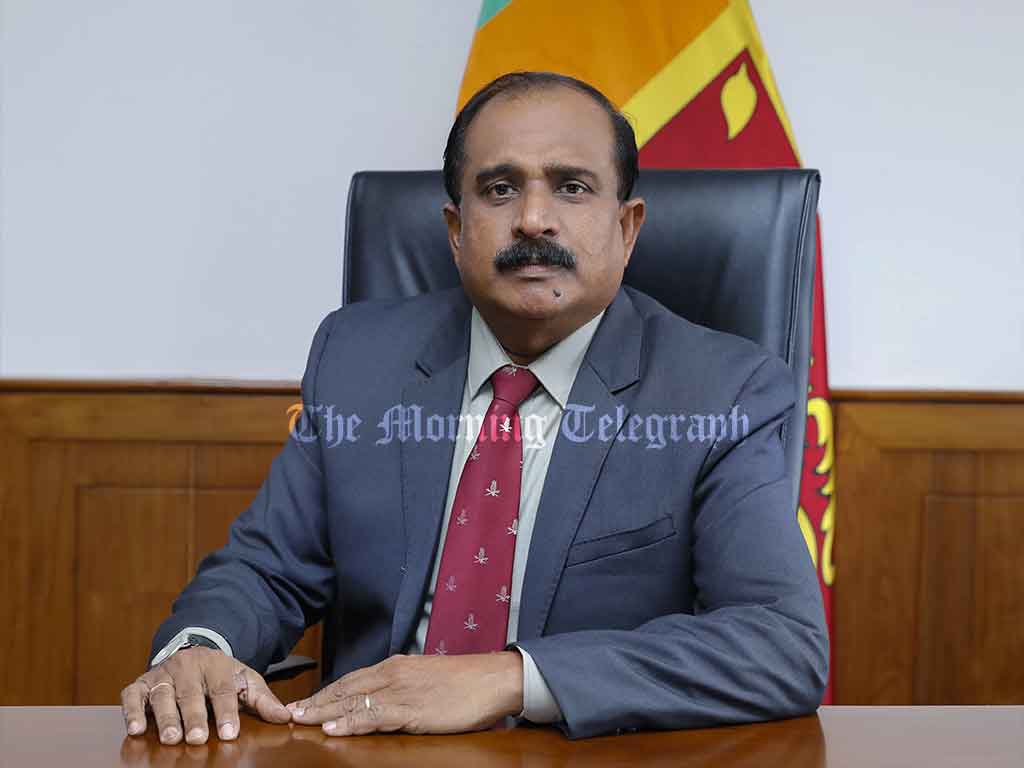
A political firestorm is erupting over Sri Lanka’s Easter Sunday attacks as opposition lawmakers file a no-confidence motion against Deputy Defence Minister Aruna Jayasekara, accusing him of obstructing justice, holding conflicting roles, and undermining military investigations linked to the 2019 terror bombings that killed over 270 people.
A no-confidence motion against Sri Lanka’s Deputy Minister of Defence, retired Major General Aruna Jayasekara, is set to be submitted to Parliament next week, according to Samagi Jana Balawegaya (SJB) MP Ajith P. Perera. He confirmed that the necessary number of Members of Parliament have already signed the motion and that it will be formally presented to the Speaker.
The motion is based on multiple grounds that have triggered growing concern among opposition lawmakers and civil society. Chief among them is Jayasekara’s role as Eastern Provincial Commander during the 2018 constitutional crisis, when then-President Maithripala Sirisena controversially ousted Prime Minister Ranil Wickremesinghe and appointed former President Mahinda Rajapaksa in his place.
Jayasekara’s presence in the Eastern Province as the commanding military officer during the Saindamarudu explosions — which occurred shortly after the Easter Sunday bombings in 2019 is also under scrutiny. His subsequent political elevation to Deputy Minister of Defence and intermittent service as Acting Minister of Defence has raised alarm bells over conflict of interest, particularly because several military officers who operated under his command are now being investigated in connection with the 2019 terror attacks.
SJB MP Kavinda Jayawardena pointed out that the military, which operates under the Defence Ministry, may be reluctant to testify against their former commander, who now holds a powerful position within the same ministry. He argued that Jayasekara’s continued presence in the ministry could directly compromise the integrity and independence of ongoing military and criminal investigations.
The Catholic Church has echoed these concerns. Spokesman for Archbishop of Colombo Malcolm Cardinal Ranjith, Father Cyril Gamini Fernando, stated that although the ongoing investigations into the Easter Sunday attacks are officially under the Ministry of Public Security via the Criminal Investigation Department and the police, Jayasekara’s dual role as both a former military commander and current deputy defence minister could still exert undue influence.
The no-confidence motion is being positioned by the opposition as an effort to uphold transparency and justice for the victims of the Easter Sunday bombings, which devastated the country on 21 April 2019. The coordinated suicide attacks targeted three churches and three luxury hotels in Colombo. Additional bombings later occurred at a house in Dematagoda and at the Tropical Inn Lodge in Dehiwala.
The Easter Sunday tragedy resulted in the deaths of more than 270 individuals, including around 45 foreign nationals, and left over 500 others injured. The attacks, claimed by ISIS, were one of the deadliest terrorist incidents in Sri Lankan history and have since become a political and judicial flashpoint in the country.
Several opposition MPs have urged for Jayasekara’s immediate removal, asserting that his involvement could hinder full disclosure of the events leading up to and following the bombings. The motion underscores the demand for an impartial investigation free from political or military interference.
As pressure mounts both locally and internationally for accountability and justice, the no-confidence motion against Aruna Jayasekara may become a critical test of Sri Lanka’s commitment to truth and institutional integrity in the wake of one of its darkest chapters.


