By Roy Denish.
Sri Lanka political patronage comes under scrutiny through accounts of luxury gifts, family access and informal influence over state decisions.
COLOMBO – In the corridors of power, influence rarely flows exclusively through official channels. Across successive administrations in Sri Lanka, political access has frequently been brokered through family networks, inner circles, and the spouses of the ruling elite.
Accounts from political insiders and historical records reveal a recurring pattern: individuals seeking state contracts, licences, or protection from regulatory action have often bypassed standard bureaucratic procedures to cultivate informal ties with political leadership.
During the tenures of former Presidents Mahinda Rajapaksa and Gotabaya Rajapaksa, political spouses emerged as focal points for these informal lobbying efforts. While both former First Ladies, Shiranthi Rajapaksa and Ioma Rajapaksa, maintained public profiles, political analysts have noted that backchannel influence was particularly pronounced during the Mahinda Rajapaksa administration.

Cultivating Access Through Luxury Gifts
Political patronage networks have long relied on personal persuasion, but historical accounts point to targeted strategies deployed by ambitious operators to secure favour.
According to accounts from the era, a prominent young businessman and politician from the Colombo District—possessing substantial family wealth and close ties to the administration—faced a commercial crisis when state authorities suspended his radio and television networks.
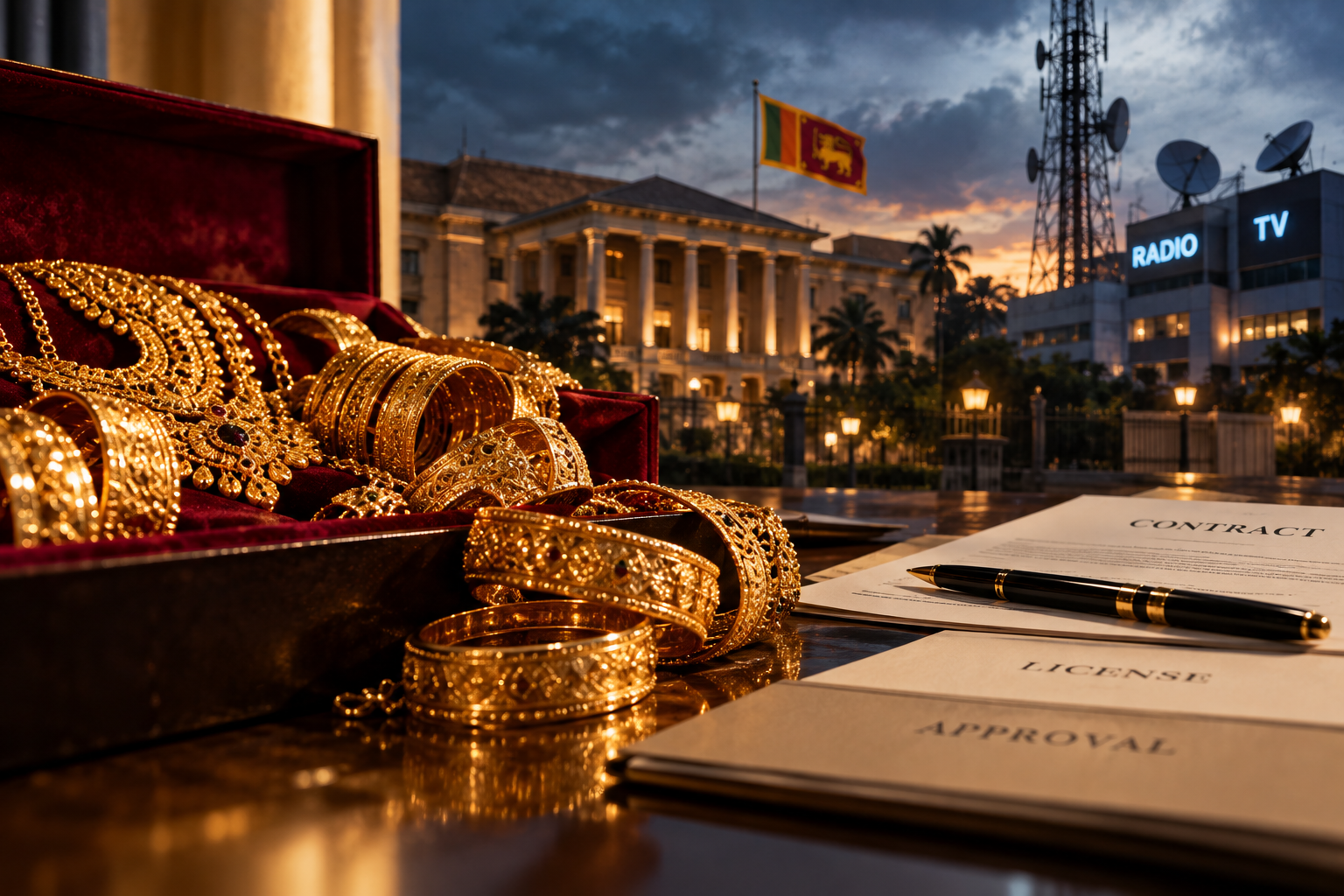
Seeking to have the state-imposed bans lifted, the businessman reportedly sought access to the ruling family’s inner circle. At a birthday celebration for then-First Lady Shiranthi Rajapaksa, he is said to have presented an exceptionally high-value gift: nearly one kilogram of gold jewellery, including heavy necklaces and multiple bangles.
Following the gift, the businessman reportedly gained significant access to the First Family’s inner circle, eventually earning a level of trust that saw him treated as a close confidant.
Witnesses from the period noted that a substantial quantity of gold jewellery had been presented. Shortly after the interaction, the regulatory hurdles facing the businessman’s media networks were reportedly cleared, allowing broadcasts to resume.
Similar dynamics involving family-centric lobbying and informal access were later reported during the presidency of Gotabaya Rajapaksa, highlighting systemic vulnerabilities within institutional governance structures.
Broader Historical Context
The practice of using extravagant gifts to influence political figures is well documented in regional political histories. Previous administrations have faced recurrent allegations involving luxury vehicles being gifted to political spouses, alongside the construction of religious sites dedicated in their honour.
For the Colombo-based businessman, the strategy of backchannel influence ultimately preceded a severe downfall. Beyond securing commercial licences, he was subsequently implicated in coercive political activities and later faced criminal charges. His career concluded with a lengthy prison sentence following a conviction for murder.
Anti-corruption advocates and political analysts argue that these events underscore enduring governance risks, illustrating how personalised patronage systems and gift-giving can compromise institutional integrity and the rule of law.