An unprecedented diplomatic meeting involving the United States, China and Russia could influence nuclear arms control, the Ukraine war and the future balance of international power.
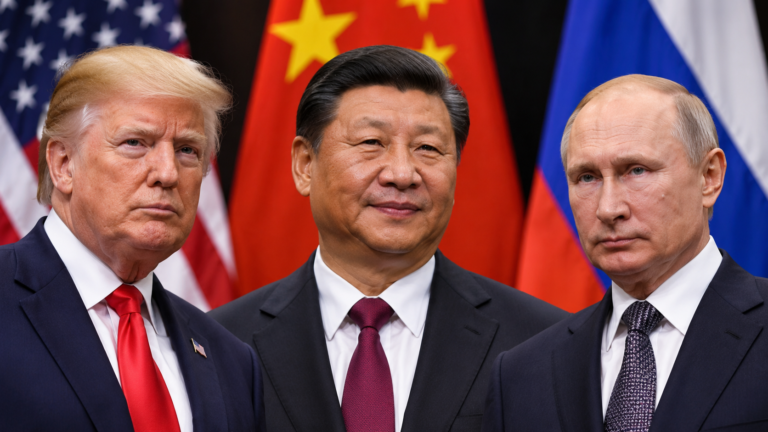
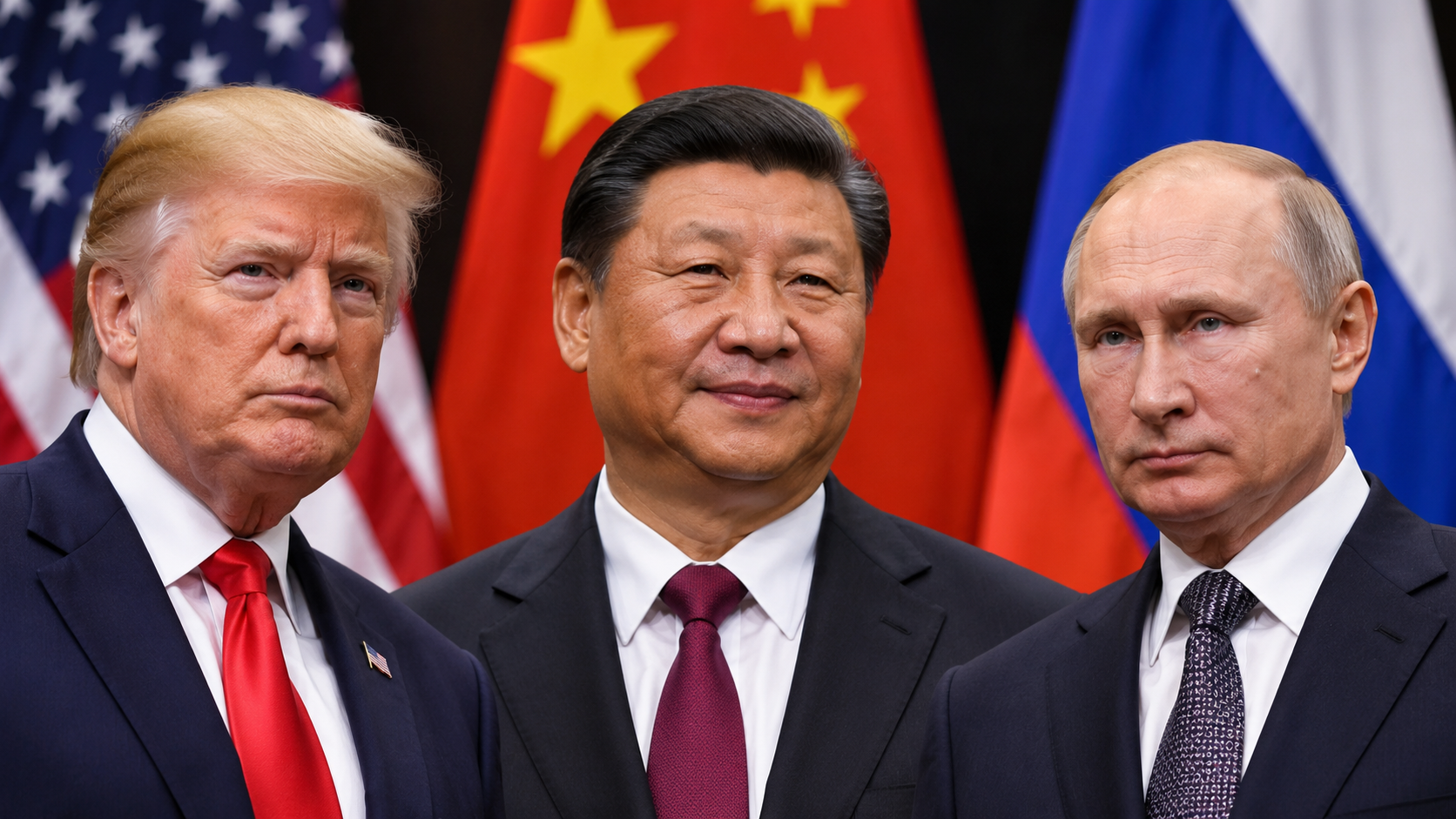
MANILA, November 17, 2026 — US President Donald Trump has begun a major diplomatic tour of Asia ahead of planned talks with Chinese President Xi Jinping and Russian President Vladimir Putin, setting the stage for a potentially historic three-way meeting on nuclear security and international relations.
The proposed talks are expected to take place during Trump’s visit to Shenzhen, China, where leaders will gather for the Asia-Pacific Economic Cooperation summit.
The planned meeting comes at a time of heightened international tension, with the war in Ukraine, conflict involving Iran, economic competition between Washington and Beijing, and uncertainty over nuclear arms control placing considerable pressure on global stability.

Although the meeting has been described as a significant diplomatic opportunity, its outcome remains uncertain.
Nuclear Weapons at the Centre of Negotiations
The proposed discussions are expected to focus partly on nuclear arms control.
The United States and Russia maintain the world’s largest nuclear weapons arsenals, while China has continued expanding its nuclear capabilities.
Existing arms control arrangements have faced increasing pressure amid deteriorating relations between Moscow and Washington.
The possibility of negotiations involving all three countries therefore represents an important development.
However, considerable differences remain over the scale of nuclear arsenals, verification procedures and the commitments each country would be prepared to accept.
Any meaningful agreement would require negotiations far beyond an initial meeting of national leaders.
Ukraine’s Future Could Be Discussed
President Trump has indicated that Russia’s continuing war in Ukraine could feature in his discussions with Putin and Xi.
This has raised concerns over the possibility of major powers attempting to negotiate aspects of the conflict without the full participation of Ukraine.
The war has fundamentally altered Europe’s security environment and intensified tensions between Russia and NATO.
European governments remain concerned about any diplomatic arrangement that could weaken Ukraine’s sovereignty or establish a precedent for changing borders through military force.
While discussions between major powers could help reduce tensions, a lasting settlement would require agreement from the countries directly involved.
China and the Battle for Economic Influence
Trump’s Asian tour also comes amid continuing trade and technological tensions between the United States and China.
American restrictions on advanced semiconductor exports have become a particularly sensitive issue.
Washington has argued that access to sophisticated artificial intelligence technology could strengthen China’s military capabilities.
Beijing has opposed restrictions it considers discriminatory and damaging to international trade.
The diplomatic meetings could therefore provide an opportunity to discuss broader economic relations, including trade barriers, technology access and investment.
However, the strategic rivalry between the two countries is unlikely to disappear through a single diplomatic encounter.
North Korea Could Add Another Dimension
Trump has also suggested that a meeting with North Korean leader Kim Jong Un might be possible if suitable arrangements can be made.
A renewed encounter would attract significant international interest following previous attempts to negotiate limits on North Korea’s nuclear programme.
Earlier meetings between Trump and Kim generated considerable publicity but failed to produce a lasting denuclearisation agreement.
Any new engagement would face questions over verification, sanctions relief and North Korea’s willingness to make enforceable commitments.
The Consequences for Smaller Nations
The results of discussions between the United States, China and Russia could affect countries far removed from the negotiating table.
For Sri Lanka and other developing economies, international stability plays an important role in determining investment confidence, export opportunities, shipping conditions and energy prices.
Reduced tensions could support economic recovery and commercial activity.
Conversely, unsuccessful negotiations or agreements that create additional geopolitical divisions could increase uncertainty in international markets.
A Diplomatic Opportunity with Enormous Stakes
The planned meeting brings together three leaders whose governments exert enormous influence over international security.
Yet the significance of the summit will depend on whether concrete agreements emerge.
Nuclear weapons negotiations require trust, verification and commitments that can survive changes in political leadership.
Similarly, meaningful progress towards ending armed conflicts requires more than public declarations.
The meeting may offer an opportunity to reduce international tensions, but it also poses a difficult question: whether the world’s major powers are genuinely prepared to cooperate on common security challenges or are seeking arrangements that primarily protect their own strategic interests.
Sources
- Associated Press — Trump’s Asia trip: Deals in Manila and Shenzhen, nuclear summit with Xi and Putin, maybe Kim meeting, November 17, 2026.
https://apnews.com/article/ffc5e5a2d384f00960034ec10087502e - Reuters — Stocks dip ahead of Nvidia earnings, Anthropic IPO, November 16, 2026. Includes reporting on the planned Trump-Xi-Putin meeting.
https://live.euronext.com/en/financial-news/stocks-dip-ahead-nvidia-earnings-anthropic-ipo