By Roshan Jayasinghe
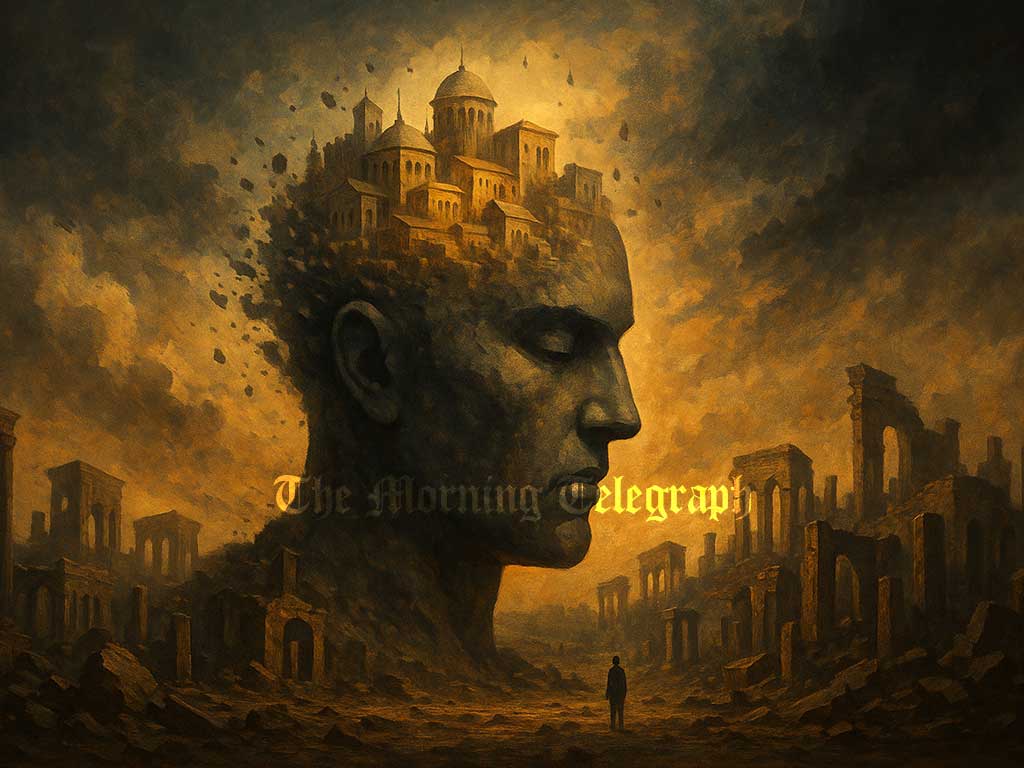
History often records the fall of civilizations through war, famine, or politics, but what if these are only surface symptoms? What if the true force behind the collapse of nations is far more subtle and far more human?
Beneath every visible ruin lies an invisible narrative, the collective mindset of a people. Just as a single person can spiral into despair or rise into light through the power of thought, so too can entire nations shape their destiny by the quality of their inner world.
When a Nation Thinks as One
Countries are not just defined by borders or laws. They are energetic fields, living ecosystems of memory, belief, and shared emotion. These psychic patterns, passed down through generations, begin to form a collective identity. When enough people carry the same story, of victimhood, superiority, fear, entitlement, or pride, those energies merge and solidify.
The result is a cultural atmosphere that becomes almost impossible to see from the inside, yet governs everything: how leaders rule, how economies function, how children are raised, and how a people see their own place in the world.
Some nations wear suffering like a badge. Others chase dominance with blind ambition. And some dissolve not through external attack, but from the internal erosion of coherence, purpose, and shared vision.
Collective Suffering is Real
This is not philosophy. It’s observable reality. There are regions of the world today where the prevailing emotional tone is grief, resentment, fear, or helplessness. It moves like a fog through public institutions, conversations, and choices. Even progress becomes performative, changes on the outside without a shift in consciousness beneath.
It’s no different than an individual who has adopted suffering as identity. Without awakening, they continue to act out pain, even while craving joy.
In the same way, a collective mind stuck in unconscious repetition can lead a nation into stagnation, or disappearance.
Civilizations Don’t Just Fall. They Fade.
Think of the great empires whose remains we now dig up. Rome. Mohenjo-Daro. The Maya. Some collapsed from invasions or disasters. But many simply faded away. What if their fall wasn’t due to one catastrophic event, but rather the slow dissolution of collective vitality, the loss of alignment, meaning, or direction?
People often ask, how could such intelligent, advanced societies vanish?
The better question might be: What was the state of their collective mind before they fell?
Did they still believe in themselves? Did they live in alignment with natural truth? Or had they become prisoners of their own conditioned thoughts, rituals, and identities?
The Mirror: One Mind, Many Bodies
The mind of a nation is not separate from the minds of its people. It is an echo of them. If individuals live in fear, the nation behaves defensively. If people are ruled by greed, the economy reflects that appetite. If people forget their connection to life, nature, and spirit, so too will their institutions.
That is why true societal healing must begin with the individual. There is no saving a country without saving the self. Each person who awakens from inherited patterns is not only freeing themselves, they are lifting the vibration of the whole.
We often speak of political change, but the real revolution is inner. No lasting solution can emerge from the same mindset that caused the problem.
What Story Are We Living?
We are now at a turning point. The human world is more interconnected than ever, yet the collective psyche is more fragmented. Anxiety, division, and numbness spread like viruses. Many believe they are alone in their suffering, when in fact they are surrounded by it, and contributing to it.
So here is the challenge, and the invitation.
If our thoughts shape our lives, and our collective thoughts shape our civilization, then we must ask:
What are we thinking?
What are we agreeing to believe together?
And who are we becoming because of it?
It is possible for nations to heal.
It is possible for cultures to mature.
But not without awareness.
If we don’t look inward, we will keep repeating the same patterns, dressing them in new names, until we forget who we really are.
Let us remember.
Let us create a new collective story, not of fear or control, but of alignment, clarity, and conscious participation in the evolution of humanity.
Because civilizations do not fall by chance.
They fall by agreement.
And they can rise again, if we choose.
About the Author
Roshan Jayasinghe is a humanist thinker and emerging writer based in California. With a background in administration and a deep passion for social equity, he explores the intersections of politics, identity, and compassion through a lens grounded in nature’s own self-correcting wisdom.

Roshan Jayasinghe
Rooted in the belief that humanity can realign with the natural order where balance, regeneration, and interdependence are inherent. Roshan’s reflections invite readers to pause, question, and reimagine the systems we live within. His writing seeks not to impose answers, but to spark thought and awaken a deeper awareness of our shared human journey. Roshan will be sharing weekly articles that gently challenge, inspire, and reconnect us to what matters most.