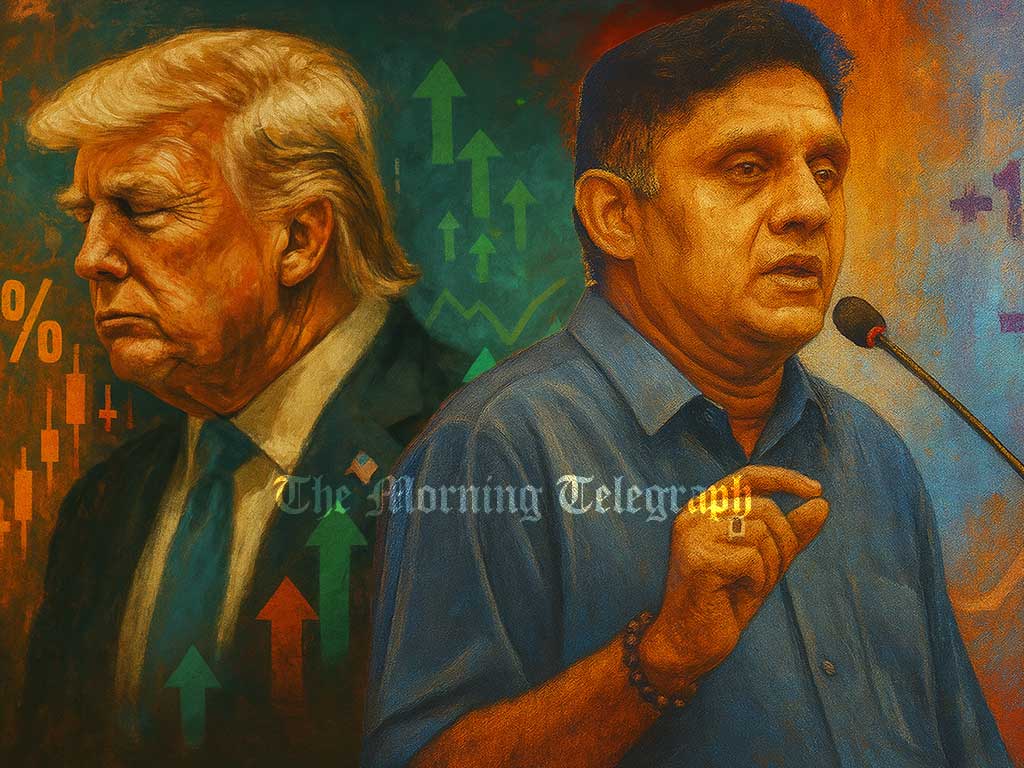
Opposition Leader Sajith Premadasa blames weak, arrogant diplomacy for the U.S. imposing a 30% tariff on Sri Lankan goods. He says poor negotiation tactics have put $3 billion in exports at risk and vows stronger leadership.
Opposition Leader Sajith Premadasa has sharply criticized the Sri Lankan government’s handling of trade negotiations with the United States, blaming weak and arrogant diplomacy for the imposition of a 30% tariff on Sri Lankan exports. In a strongly worded social media post, Premadasa claimed that the lack of effective negotiation strategy and overreliance on theoretical experts has put nearly $3 billion worth of exports at risk.
Premadasa’s comments come amid mounting concern among Sri Lankan exporters and trade organizations following the announcement of steep U.S. import duties on Sri Lankan goods. Although the tariff was recently reduced from 44% in April to 30%, it remains significantly high, sparking fears over competitiveness, job losses, and long-term economic consequences.
“This is the price we pay for poor negotiation. Arrogance stopped us from seeking every expert hand. Now $3 billion in exports is hanging in the balance,” Premadasa stated, highlighting what he sees as a failure in global economic diplomacy.
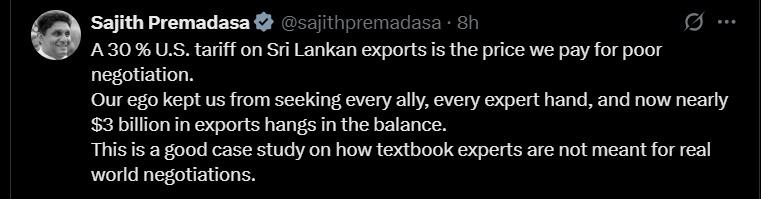
He framed the issue as a classic example of how academic theory and real-world diplomacy often collide, calling it a “case study in relying on textbook experts for complex international trade negotiations.”
Premadasa also added that had he been in charge, tax reductions and proactive diplomacy would have softened the blow, suggesting that a more collaborative and grounded approach could have preserved Sri Lanka’s standing with key trading partners like the United States.
The remarks signal a deeper political narrative as Premadasa positions himself as a more pragmatic and globally savvy leader, willing to listen to both domestic and international voices when negotiating on behalf of the country.
Meanwhile, businesses in sectors such as apparel, spices, and rubber, which make up the bulk of U.S.-bound exports—are calling for urgent policy intervention to mitigate the tariff impact and regain market access competitiveness.
With billions in trade and thousands of jobs at stake, the episode has become a flashpoint in the broader debate over Sri Lanka’s global trade strategy, and Premadasa’s statement adds political heat to an already sensitive economic challenge.