Despite ongoing US-Sri Lanka tariff talks, the government has yet to disclose key details about concessions or trade-offs. Experts warn of economic and strategic risks as uncertainty looms over garment exports, services, and Colombo Port City deals.
Although discussions have taken place between Sri Lankan and US representatives regarding tariff reductions, economic analysts are sounding the alarm over the government’s refusal to disclose which goods are included and what percentage reductions were agreed upon. This lack of transparency, they argue, is a serious concern with direct implications for Sri Lanka’s economic stability.
Experts stress that the government must reveal details of the agreement in Parliament, particularly concerning what was negotiated and which sectors or products were affected by the tariff concessions. The secrecy surrounding these decisions has raised red flags across the policy and business communities.
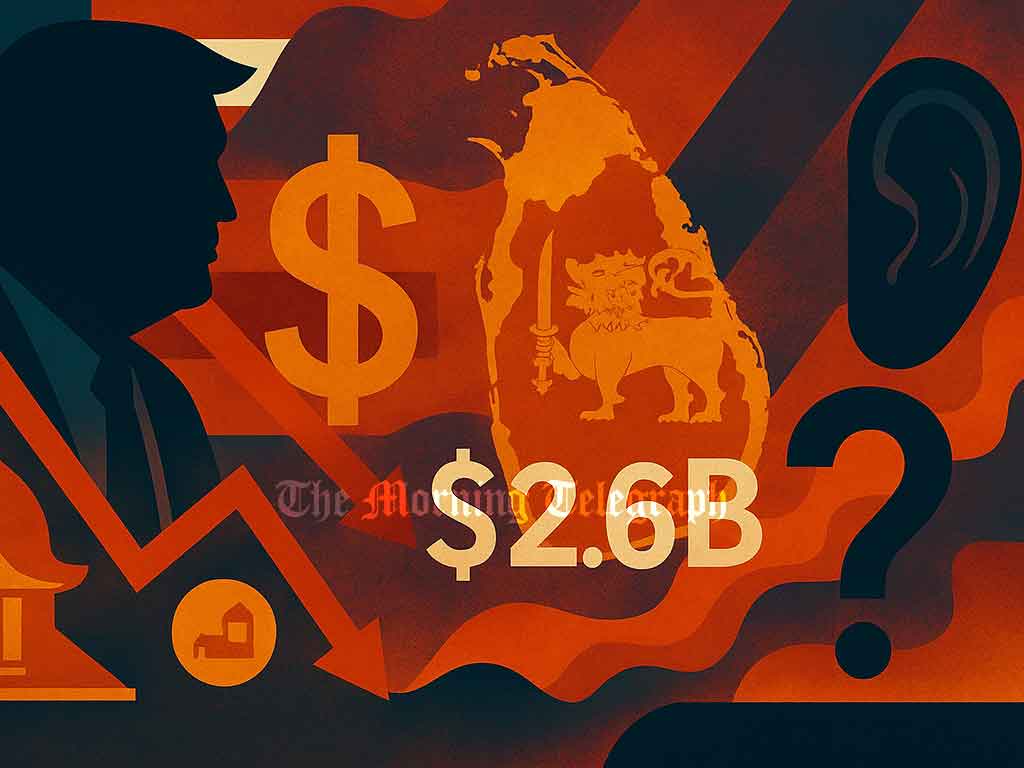
According to a former Finance Ministry Secretary, who spoke under anonymity, Sri Lanka enjoyed a $2.6 billion trade surplus with the United States in 2024 alone. Despite the country’s growing ties with China and India, the US remains a key export destination. Thus, the proposed 30% tariff on Sri Lankan goods threatens to significantly reduce this surplus.
The former official emphasized that future talks with the US Department of Commerce should focus on preserving this trade surplus. He criticized the absence of high-level political leadership in the negotiations, noting that other countries sent strong delegations to meet with the United States Trade Representative (USTR). Sri Lanka, in contrast, lacked representation from its Prime Minister or Cabinet-level officials.
Echoing this concern, Prof. Priyanga Dunusinghe warned that the 30% tariff could slash Sri Lanka’s export income by $400 to $500 million annually. He further predicted that any negotiations with the US could result in increased American agricultural exports, such as cheese, butter, and meat into Sri Lanka, which could destabilize local industries.
The professor also warned of the potential strategic pressure Sri Lanka may face to open its markets further to US services and investments. Notably, the Colombo Port City project may lose out on expected tax concessions. He advocated for broadening the scope of negotiations to include energy, IT, shipping, and agriculture.
Meanwhile, Felix Fernando, Vice President of the Joint Apparel Associations Forum, remarked that while immediate apparel revenue losses are not expected, Sri Lanka could face a drop in orders due to reduced competitiveness. He noted that if Sri Lanka maintains a lower tariff rate than competitors such as India, Vietnam, and Bangladesh, it might still retain some advantage.
As future US-Sri Lanka tariff discussions approach, concerns continue to mount over what concessions may have already been offered. Attempts to reach Deputy Minister of Economic Development Dr. Anil Jayantha Fernando and Trade Secretary K.A. Wimalenthirajah for comment were unsuccessful.