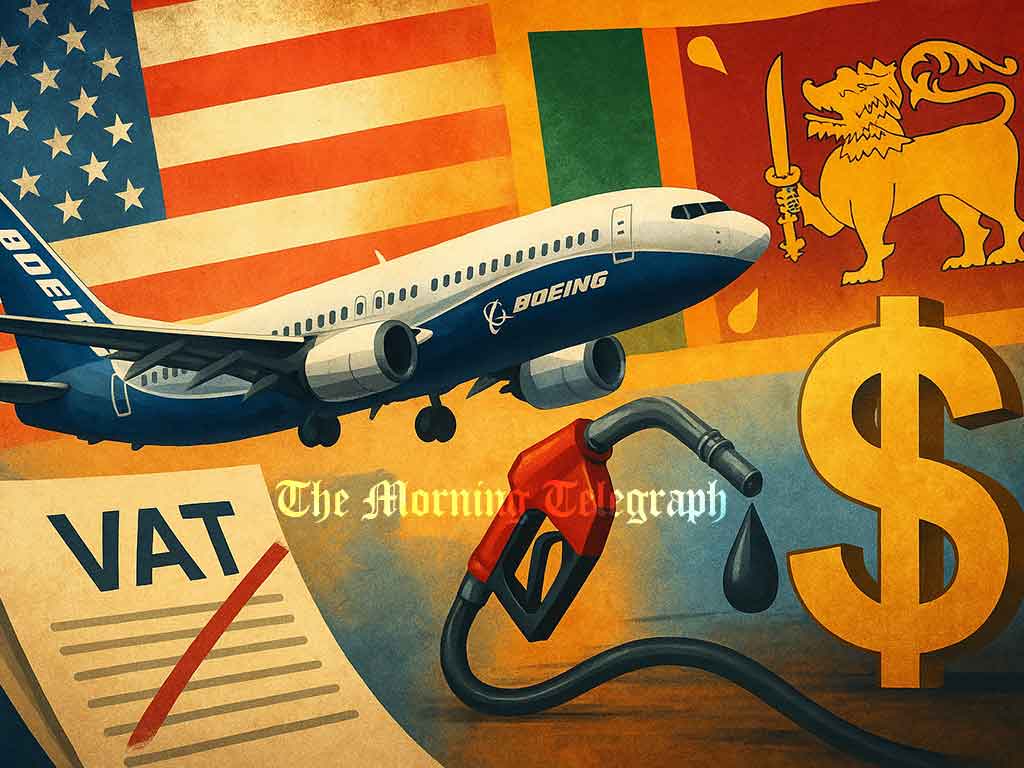
To secure U.S. tariff concessions, Sri Lanka is preparing to buy three Boeing aircraft, import fuel and raw materials from America, and remove VAT on U.S. goods raising concerns about trade dependency and long-term economic consequences.
In a significant strategic shift, the Sri Lankan government has decided to take bold steps to reduce its trade imbalance with the United States in a bid to retain the 30% reciprocal tariff concession imposed by U.S. President Donald Trump.
According to high-level diplomatic sources, the government is actively working on a plan to increase the volume of goods imported from the U.S. This move comes amidst ongoing negotiations aimed at maintaining favorable export conditions under the newly introduced American tariff framework.
As part of the effort to rebalance the trade equation, a proposal has been made for Sri Lanka to purchase three Boeing aircraft and import a portion of the country’s annual fuel requirement from the U.S. These purchases are expected to be executed through a leading private company operating within Sri Lanka. In addition, the government is considering sourcing raw materials for soy production directly from the American market.
But perhaps the most contentious part of the proposed trade plan is the removal of Value Added Tax (VAT) currently applied to imports and exports between the two nations. Diplomatic insiders state that this recommendation comes following a request from U.S. representatives, based on the premise that VAT constitutes a form of tariff under President Trump’s trade doctrine.
The decision to scrap VAT could be seen as a major concession, particularly considering its role in government revenue. However, officials believe this move may be critical in demonstrating goodwill and securing long-term tariff exemptions that will benefit Sri Lankan exporters, especially in key sectors like apparel, tea, and rubber.
While no formal announcement has been made, sources indicate that discussions around these economic decisions have already reached advanced stages. The potential implications, both financially and politically, are significant.
Critics argue that such trade-offs, particularly the purchase of expensive aircraft and the rollback of key taxes, may create new forms of dependency on U.S. trade policy while simultaneously weakening local economic control. They are also calling for more transparency in the negotiation process.
Nevertheless, the government appears committed to deepening its trade partnership with Washington by adjusting its import strategy and adopting policies that align with the U.S. administration’s economic expectations.
As this deal continues to unfold, the broader question remains: will these high-stakes purchases and tax concessions translate into lasting benefits for Sri Lanka or are they too steep a price for tariff relief?