
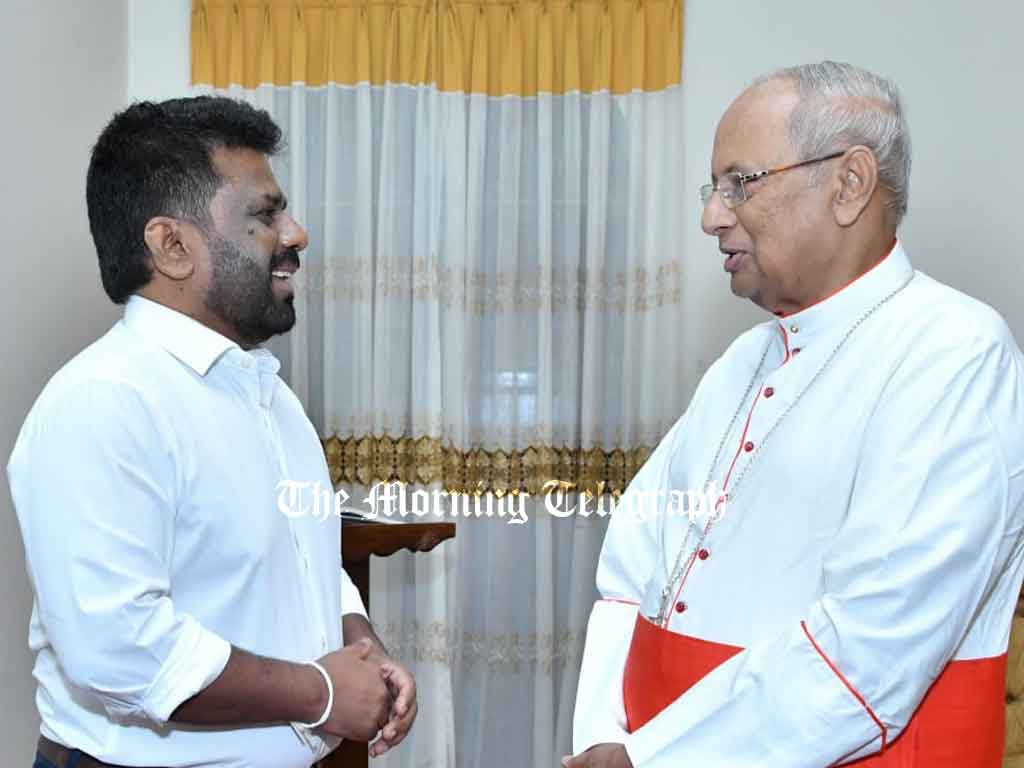
As Cardinal Malcolm Ranjith celebrates 50 years as a priest, questions arise over whether his legacy is one of spiritual service or political spectacle. This in-depth exposé explores his role in the Catholic Church’s moral decline and the dangerous fusion of faith and state power in Sri Lanka.
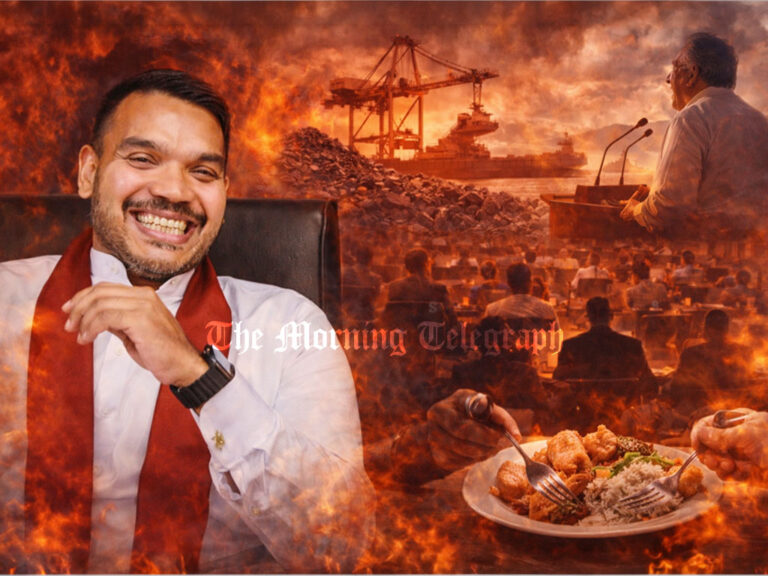
As Cardinal Malcolm Ranjith marked half a century in the priesthood, what should have been a moment of solemn reverence instead exposed a bitter truth: a Church entangled in politics, performance, and profound moral decay. Rather than a celebration of sacred service, his golden jubilee unfolded as a carefully orchestrated show, with political elites flanking him and media sycophants likening the gathering to a messianic revelation. But this was no divine milestone it was a travesty in cassock.
Once hailed as a spiritual leader, Cardinal Ranjith has become, arguably, the single most damaging figure to the Catholic Church’s credibility in Sri Lanka. Time and again, he has traded the prophetic calling of his office for political favor, shedding his clerical identity as conveniently as one would change attire. From pulpits to political podiums, from the vestry to VIP lounges, he has courted power at the expense of principle, leaving behind a legacy of opportunism masked in reverence.
Under his stewardship, the priesthood has drifted from its spiritual moorings. No longer a symbol of sacrifice and service, it has become an instrument of statecraft and spectacle. Ranjith has sat among the very architects of misrule he once decried, cloaked in solemn indignation while cutting deals in private. The result? A Church less defined by its Gospel than by the optics of political convenience.
The 2019 Easter Sunday bombings could have been the moment he rose as a true shepherd of the people. Instead, his initial resolve gave way to performative outrage. As public anger simmered, the Cardinal grew more comfortable behind microphones and more reluctant before the powerful. Victims and their families remain suspended in a purgatory of unkept promises, while grief was commodified and justice politicized.
Shockingly, funds raised in the aftermath were never subjected to proper audits. Allegations surrounding their use remain cloaked in ambiguity. Rather than support de-radicalization laws to prevent future extremism, Ranjith publicly opposed them. More disturbing still was his participation in a UK-aired documentary brimming with conspiracies that even its producer later disavowed. The credibility crisis deepened, and the truth faded into shadows.
Every institution the Cardinal touched religious, legal, educational has suffered politicization. Churches, courts, and classrooms that once stood for clarity now serve as props in a larger theater of political opportunism. Where believers sought answers, they were handed distraction. Through it all, Ranjith remained not a martyr for truth, but its quiet controller, ensuring no flame of scrutiny reached those in power.
His elevation by state actors and diplomats raises disturbing questions. Is he a spiritual father to the afflicted or a high priest of political religion? A shepherd laying down his life for the flock, or a manager of appearances who dines with wolves in suits?
We must not confuse ceremonial accolades with true sanctity. The Gospel demands confrontation, not comfort. Prophetic ministry is not applause-driven; it is rooted in truth, regardless of political cost. The President’s praise of Ranjith as a “noble example” should unsettle any believer whose faith is not for sale.
Under Ranjith’s leadership, the Church in Sri Lanka has been reimagined not in the crucified image of Christ, but in the throne of clericalism. Altars have been domesticated. Sacraments politicized. Believers infantilized. Clergy neutralized. It begs the question: what remains of a Church that no longer challenges, no longer provokes, no longer resists?
Fifty years of priesthood is not enough to shield Cardinal Ranjith from accountability. We must ask not just what he built, but what he has helped dismantle. For there is no jubilee without justice. No priesthood worth honoring that does not bear the scars of the cross. And no Church worth defending if it becomes indistinguishable from the state it was born to confront.
As an aged Catholic I found him more a political priest than a religious priest.As a minority group winning the goodwill of the governing elite is acceptable but not to the extent of boot licking. He was detested for his political inclinations and boot licking the Rajapakses unbecoming for a religious head specially the Catholic Church which leadership was exemplary and non political always.
Agree wholeheartedly! Perhaps the Easter Sunday attacks may not have occurred if he had not flirted/cosied upto the Rajapakses?? He was their cats paw & they used him. Sadly, quite a few of the Catholic clergy blindly echo whatever the Cardinal says!! The last three issues of the “Catholic Messenger” have been nothing but paeans of hosannas about his sacerdotal ordination??!!