From Trump’s condescending remarks to the Sri Lankan opposition’s obsession with English, this article exposes the toxic mix of linguistic elitism, colonial hangovers, and misguided pride. Why mastering English is valuable—but weaponizing it is not.
There seems to be no end to the headline-grabbing controversies erupting from the White House during US President Donald Trump’s tumultuous second term. These range from veiled threats to allies to patronizing remarks toward visiting dignitaries. One such behavior has prompted pundits to coin a phrase “the second term curse” describing Trump’s volatile, increasingly confrontational diplomacy. In February, Trump lashed out at Ukrainian President Volodymyr Zelensky over his attire, prompting Zelensky to walk out of the Oval Office.
As Trump continues to style himself a global arbiter of excellence under his MAGA (Make America Great Again) project, it appears the White House has become a battleground of outdated etiquette and linguistic snobbery. He has repeatedly mocked visiting leaders, particularly from the developing world, for their dress and English communication skills.
The latest incident involved Liberian President Joseph Boakai, whom Trump condescendingly praised for his English, asking where he had learned it. Unaware, it seems, that Liberia’s official language is English, and that Boakai hails from a nation with deep linguistic roots dating back to freed black American settlers in the 19th century. Trump’s attitude was equally hostile toward South African President Cyril Ramaphosa during a May meeting, continuing a pattern of diplomatic arrogance.
Trump’s remarks have sparked reactions beyond the Atlantic. In Sri Lanka, opposition politicians jumped at the opportunity to shame a ruling party politician for his lack of fluency in English at an international event. The implication? That English proficiency is the ultimate measure of competence. Yet critics overlook a basic truth: language skills vary, and not every politician will speak English fluently. That’s what interpreters are for.
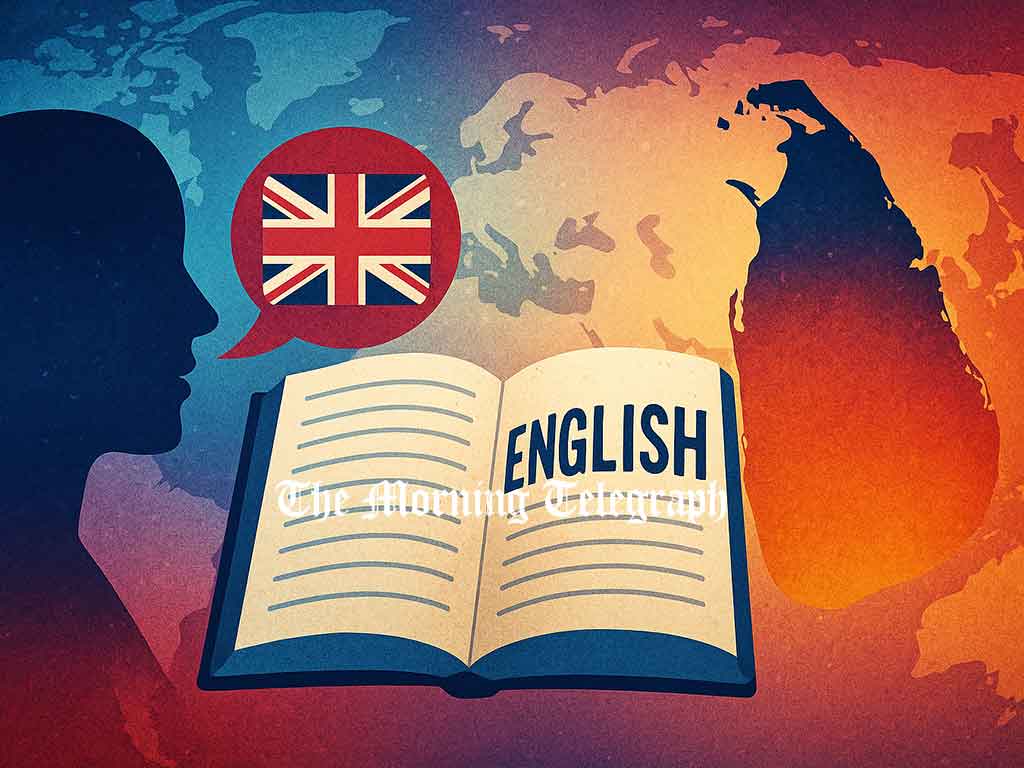
Linguists now agree that there is no single “English,” but many varieties, each shaped by region, culture, and context. The Oxford English Dictionary’s World English programme acknowledges that British English is no longer the sole standard. Trump’s American English, too, is just one flavor. As one journalist once put it, English is a “beautiful bastard language,” thriving by borrowing and adapting from others. Even Sri Lanka’s iconic ‘kottu roti’ has made its way into the OED.
What makes English resilient is its adaptability. Today, 52% of websites globally are in English. The language continues to evolve, blending words from every corner of the globe. Mastery of English remains valuable, especially for those interacting in international forums. But weaponizing English proficiency as a status symbol only deepens social divides and colonial hangovers.
Like denim or tea or pizza, English has become so globalized that its origins matter less than its function. It no longer belongs to one nation. So while learning English is beneficial, obsessing over fluency as a mark of superiority is misguided.
Ultimately, those who struggle with English should make every effort to learn it as a gateway to the world. But neither Sri Lankan opposition politicians nor Donald Trump, whose own communication style leaves much to be desired are in any position to judge others.