
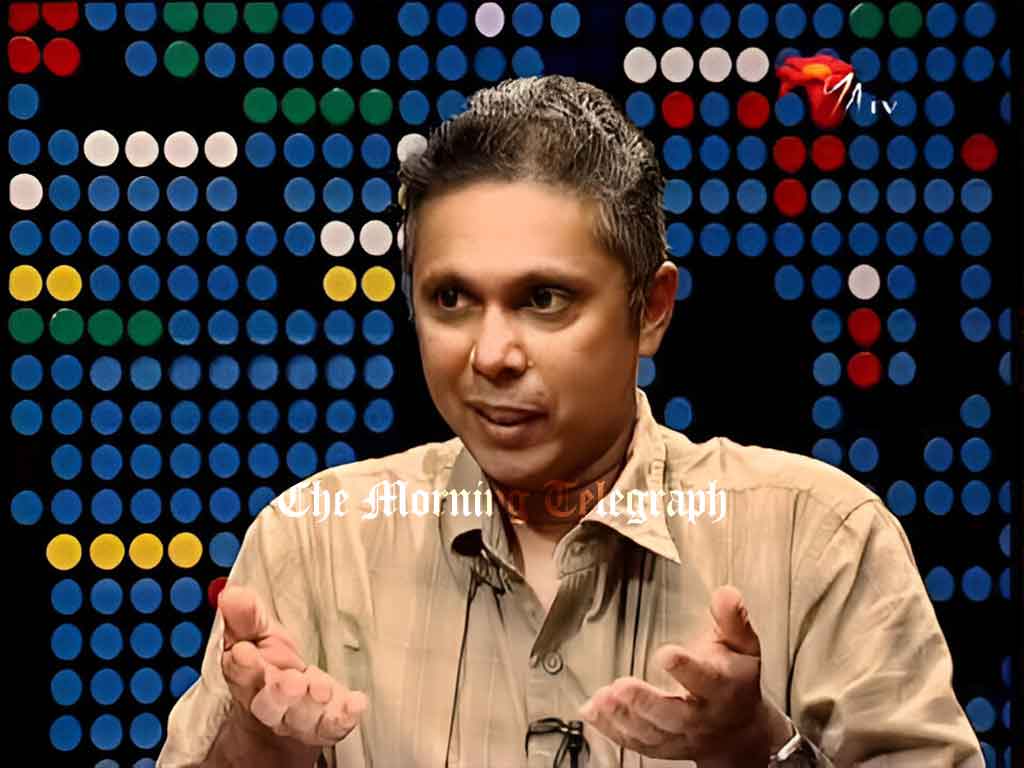
Professor Nirmal Ranjith Dewasiri has ignited controversy by accusing the President’s Media Unit of hiding key information under Sri Lanka’s Right to Information Act, allegedly to shield JVP-affiliated personnel on the state payroll. His comments raise serious questions about transparency, political infiltration, and taxpayer accountability in the heart of government media operations.
Professor Nirmal Ranjith Dewasiri has raised alarm over the refusal by the President’s Media Unit to disclose information requested under the Right to Information (RTI) Act, alleging the real motive is to conceal the presence of JVP cadres within the unit.
In a strongly worded statement made during an online discussion, Professor Dewasiri questioned the legitimacy of the Media Unit’s decision to invoke specific provisions of the RTI Act to avoid disclosing details requested by the public. He said this refusal has stirred considerable controversy, especially as the information pertains to public sector appointments funded by taxpayer money.
The professor firmly asserted that the true reason behind withholding the information is the fear of exposing the individuals attached to the President’s Media Unit who are allegedly connected to the JVP. “The government has no right to hide individuals who are on the public payroll,” Dewasiri stated, emphasizing that this kind of secrecy is unacceptable in a democratic society.
Dewasiri accused the current administration of using the President’s Media Unit as a cover to embed political loyalists from the Janatha Vimukthi Peramuna (JVP) into state structures. According to him, protecting these affiliations under legal pretenses is a misuse of both the law and public trust.
He went further, stating that he does not endorse the concealment of such appointments, reiterating that every Sri Lankan citizen has the right to know who is employed in state institutions, especially those paid from public funds. The professor argued that transparency in public staffing is a non-negotiable pillar of good governance.
In a pointed remark, Dewasiri claimed that the JVP’s Pelawatte office has now become the de facto “center of state power,” suggesting a blurring of lines between political party operations and government administration. His assertion implies a deeper infiltration of party machinery into official state channels.
This revelation has added fuel to ongoing concerns about the politicization of public institutions under the current regime. Critics argue that if the government has nothing to hide, it should not shy away from complying with RTI requests—particularly when they relate to the employment of individuals funded by public resources.
Dewasiri’s statement has intensified calls for the President’s Office to release the requested information and address the growing perception that the RTI Act is being manipulated for political cover-ups. The debate touches on broader themes of transparency, accountability, and the ethical boundaries between party loyalty and public duty.
As civil society watches closely, the question remains: Is Sri Lanka’s public administration being turned into a political recruitment ground? And if so, what does this mean for the credibility of the institutions meant to serve all citizens, regardless of political affiliation?



This seems to me to be personal annimosity dressed up as public propriety. it is not even remotely sensible for ever member of the public to know the details of every public sector employee as this “professor” asserts – nor is it globally followed – check out India, China, the USA, the UK, etc. The individual employees’ right to privacy takes precedence. This person should know that.