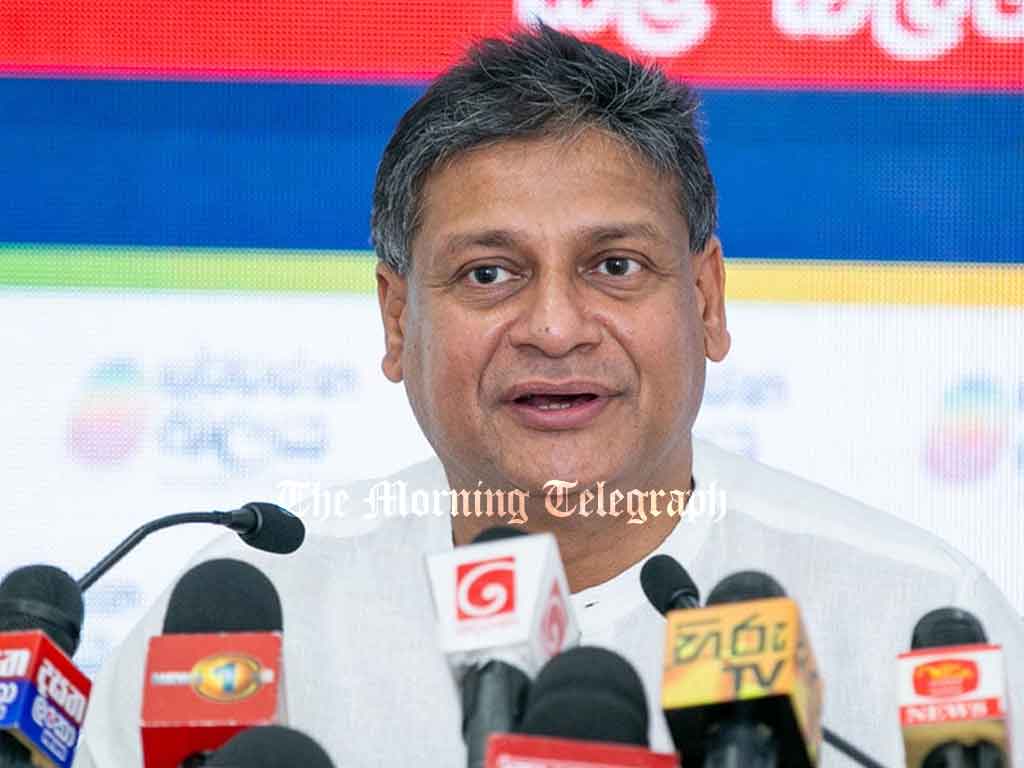
Sarvajana Balaya leader MP Dilith Jayaweera says the public now calls President Anura Dissanayake ‘Badu Kumara’ (Tax Prince) due to heavy IMF-driven taxation and looming U.S. tariffs. He warns of collapsing industries, job losses, and rising prices as the government pursues Ranil Wickremesinghe’s economic blueprint under U.S. and IMF pressure.
The leader of Sarvajana Balaya, MP Dilith Jayaweera, has warned that the current government’s strict tax policies driven by the International Monetary Fund (IMF) and U.S. trade retaliation are pushing the public to their limit.
Speaking at a media briefing held at the Sarvajana Balaya headquarters, Jayaweera said that while the government claims to be working hard to meet public expectations, the people are instead burdened with unbearable taxes. According to him, these taxes are not homegrown policies but the product of the IMF’s demands, imposed with the blessing of President Anura Dissanayake and his key ideologue, Ranil Wickremesinghe.
“People have had enough,” Jayaweera declared. “They’ve started calling the President ‘Badu Kumara’ the Tax Prince. That tells you everything.”
He pointed to the damaging effects of the upcoming 30% Trump tariff on Sri Lankan exports to the United States. Jayaweera emphasized that this tariff hike would drive up the price of Sri Lankan goods in U.S. markets, making them less competitive. The ripple effect, he said, would result in decreased sales, crippled local industries, and large-scale job losses.
He stressed that instead of resisting this economic strain, the government appears to be embracing it as part of its theoretical commitment to economic reforms dictated from abroad.
“We are witnessing the unraveling of our industries and livelihoods,” he warned. “This is not economic liberation, it’s surrender. And the people are the ones paying the price.”
Jayaweera’s remarks echo growing public dissatisfaction as living costs rise and uncertainty grows in key sectors like exports, manufacturing, and employment. The Sarvajana Balaya leader urged the government to reassess its economic path before irreversible damage is done.