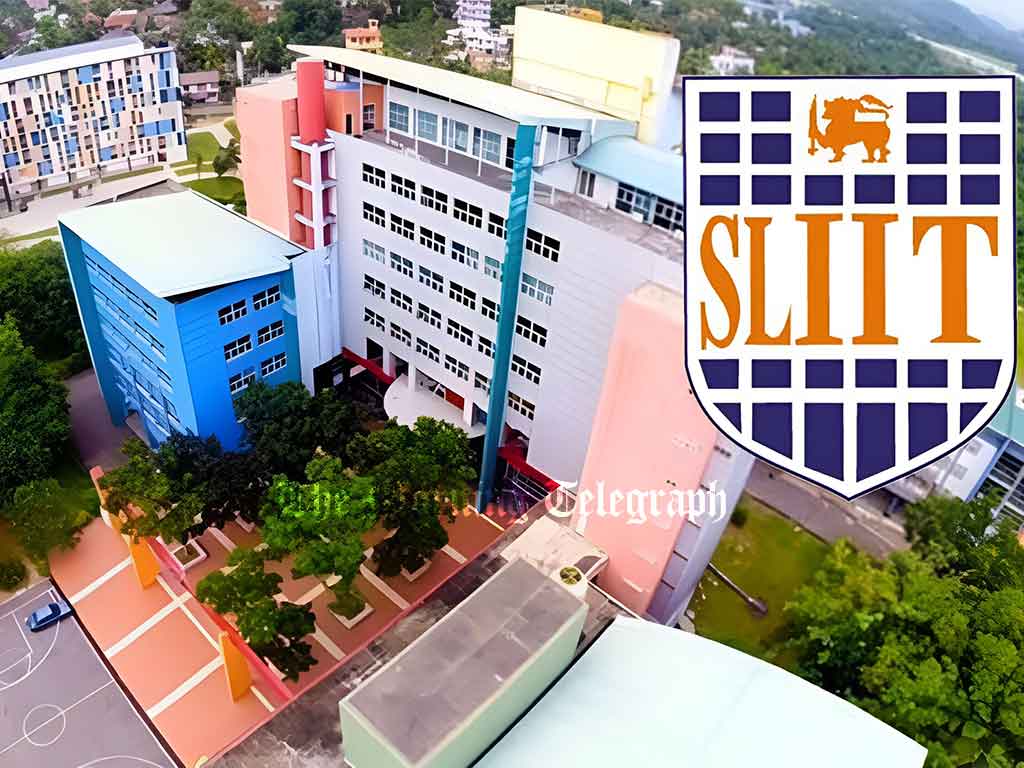
The Sri Lanka Institute of Information Technology (SLIIT) is at the center of a major controversy as COPE declares its privatization illegal and calls for its return to the Mahapola Trust Fund. Allegations of fraud, missing audits, and political negligence spark demands for urgent reform and forensic investigations.
In a major revelation, the Committee on Public Enterprises (COPE) has declared the privatization of the Sri Lanka Institute of Information Technology (SLIIT) illegal and urged the government to reclaim control of the institution under the Mahapola Trust Fund. This recommendation was made during COPE’s recent session to review the Auditor General’s reports and performance data for 2022 and 2023.
COPE Chairman Dr. Nishantha Samaraweera directed the Secretary to the Ministry of Trade, Commerce, Food Security and Cooperative Development, K.A. Wimalenthirarajah, and Mahapola Trust Fund Chairman, former Supreme Court Justice Vijith Malalgoda, to initiate immediate legal action to restore SLIIT as a state-run institution.
The crux of the issue lies in a 2015 agreement approved by the Cabinet under which SLIIT paid Rs. 408 million to the Mahapola Fund to claim ownership. However, COPE now asserts that such a transaction is fundamentally flawed, as an institution owned by the Fund should not pay the Fund for ownership, thereby undermining state assets.
The committee emphasized that punitive actions must be taken against those responsible for this “illegal and fraudulent” transaction. Ex-officio Trade Minister Wasantha Samarasinghe, who helped establish the Mahapola Fund, pledged that these abuses would not be buried in time and that deeper investigations would follow.
SLIIT, which began as a government-backed project with state-appointed officials on its board, has evolved into a lucrative private venture. According to testimony presented to the committee, this transition was driven by personal greed once officials realized the institution’s immense profit potential.
Despite the ongoing investigation, COPE clarified that there is no intention to disrupt SLIIT’s academic activities. Instead, it plans to retain the institution’s current structure while placing it under Mahapola Fund control, allowing more students to benefit from subsidized higher education.
Concerns were also raised about previous administrative negligence, including the failure to fill key roles like the Internal Auditor, particularly during the last government. COPE members flagged this as a major efficiency problem in a fund managing nearly Rs. 20 billion.
Further scrutiny was placed on NatWealth Corporation and NatWealth Securities Limited companies under Mahapola’s purview. COPE recommended a full forensic audit into questionable reinvestments in loss-making entities.
The committee also considered expanding Mahapola scholarships to a larger pool of eligible university students, with assurances from Fund Chairman Malalgoda that interest and income from its Rs. 20 billion capital will be fairly managed.
Additional scandals were also brought to light, including the appointment of trade officers on questionable contract terms and the cancellation of an online lottery winner, which resulted in a Rs. 750 million loss to the fund. COPE has instructed officials to launch a forensic audit and implement corrective measures.
Among those present at the session were MPs Dayasiri Jayasekara, S.M. Marikkar, Nilanthi Kottahachchi, Samanmali Gunasinghe, Sujeewa Dissanayake, Jagath Manuwarna, Ruwan Mapalagama, Asitha Egoda Withana, Thilina Samarakoon, Chandima Hettiarachchi, Lakmali Hemachandra, and Dinesh Hemantha. Also in attendance were former Trade Secretary P.M.B. Atapattu, and Education Secretary Nalaka Kaluwewa, along with other officials.