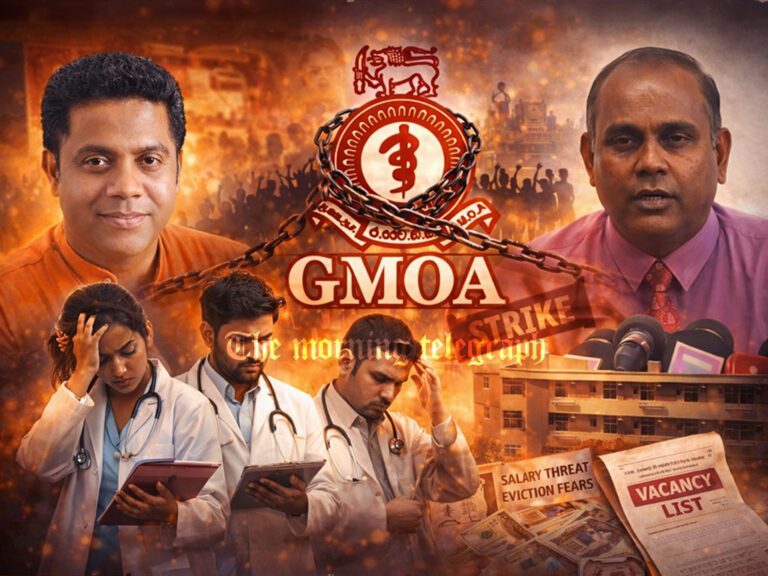
The GMOA has issued a dire warning that Sri Lanka’s hospital system is on the verge of collapse due to nationwide drug and equipment shortages. With doctors now hesitant to recommend external medicine purchases due to legal risks, surgeries and patient care services are grinding to a halt. The Health Ministry is being blamed for systemic failure and lack of protection for frontline staff.
The Government Medical Officers’ Association (GMOA) has released a critical statement highlighting the growing threat to Sri Lanka’s healthcare system due to the ongoing shortage of medicines and equipment, and the legal jeopardy faced by doctors attempting to maintain patient care.
In the statement, the GMOA emphasized that doctors and other medical staff continue to serve the public with utmost dedication. However, their ability to provide optimal patient care depends significantly on the availability of essential medicines and medical equipment. When this support system fails, it becomes extremely difficult to uphold the standard of treatment.
The association pointed out that hospital services across the country are already being negatively impacted by shortages. Although the uninterrupted supply of quality medicines is a fundamental responsibility of the government and the Ministry of Health, recurring failures in administrative processes, both past and present have disrupted this crucial obligation.
While the GMOA has persistently urged authorities to resolve the medication crisis and ensure regular supply, their calls have not received due priority. This problem has extended beyond pharmaceuticals, encompassing surgical instruments, diagnostic tools, and essential laboratory and radiology devices.
In the absence of sufficient supplies, doctors have historically resorted to alternative methods of procuring necessary items often at personal risk to ensure uninterrupted care. These decisions are guided by a sense of duty to their patients, despite the legal gray areas involved.
However, a shift is now occurring. Media reports and investigations into these alternative procurement efforts have created an atmosphere of fear among medical professionals. Specialists and general practitioners alike are increasingly reluctant to recommend external purchases, as they lack legal protections.
This reluctance, the GMOA warns, could result in significant disruptions to vital hospital services, including surgeries and other treatments. The Health Ministry bears full responsibility for creating and implementing proper legal guidelines to allow doctors to operate safely under these challenging circumstances.
Despite the growing urgency, the Ministry has failed to establish such legal safeguards. The result is a healthcare workforce caught between professional obligation and legal vulnerability, leading to service paralysis in many institutions.
In response to the crisis, the GMOA Executive Council has formed a three-member committee comprising senior specialists to coordinate with all relevant parties and draft a comprehensive proposal to address the issue. Preliminary discussions have been conducted, and a base document has been circulated among the wider membership for feedback.
A key stakeholder meeting is scheduled to take place at the GMOA head office on Monday, July 21, 2025, where the proposal will be refined. The finalized version will be presented at the GMOA Central Committee meeting at the end of the month for ratification.
The GMOA reasserts that safeguarding free healthcare should be the unwavering policy of any government. The continuous supply of medicines is non-negotiable, and the safety of doctors who go above and beyond to maintain healthcare services must be legally assured.
As the crisis deepens, the GMOA’s message is clear: if the government fails to act swiftly, Sri Lanka’s public health system faces imminent collapse, with dire consequences for patients and practitioners alike.