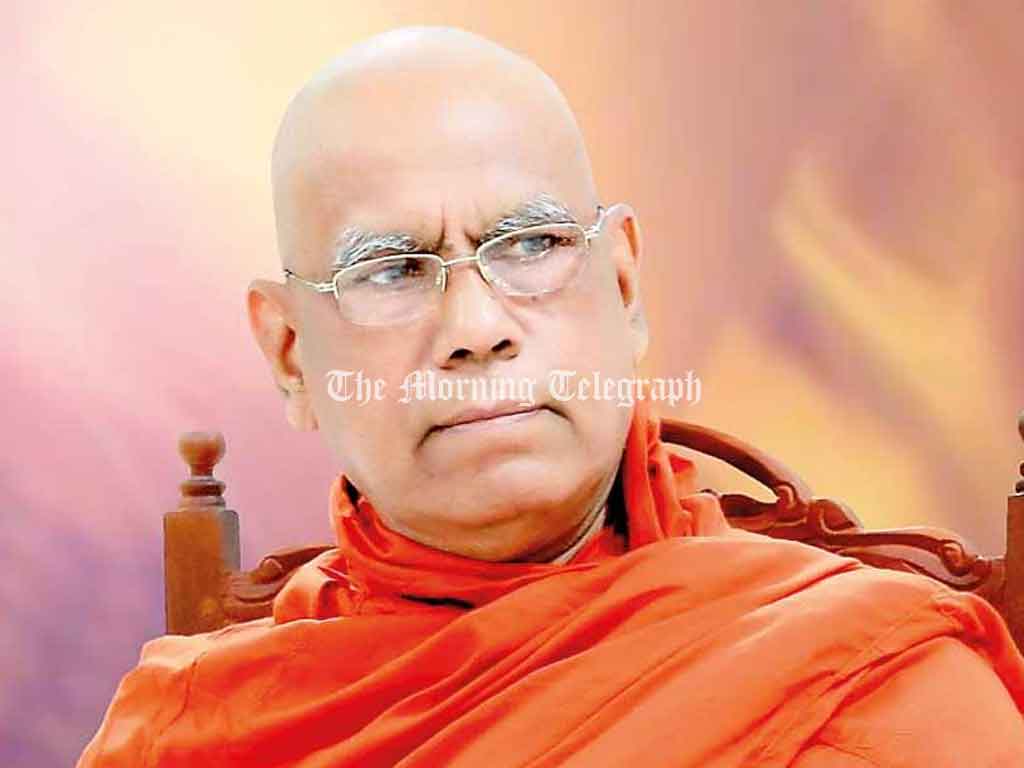
In a fiery press briefing, Chief Sanghanayake of Southern Sri Lanka, Dr. Omalpe Sobitha Thero, warns that Sri Lanka’s controversial education reforms may mirror tactics once used by the LTTE erasing history and cultural identity. He questions the government’s rush to implement changes that sideline subjects like history and aesthetics, saying it will disconnect future generations from their roots.
In a powerful press conference held in Embilipitiya, the Chief Sanghanayake of South Sri Lanka, Dr. Omalpe Sobitha Thero, voiced stern opposition to the government’s new education reforms, raising alarms about the removal and marginalization of critical subjects such as history and aesthetics.
He began by asserting that the current government, along with the Ministry of Education, should focus on addressing the urgent needs of the country before attempting such sweeping reforms. “The government should prioritize what is essential for the people of this country right now,” the Thero emphasized, calling the timing of the reforms “premature and unnecessary.”
A major concern raised by the Thero was that children are being discouraged from selecting subjects like history and aesthetics due to these reforms, effectively distancing the younger generation from their cultural and national roots. “This is a very unfortunate situation,” he lamented. “These subjects are essential for developing national identity, moral values, and cultural pride.”
Drawing a provocative comparison, Sobitha Thero stated, “The LTTE also removed history in its effort to erase cultural memory and control narratives. What we are seeing today is not very different.” His comments suggest that the government’s curriculum restructuring may be unintentionally echoing the tactics of the separatist group.
He further highlighted the international importance of historical education, using the United States as an example. “Even in America, you are not granted citizenship unless you demonstrate knowledge of American history. Why are we moving in the opposite direction?”
The Thero urged greater public discussion and scrutiny over the education reform process, warning that if subjects like history and aesthetics are phased out, the impact on national consciousness could be irreversible.