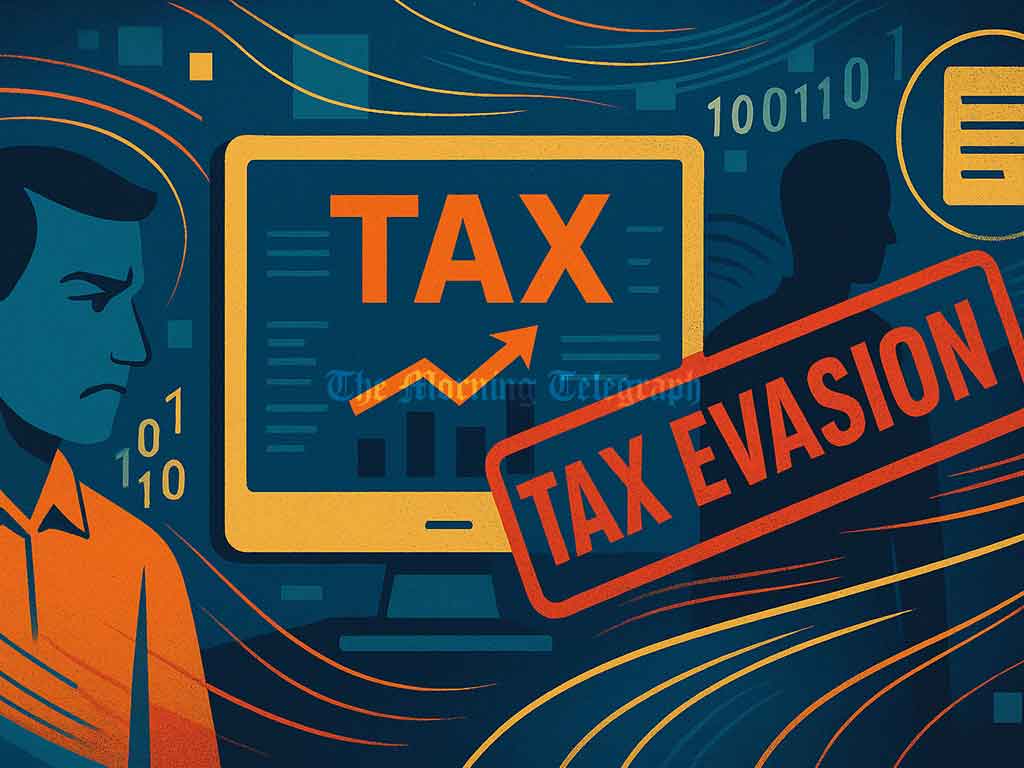
As economic frustration grows, Sri Lanka’s taxpayers ask: where is the justice? From salary earners to struggling business owners, many feel crushed under high taxes while the elite and evaders walk free. With new digital systems to track all transactions in the works, the government says it’s turning a corner, but will it truly catch the tax cheats, or is this just another political illusion?
Will Sri Lanka’s Tax Evaders Face Consequences as Digital Surveillance Tightens?
“They said they’d reduce income tax. Instead, the threshold dropped from Rs. 200,000 to Rs. 150,000. Now they’re collecting ten times more by lowering it by just Rs. 50,000.”
That’s the frustrated voice of Wasantha (name changed), a Colombo-based employee and father of three, echoing a sentiment shared by many Sri Lankans struggling under what they say are unjust and poorly targeted tax burdens.
Despite government assurances of fairness, voices like Wasantha’s paint a starkly different picture. With social media commentary intensifying and rising cost-of-living pressure, tax fatigue is real and growing.
A Punishment for Educated Workers
Wasantha, a university graduate in his late 40s, likened the Advance Personal Income Tax (APIT) to a form of punishment for those who pursued education and secured stable jobs. He says that the dream of owning a car has become impossible due to crushing import taxes.
“In Japan, a car worth Rs. 6.5 million here, the government makes Rs. 10 million off it. And yet politicians who wrecked the economy walk free. The people didn’t create this crisis, they’re just paying the price,” he lamented.
Transparency Concerns and Political Favouritism
Mahesh, a 30-something accountant, voiced similar concerns. While he agrees that taxation is necessary to fund public services, he questioned the fairness and transparency of the system.
“We found out only recently that MPs are taxed differently on their allowances. It’s not fair that we pay full taxes while lawmakers get loopholes,” he said.
Mahesh pointed out the lack of return on their taxes citing poor services in education and healthcare as a primary concern. He also noted that while employees are taxed on gross salary, businesses are taxed on profits and can manipulate expenses to lower payments.
Controversy Over Welfare Spending
A growing segment of the public is also criticizing government welfare programs like the ‘Aswasuma’ relief, which provides monthly payments to nearly 1.5 million families. Critics argue that taxpayer money is being used inefficiently to support individuals without requiring productivity or contribution in return.
Mahesh believes this creates long-term dependency and is often politically motivated. “If we’re spending money, let’s invest it in industries where those people can work and earn, rather than just handing out money,” he added.
Government Response: Tax Relief Will Come… Eventually
Attempts to reach the Deputy Minister of Labor and Economic Development were unsuccessful. However, National People’s Power MP Kaushalya Ariyaratne acknowledged public frustrations but said that repealing taxes was not possible under current economic conditions.
“When we took over, we inherited a broken system. We had to start from scratch. We are focusing on reducing indirect taxes and increasing direct ones,” she explained.
She emphasized the government’s efforts to develop a fully digitized tax tracking system to address tax evasion and bring all transactions into the legal net.
Digital Crackdown on Tax Evasion Underway
The MP admitted that current systems allow some businesses to evade tax using legal grey areas but said that digital reform was a priority.
“We’re building a system that records all transactions something that hasn’t existed before. That way, no one can hide anymore,” she stated.
Although she admitted that the process would take time, she insisted that new legislation and technology would help bring accountability and transparency to Sri Lanka’s tax system.
Future Promises of Relief
The MP also assured the public that the current Rs. 150,000 tax threshold could be raised in the future based on economic recovery.
“We know people are struggling. This isn’t forever. As our income improves, we will provide relief,” she said.
Still, many Sri Lankans remain skeptical. With memories of past political betrayals and little to show for their contributions, the public continues to demand accountability, not just from fellow taxpayers, but from the politicians who shaped the crisis they now must help solve.