China has broken ground on the world’s most powerful dam near the Indian border, triggering fears of ecological disaster, seismic instability, and geopolitical tension. The megadam could generate more electricity than the UK uses annually, but at what cost?
China’s £120 Billion Tibetan Megadam Raises Alarms Over Power, Politics, and Peril
China has launched construction on what is expected to become the world’s largest hydropower project in the Tibetan Himalayas—a controversial £120 billion Nyingchi megadam that has already ignited regional anxiety. According to The Times UK, this colossal structure is set to dwarf China’s own Three Gorges Dam and generate more electricity than Britain consumes in an entire year.
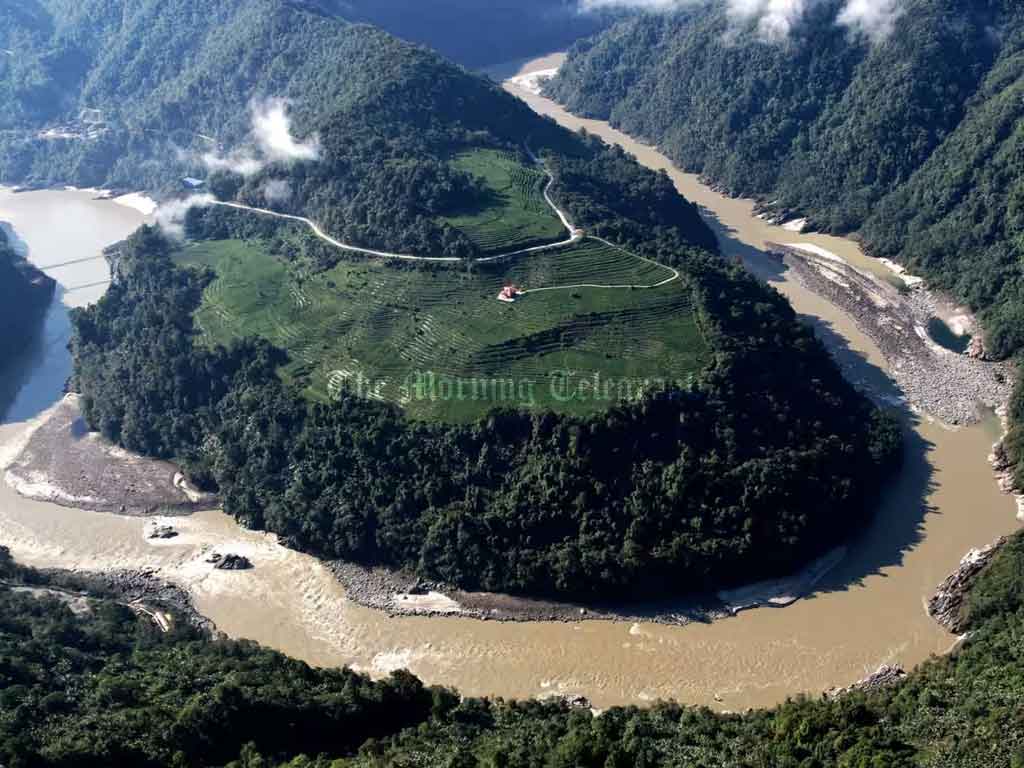
The dam, situated on the Yarlung Tsangpo River just a few miles from the Indian border, will consist of five cascading hydroelectric stations and is projected to churn out 300 billion kilowatt-hours of electricity annually. Once the river crosses into India, it becomes the Brahmaputra, a lifeline for hundreds of millions in India and Bangladesh. Critics warn the megadam could give China unchecked control over water flows during periods of heightened geopolitical tension.
Chinese Premier Li Qiang officiated the groundbreaking ceremony in Nyingchi on Friday, calling it “the project of the century.” His remarks underscored the project’s immense political, strategic, and economic significance to Beijing’s long-term energy and infrastructure ambitions.
China, though still the world’s top coal-fired power producer, is under global pressure to curb emissions. Hydropower, especially of this scale, is viewed as a cornerstone of the nation’s green transition. First outlined in the Communist Party’s 2020 five-year plan, the Nyingchi dam has now gained formal approval after years of bureaucratic planning.
“This project is intended to accelerate the country’s efforts to create a new development pattern and pursue high-quality development,” read a government statement issued after the launch.
Yet not everyone is celebrating. Environmental groups and regional leaders are voicing alarm over the ecological fragility of the dam’s location. The site is prone to earthquakes and hosts a melting glacial system already stressed by climate change. A 7.1 magnitude quake struck the region earlier this year, killing at least 126 people.
“The project poses an existential threat,” warned Pema Khandu, Chief Minister of India’s Arunachal Pradesh state, describing the dam as a “ticking water bomb.” He cautioned that disrupted river flow could bring catastrophic consequences to downstream communities and tribal populations.
India’s central government, led by Prime Minister Narendra Modi, has responded with cautious restraint, mindful of fragile diplomatic ties with China following deadly border skirmishes in 2020 and 2021. However, reports suggest New Delhi is considering its own dam initiatives on the Brahmaputra to counterbalance China’s growing hydrological dominance.
Scientists are particularly concerned about the dam’s positioning in one of the world’s deepest canyons, where the river plunges nearly 2,000 meters offering massive energy potential, but amplifying seismic risks. Even some Chinese scientists have voiced unease about potential ecological collapse and the possibility of catastrophic failure during a quake.
Despite these dangers, enthusiasm for the project remains high within China. Li Qiang’s announcement sent construction and energy company shares surging on the Shanghai stock exchange, signaling strong investor confidence in the state’s renewed push for mega-infrastructure.
The Nyingchi dam may mark China’s return to audacious development. But as regional tensions rise and ecological fragility deepens, the world is watching with bated breath. For millions downstream and environmentalists across Asia, the stakes are higher than ever. As The Times UK notes, the critical question remains: will this “project of the century” deliver power or peril?