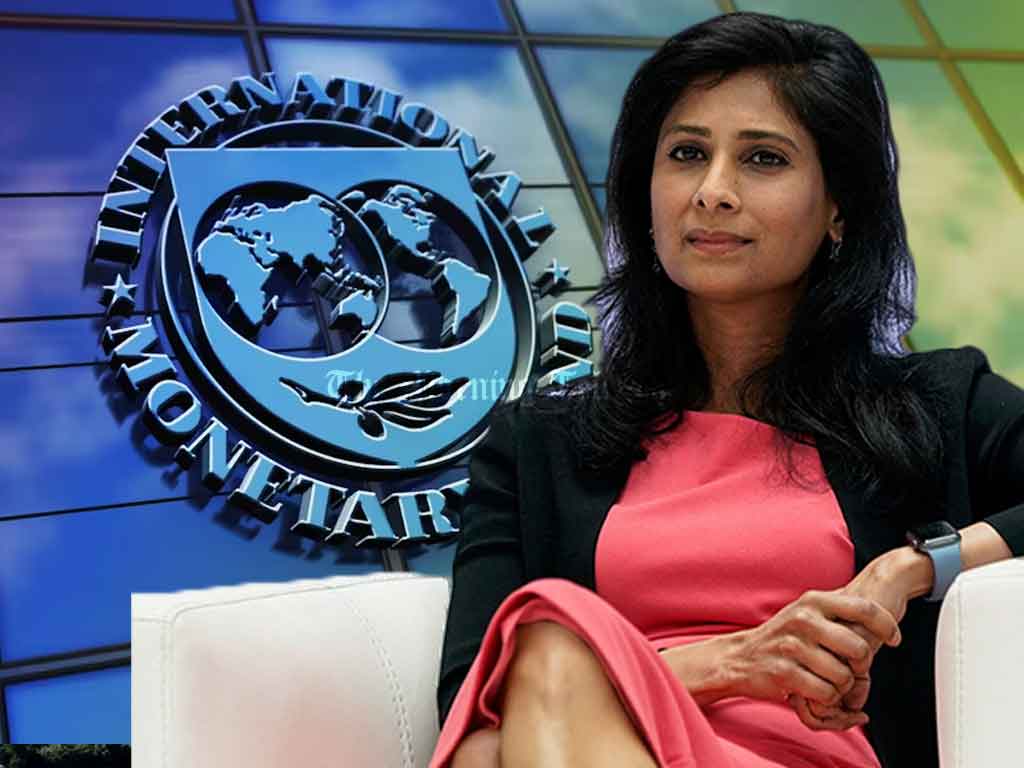
IMF’s top woman economist Gita Gopinath steps down to return to Harvard University, ending a transformative era in global policy. Her legacy includes COVID-19 response leadership, capital flow strategy, and economic resilience. Now, she’s shaping the next generation from the classroom.
Gita Gopinath Quits IMF Power Post, Heads Back to Harvard in Historic Return
Gita Gopinath, the International Monetary Fund’s (IMF) First Deputy Managing Director and one of the most influential economists in the world, will step down this fall and return to academia at Harvard University. This move concludes a high-impact chapter in global economic leadership.
Gopinath will assume her previous position at Harvard as the inaugural Gregory and Ania Coffey Professor of Economics following a long-term public service leave. Her return marks a meaningful academic homecoming she first joined Harvard as a visiting professor in 2005 and gained global recognition during her tenure.
“I now return to my roots in academia,” Gopinath stated. “I look forward to continuing to push the research frontier in international finance and macroeconomics to address global challenges, and to training the next generation of economists.”
Gopinath made history in 2018 by becoming the IMF’s first female Chief Economist. Her leadership came at a time of unprecedented global volatility. She played a central role in guiding the IMF through the COVID-19 crisis, co-developing a global vaccine access initiative and shaping the Integrated Policy Framework, which became a core economic tool for countries managing capital flows.
In 2022, she was elevated to First Deputy Managing Director. In this powerful role, she oversaw global economic surveillance, policy coordination, and programs for key nations including Argentina and Ukraine. Her leadership placed her at the epicenter of major global economic events from pandemic shocks and inflation surges to geopolitical conflicts and disrupted trade.
“Gita’s analytical rigor was paired with practical policy advice during a uniquely challenging era,” said IMF Managing Director Kristalina Georgieva. “Her departure is a loss for the IMF, but a huge gain for Harvard and its students.”
Former IMF head and current European Central Bank President Christine Lagarde also praised Gopinath’s legacy. “She’s a class-act economist gracious, kind, elegant, and incredibly smart. She proved a great leader in a demanding institution.”
Harvard faculty welcomed her return with enthusiasm. David M. Cutler, dean of social science and Otto Eckstein Professor of Applied Economics, noted, “Gita’s research has fundamentally shaped our understanding of exchange rates, capital flows, and the global economic framework. Her return solidifies Harvard’s standing in international macroeconomics.”
Gopinath will begin teaching new economics courses in the spring under her named professorship.
Founded in 1945, the IMF serves 191 nations by fostering global financial stability and responding to economic crises. Gopinath’s exit marks the close of a pivotal era for the institution, which benefited immensely from her guidance during global economic turbulence.
“It has been the opportunity of a lifetime to work with brilliant colleagues at the IMF and serve the global community,” Gopinath reflected.
As she transitions back to academia, Gopinath’s influence on global policy and economic thought continues to grow shaping future leaders and deepening her legacy in the world of finance and economics.