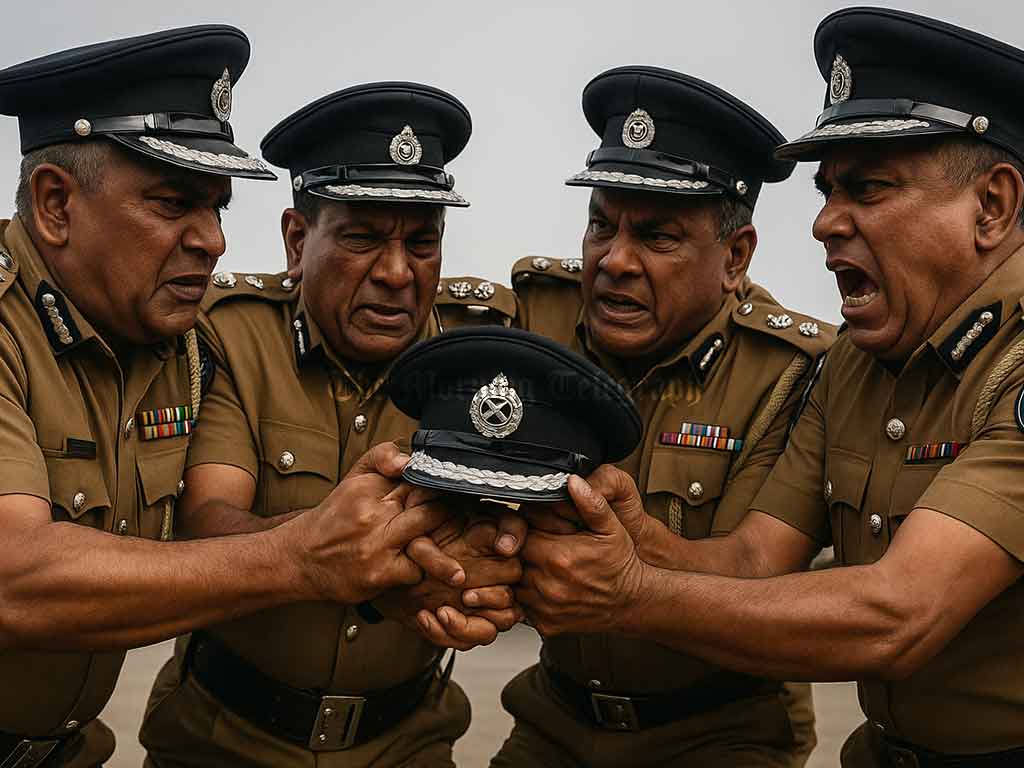
- Note that the image above was created by AI.
With Deshabandu Tennakoon facing historic impeachment over abuse of power, Sri Lanka’s race for the next IGP is officially on. President Anura Kumara Dissanayake must now nominate a new police chief amid a violent crime surge and intense scrutiny from the Constitutional Council.
Sri Lanka’s IGP Shakeup Begins: President to Nominate Successor After Deshabandu Found Guilty
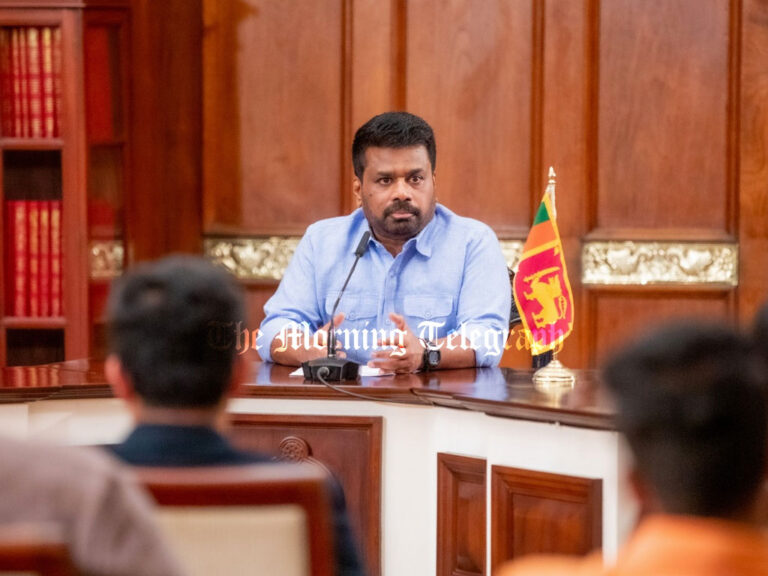
The race to appoint Sri Lanka’s next Inspector General of Police (IGP) is officially underway, following a damning verdict against current IGP Deshabandu Tennakoon. A three-member Committee of Inquiry led by Supreme Court Justice Preethi Padman Surasena found Tennakoon guilty of gross abuse of power, paving the way for his historic impeachment. Once removed, President Anura Kumara Dissanayake is expected to nominate one or more candidates to the Constitutional Council (CC) to fill the powerful post.
The new IGP will be stepping into office during one of Sri Lanka’s most dangerous periods in recent years. The country is witnessing a spike in violent crime and underworld activity, with over 60 shooting incidents and more than 45 deaths reported in just the first half of 2025. President Dissanayake has pledged to crack down on organized crime, although he admitted that restoring law and order will take time.
The three-member panel that found Tennakoon guilty submitted its final report to the Speaker of Parliament. The most damning charge held him accountable for the 2022 Weligama W-15 Hotel shooting, where a police officer was killed. Tennakoon, who served as the 36th IGP, is now set to become the first police chief in Sri Lankan history to be impeached by Parliament.
According to a senior police official, the President can initiate the selection process for the next IGP once Parliament formally removes Tennakoon. Currently, Senior DIG Priyantha Weerasuriya is serving as Acting IGP since September 27, 2024. He began his police career as a constable in 1988 and climbed the ranks, although he is second in seniority to Senior DIG Lalith Pathinayake.
Pathinayake is now serving as Acting Senior DIG (Administration) following the recent removal of Senior DIG Nilantha Jayawardena, who was dismissed by the National Police Commission over his role in the 2019 Easter Sunday attacks.
Under the 21st Amendment to the Constitution, the President can recommend one or more officers for IGP to the ten-member Constitutional Council. The appointment is finalized only if at least five members of the CC approve.
The Council has played a role in three IGP appointments in recent history. In 2003, under then Speaker Joseph Michael Perera, Indra de Silva was appointed. In 2016, the Council chaired by Speaker Karu Jayasuriya selected Pujith Jayasundara as the 34th IGP. Most recently, in 2024, Deshabandu Tennakoon was appointed under the Council led by Speaker Mahinda Yapa Abeywardena—a controversial decision now being legally challenged.
Former Senior DIG Priyantha Jayakody noted that seniority hasn’t always been the deciding factor. In 2003, Indra de Silva was chosen over his senior Chandra Fernando to avoid tensions with then-President Chandrika Bandaranaike Kumaratunga. However, Fernando was later appointed as the 29th IGP after de Silva’s retirement.
Despite Pathinayake’s seniority, Weerasuriya’s tenure as Acting IGP could make him the front-runner. Jayakody believes Weerasuriya may be appointed even if only for a short term, followed by Pathinayake before his retirement.
Ultimately, it is the President’s nomination that sets the wheels in motion. While former Presidents Kumaratunga and Sirisena submitted multiple nominees, former President Ranil Wickremesinghe broke with tradition by sending only one name Deshabandu Tennakoon in 2024, a move criticized for undermining due process.
The current Constitutional Council comprises the Speaker (Chair), President’s representative, Prime Minister, a Prime Minister’s nominee, the Opposition Leader, an Opposition Leader’s nominee, a minority party representative, and three civil society members. In case of a tie, the Speaker exercises a casting vote.
The Council recently demonstrated its independence by rejecting the President’s recommendation for Auditor General. The proposal was opposed by the Opposition Leader, his nominee, the minority party representative, and all three civil society members. This signals the Council may exercise similar scrutiny over the IGP nomination especially given the high-profile nature of the post and public demands for reform in law enforcement.