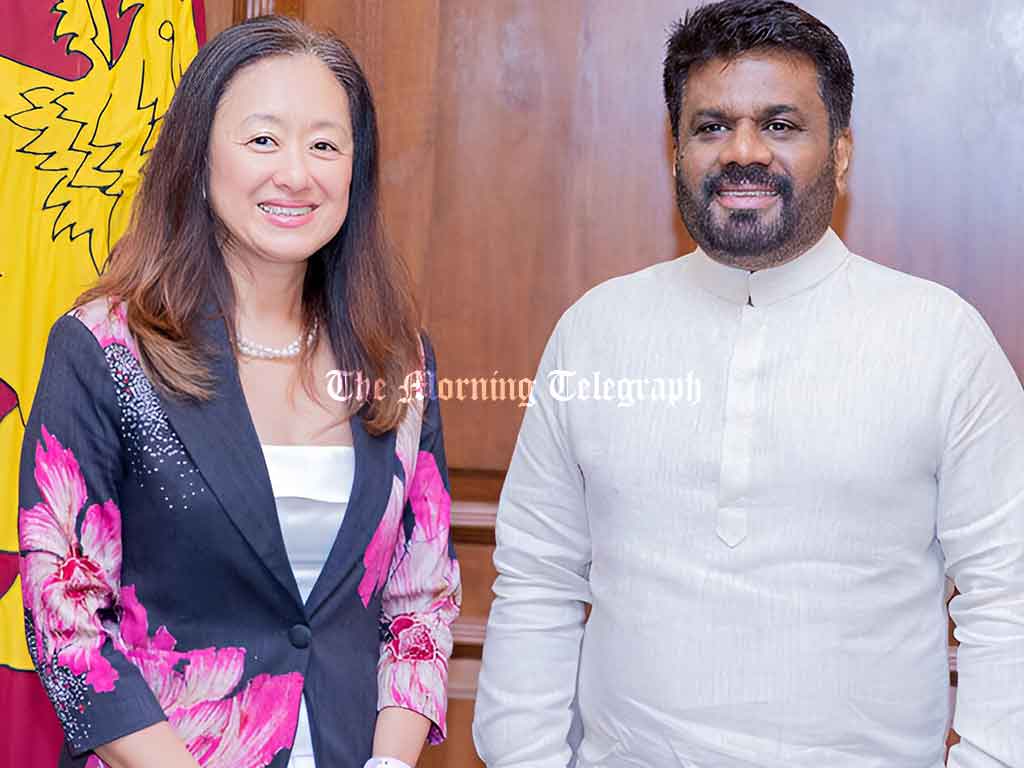
As Sri Lanka grapples with crushing U.S. tariffs, questions mount over President Anura’s reliance on U.S. Ambassador Julie Chung and missed chances for White House diplomacy. Is the nation paying the price for political partnerships?
A note ending former U.S. President Donald Trump’s letter to Sri Lankan President Anura Kumara Dissanayake delivered a warning loud and clear:
“These tariffs may be modified upward or downward depending on our relationship with your country.”
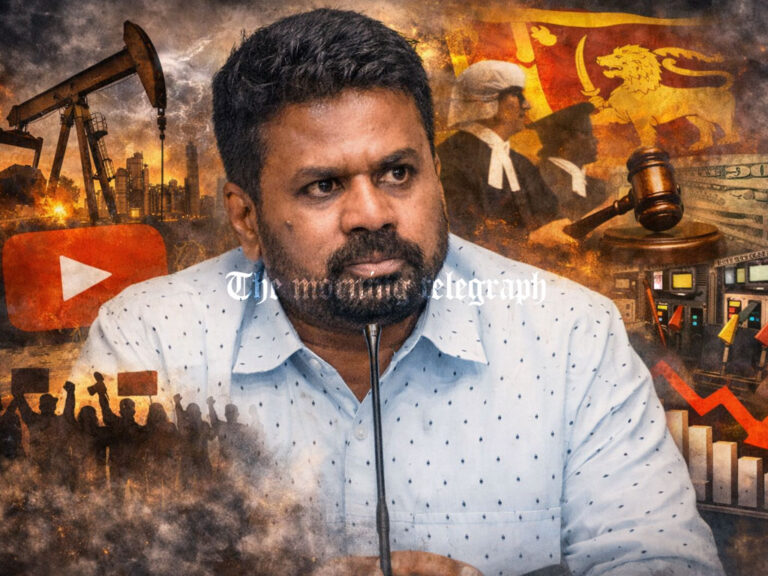
That single line captured the core of Sri Lanka’s growing crisis with the United States a tariff war that could devastate its export economy. Sources suggest President Anura placed considerable trust in U.S. Ambassador Julie Chung in navigating this complex relationship. But critics now ask: did he trust too much and communicate too little with the White House?
Trump’s administration imposed a hefty 30% tariff on Sri Lanka, pressuring the island to reduce its trade with China. Reports indicate this move came with warnings that failure to comply with Washington’s interests would carry consequences. In response, China’s Foreign Minister reportedly met with Sri Lanka’s Foreign Minister Vijitha Herath in Malaysia to discuss counterbalancing the U.S. pressure by strengthening Sino-Lankan trade ties.
Sri Lanka was not alone. Trump imposed identical 30% tariffs on Algeria, Iraq, and Libya. These countries, along with Sri Lanka, share a politically volatile trait: all saw their former leaders overthrown through coups or mass uprisings. The U.S. played a direct role in deposing Saddam Hussein and Muammar Gaddafi, and some accuse Washington of indirectly supporting the fall of Gotabaya Rajapaksa and his family’s grip on Sri Lankan politics.
In Iraq and Libya, pro-American regimes were installed after the removal of anti-U.S. governments. In Sri Lanka, Ranil Wickremesinghe, Gotabaya’s successor and current President Anura are seen as closely aligned with U.S. interests.
During Sri Lanka’s most recent local government election, President Anura declared that the U.S. and Sri Lanka would issue a joint statement on resolving the tariff issue. His remarks suggested optimism that the U.S. would offer trade concessions and bolster the legitimacy of his government on the world stage.
However, Anura’s sole direct diplomatic channel to the U.S. was through Ambassador Julie Chung. Chung played a pivotal role in establishing Anura’s relations with Washington. She also publicly supported the ‘aragalaya’ Sri Lanka’s 2022 people’s uprising that led to the Rajapaksa family’s political downfall. Many of Gotabaya Rajapaksa’s supporters still blame her for influencing the events that toppled his presidency.
During the peak of the protests, Julie and Anura reportedly grew politically close. Critics argue that Anura’s reliance on Chung may have blinded him to the need for direct White House outreach, a move that could have secured better outcomes in the tariff negotiations.
Prime Minister Harini Amarasuriya also played a significant role in this U.S.-Sri Lanka partnership effort. However, the failure to bypass intermediary diplomacy and initiate high-level U.S. communication—especially during a crisis has left many wondering if the tariff punishment could have been avoided. Historically, Sri Lankan leaders maintained back-channel access to U.S. administrations. One notable example is the late businessman Harry Jayawardene, who had strong White House ties.
Today, as Sri Lanka stares down a harsh 30% tariff and a damaged trade balance, questions persist about missed diplomatic opportunities, misplaced trust, and the high cost of leaning too hard on friendship instead of formal foreign policy channels.