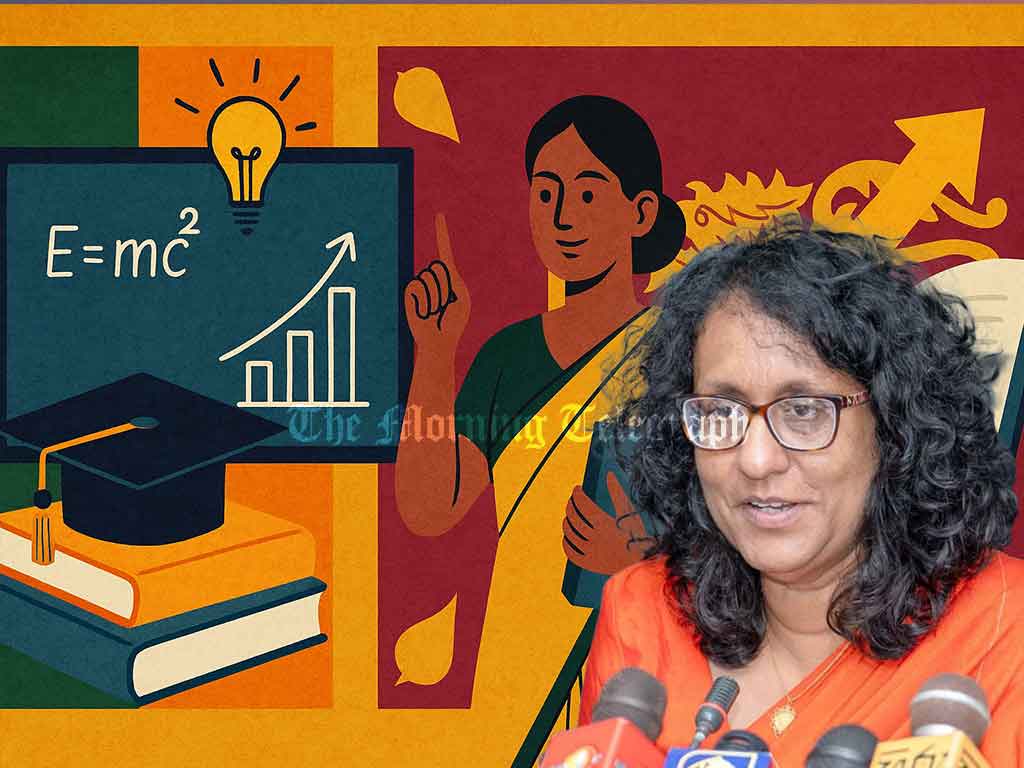
Prime Minister Harini Amarasuriya clarified that Sri Lanka’s current wave of education reforms was not pioneered by the Compass-led government but is a continuation of earlier policy discussions. Acknowledging the opposition’s claims, she stressed that no single party owns educational concepts or reform initiatives. Amid worsening teacher distribution problems and over 80,000 students absent from school in 2024, the government is calling for broad participation to shape a new concept paper for reform. The move underscores the urgent need for collective solutions to revamp Sri Lanka’s struggling education system.
Prime Minister Harini Amarasuriya has admitted that the education reforms currently under debate were not launched under the National People’s Power government.
She emphasized that these reforms have been part of the national conversation for many years, originating under previous governments.
While addressing the ongoing discussions about education reform, she made her stance clear.
“We intend to continue the national dialogue on education reforms. There are many claims from the opposition regarding who initiated this process.
We acknowledge that these reforms were not initiated by the National People’s Power. This has been an ongoing discussion for several years.
More importantly, concepts tied to education are not the property of any single political party. Education is based on global philosophies. No one holds personal ownership over knowledge or education policy directions.
The education system is facing serious challenges. While we talk about teacher surplus, we’re also grappling with a teacher shortage.
According to official school attendance data, 80,591 students failed to attend school regularly in 2024. This is one of the core issues we are trying to address with the new education reforms.
The creation of the concept paper for these reforms should be an open conversation. We invite all parties, regardless of political alignment, to share their proposals and input.”