In a nation scarred by bloodshed and betrayal, Sri Lanka’s spy community is being vilified while those truly responsible hide behind robes and rhetoric. As the Catholic Church’s political entanglements grow darker and bolder, what once was faith now feels like theatre. This is not about salvation, it’s about power. And the cost? Truth buried. Justice denied.
These unseen protectors bleed, age, and live with the crushing burden of duty, yet they’re remembered only when they fail. When disaster strikes, there is no legal shield for them, no institutional compassion. In a country haunted by decades of bloodshed, ignorance of how intelligence truly operates isn’t just troubling, it’s perilous.
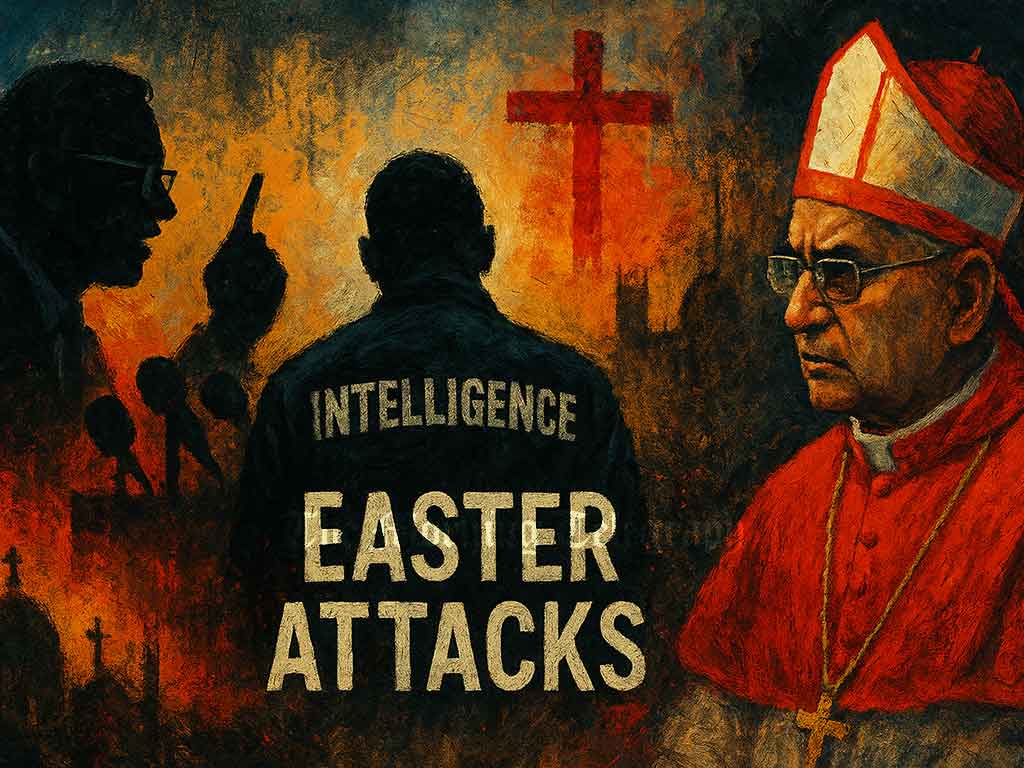
Jude Krishantha, a self-styled media voice for the Catholic Church, publicly called for the hanging of Senior DIG Nilantha Jayawardena. Had such inflammatory rhetoric come from a Buddhist monk, outrage would have engulfed the nation. But Jude’s words were met with silence. A weak disclaimer followed from Fr. Cyril Gamini, yet Jude remains untouched by consequence. This is not driven by spiritual conviction, it is pure political theatre.
Recently, a group of concerned Catholic citizens broke their silence, accusing the Church of distorting faith in the aftermath of the Easter carnage. They claim Muslim organizations donated an enormous sum in solidarity—possibly even a billion rupees. Yet, no audit followed. No investigation. Only a repeated mantra: “Let not the left hand know what the right hand gives.” But does this biblical wisdom mask something more troubling?
Cardinal Malcolm Ranjith has gone further, claiming the attacks were orchestrated by Western powers to revive a southern political force. With this, he abandoned his pastoral role to become a political figure. Since then, governments have come and gone, but his voice remains a shadow over each, using the pulpit for ultimatums, not salvation. Justice, in his narrative, is no longer blind, it favors only the voices that echo his.
This campaign of blame serves a darker question: who truly benefits from it? The State, needing a legal framework to de-radicalize Zahran’s followers, was blocked by the Cardinal’s faction. Was it about timing? Or donations? Meanwhile, the Church avoided deeper reflection, substituting repentance with PR. Films were made, donations collected, careers born, not from tragedy, but from a branded opportunity.
But the true crisis wasn’t political, it was spiritual. The Easter bombings shattered faith itself. The Cardinal’s absence from churches was less damaging than the moral vacuum left in its wake. Into that void stepped blame, and the intelligence sector became its sacrificial lamb. Accountability must be whole, not cherry-picked. Instead, we’ve seen selective justice, with one official promoted and another crushed by humiliation.
Soon after the bombs, leaked documents confirmed that Nilantha Jayawardena had relayed warnings from India’s intelligence bureau. Over 350 alerts had been issued. But the truth was buried. Rather than confront failure across institutions, it became easier to blame the messenger and glorify the narrative.
Sri Lanka’s national trauma has now devolved into a tragicomedy, where pain is politicized, and truth lies entombed beneath sermons and soundbites. What remains is not healing, but a hollow theater of sanctimony, where power, not faith, delivers the final act.