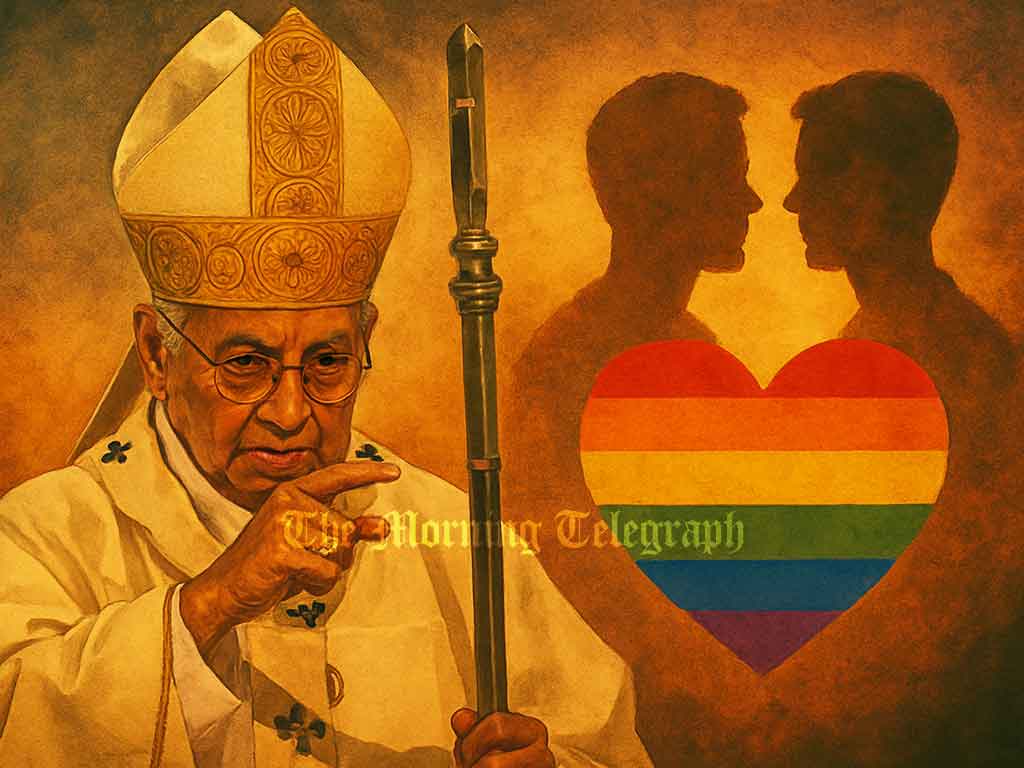
Cardinal Malcolm Ranjith has reignited controversy by publicly rejecting same-sex marriage during a sermon, questioning how two men or two women could start a family or raise children. Citing the erosion of traditional values, the Archbishop claimed modern relationships lack stability, with emotional impulsiveness replacing meaningful commitment. He criticized foreign influences and advocacy groups for promoting LGBTQ+ rights in Sri Lanka, framing them as a threat to societal norms and the sanctity of marriage.
Archbishop Malcolm Cardinal Ranjith has expressed strong opposition to same-sex marriage, raising questions about the legitimacy of such unions and how they could form the foundation of a family. Delivering his remarks during a church service, the Cardinal warned that modern understandings of marriage are becoming distorted under the influence of foreign trends and misguided emotional choices.
He said that today’s youth often misunderstand the true meaning of marriage, becoming slaves to emotion when choosing a spouse. This emotional impulsiveness, he argued, has led many to see marriage as temporary rather than a lifelong commitment.
The Archbishop then sharply criticized the rising acceptance of same-sex unions, asking, “How can two men get married and raise a family? How can they have children?” He claimed that external organizations are attempting to introduce and normalize same-sex marriage in Sri Lanka under the pretext of human rights.
Calling such views corrupt and socially harmful, he said that what is being portrayed as a human right is, in reality, an attack on natural law and traditional values.
The Cardinal contrasted this with traditional arranged marriages of the past, where couples met under the guidance of their parents. According to him, these marriages, grounded in responsibility and family approval, had a higher success rate than those based purely on friendship or emotional ties.
His comments have stirred debate, highlighting the ongoing clash between traditional religious views and evolving global norms on LGBTQ+ rights and marriage equality.