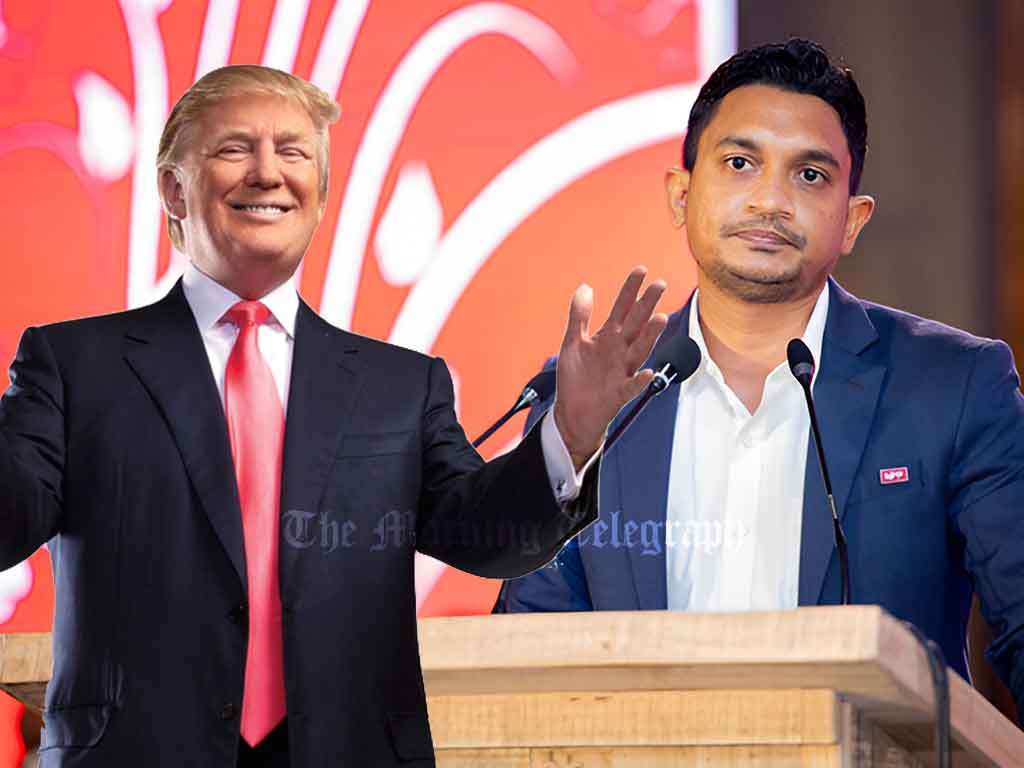
Deputy Minister Chaturanga Abeysinghe has acknowledged that Sri Lanka lacks the bargaining power to significantly influence U.S. tariff decisions, just days before new trade duties are set to hit on August 1. With no major exports or deals to offer, Colombo’s ability to negotiate remains limited. Despite ongoing talks, no formal agreements or joint statements with Washington have emerged, raising concerns for local industries bracing for impact.
Deputy Minister of Industries Chaturanga Abeysinghe says Sri Lanka has little ability to negotiate effectively with the United States over the new tariffs scheduled to take effect on August 1.
Speaking to the media following a recent program, Abeysinghe pointed out that Sri Lanka lacks sufficient leverage to influence the decisions of more powerful countries. “We simply don’t have much to offer in return,” he stated.
Although discussions are ongoing to ease the current tariff burden, Abeysinghe’s remarks highlight the limitations of Sri Lanka’s negotiating position. The upcoming U.S. trade measures could add pressure on key export sectors already struggling to compete globally.
As of now, there is no information about a joint trade statement or any formal agreement between Sri Lanka and the U.S. to address the issue.
The absence of meaningful progress has raised concerns among local industry leaders, many of whom warn that higher U.S. duties could further weaken Sri Lanka’s already fragile export economy.