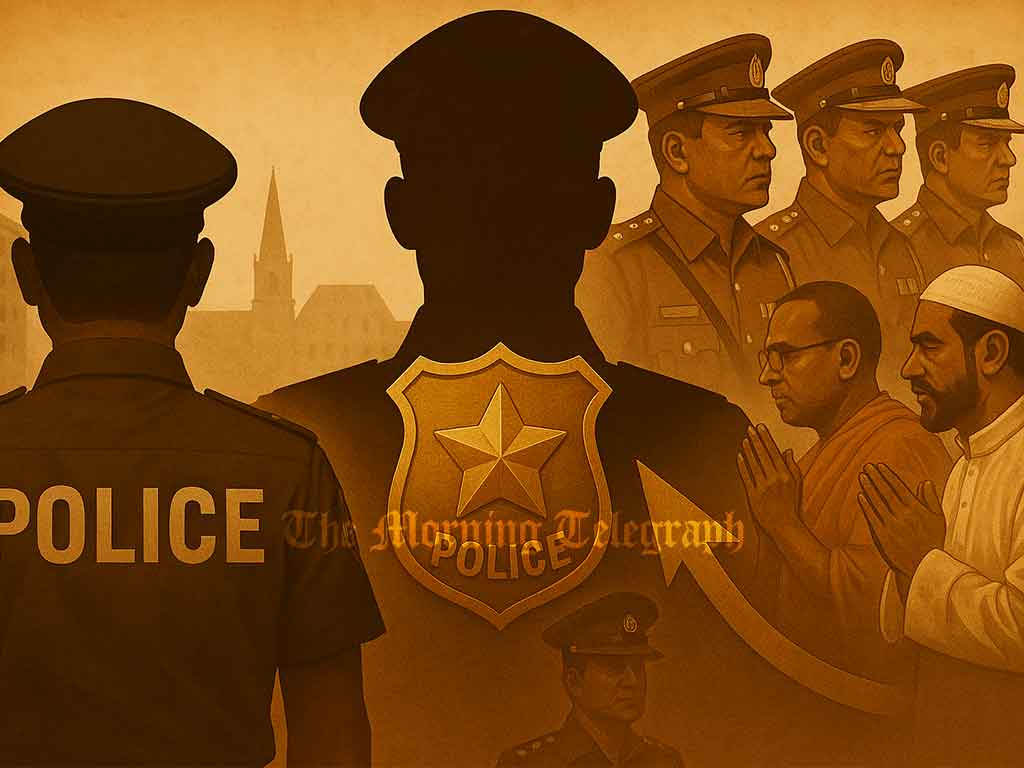
The race to replace IGP Deshabandu Tennakoon is intensifying as six senior DIGs compete for the coveted position, with religious leaders and political allies backing their preferred candidates. With the President soon forced to act, behind-the-scenes lobbying is at full throttle.
A fierce contest has erupted within the Sri Lankan Police Department as six senior Deputy Inspector Generals (DIGs) compete for the role of Inspector General of Police (IGP), a position that will be vacated if the no-confidence motion against incumbent IGP Deshabandu Tennakoon passes in Parliament on August 5.
The six contenders vying for the top post include Acting IGP Priyantha Weerasuriya, Lalith Pathinayake, Sanjeewa Dharmaratne, Ranmal Kodithuwakku, Kithsiri Jayalath, and Rajitha Sri Daminda.
According to high-level police sources, the competition has gone beyond merit and seniority. Several candidates are now allegedly engaging in behind-the-scenes efforts, seeking backing from powerful politicians and influential religious leaders to improve their chances. It is believed that some religious figures have personally appealed to the government on behalf of their preferred DIGs.
Among the frontrunners is Acting IGP Priyantha Weerasuriya, who already holds the acting role and is reportedly being backed by some political factions and external stakeholders. However, insiders say the government has not yet finalized a decision and is weighing various considerations, including public trust, internal discipline, and political stability.
If the motion against Deshabandu Tennakoon is passed on August 5, the President will be constitutionally obligated to recommend a replacement to the Constitutional Council without delay. The process has drawn unusual attention due to the involvement of non-state actors and the intense lobbying campaign currently underway.
As the deadline looms, the decision over who will lead Sri Lanka’s law enforcement may ultimately rest on more than just credentials—raising critical questions about the politicization of the police service and the role of religious institutions in state appointments.