Sri Lanka is home to a remarkably educated population. Many citizens boast impressive qualifications. Yet, tragically, the majority seem to lack essential virtues good character and even a basic level of commonsense.
It’s been some time since the people elected a new President and government, riding high on hopes of a brighter, corruption-free, and peaceful future. Expectations for reform, prosperity, and social progress were sky-high. But as the dust settles, it is not hard to see that these dreams are beginning to crumble.
Hope is thinning out. Each day, more citizens are growing disillusioned. Yet, some still cling to optimism, believing that educational and constitutional reforms may turn things around. Public dialogue continues, but whether these efforts lead to real transformation remains in doubt.
Having observed Sri Lankan politics over the years, I’ve come to believe that we’ve misdiagnosed our national crisis. Our problems do not stem from constitutional flaws, the Executive Presidency, commissions like the Police Commission, or even issues like foreign reserves, inflation, the energy crisis, or national security. The rot runs deeper within us.
We often point fingers at politicians for everything wrong with the country. But the real problem begins with voters. It’s the public that puts these leaders in office. And once elected, those leaders appoint bureaucrats, judges, and officials who carry out their agendas, often without integrity or impartiality.
If there were a global ranking of countries with the lowest levels of commonsense and attitudes among educated people, Sri Lanka would, unfortunately, be in the top ten. I’ve argued this before, and I won’t belabor the point again but the signs are everywhere.
Let’s briefly unpack this. As a society, we are deeply racist and fiercely ethno-nationalist. While racism and nationalism are global phenomena, in Sri Lanka they are especially toxic. Sinhalese and Tamil communities alike are trapped in this self-destructive spiral. This ethno-political mindset has brought us to our knees.
Worse still, we lack the ability to process cause-and-effect relationships. We fail to evaluate political, social, and economic events rationally or scientifically. And so, mistake after mistake, poor decision after poor decision, continues to define us.
Many are highly educated, yes. But education has failed to produce wisdom. Why? Because our education system was built without a real understanding of what universal education should accomplish. Our policymakers misunderstood the mission.
Therefore, we are fooling ourselves if we think constitutional tinkering or policy reform can fix our crises. Until we address the dual problem of attitude erosion and commonsense collapse, nothing will change. Political education is urgently needed to tackle these root causes.
What about the educational reforms now being proposed? They are hollow. Reformists don’t even seem to know what needs reforming. Take history, for example. It’s a powerful tool that, if taught correctly, can foster internationalism and reduce racist thinking. But neither the proponents nor the opponents of making history a compulsory subject understand its true purpose.
Sadly, we may not even have educators or historians capable of producing the kind of curriculum that truly educates. Most of what passes for history in Sri Lanka is just romanticised folklore of tribal pride.
To genuinely reform, we need to reshape public attitudes and build a society with stronger commonsense. Tools like literature, music, art, and critical discourse are essential. But don’t expect the JVP or NPP to lead this. Their past is riddled with violence and racism. They have never apologised for this history or for spreading harmful socio-political myths.
Real change must emerge from civil society from the very small group of broad-minded citizens still left in the country. It won’t come from party politics.
Yet, many still place blind trust in the JVP/NPP government. Their rise gave people hope. But this hope stemmed from desperation and a lack of political literacy. It’s not that people are stupid; they’re simply uninformed about the complexities of governance, economics, and policy.
But anyone with a decent understanding of politics should have recognised that movements like the JVP/NPP populist and superficial were never equipped to tackle decades of structural decay. Their record is already exposing them.
The JVP/NPP have proven adept at lying. They have consistently misled both Sinhalese and Tamils. Their dealings both domestic and international lack transparency. Their governance is devoid of vision, strategy, or credible planning for the nation’s future.
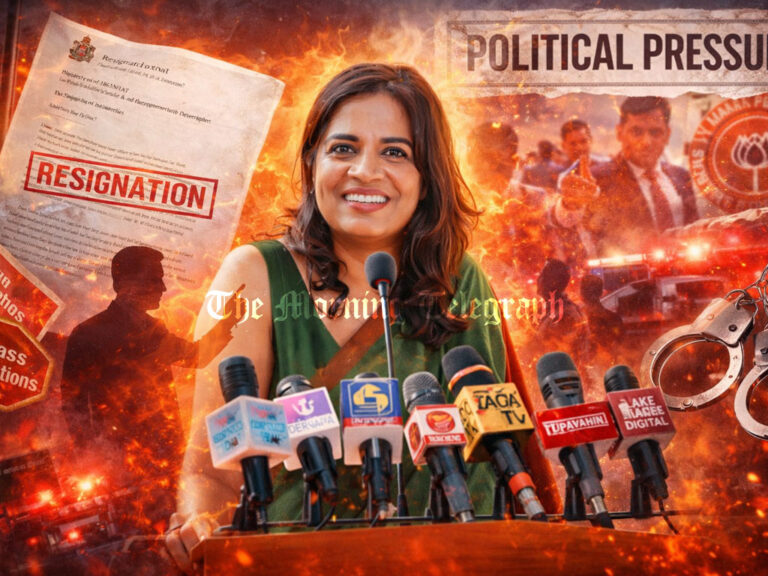
Now, political insiders suggest the current coalition’s days are numbered. Internal tensions are rising. Analysts predict an eventual split. Unlike the collapse under Gotabaya Rajapaksa, this one will be fueled by conflicts with police, armed forces, and public servants. Collapse is not a matter of if, but when.
So, under these conditions, does it make sense to propose solutions? Probably not. There’s little to no reason to expect good governance or reform from this administration. Still, I will not dismiss all hope. Even if the flame is faint, lighting one candle is better than embracing the darkness.