The Catholic Church has called for the resignation of Deputy Minister of Defense Aruna Jayasekara over his alleged links to the Easter Sunday failure. But Jayasekara is standing his ground, saying the government won’t bow to church pressure. The controversy reignites national scrutiny on military involvement and accountability in the Easter attacks.
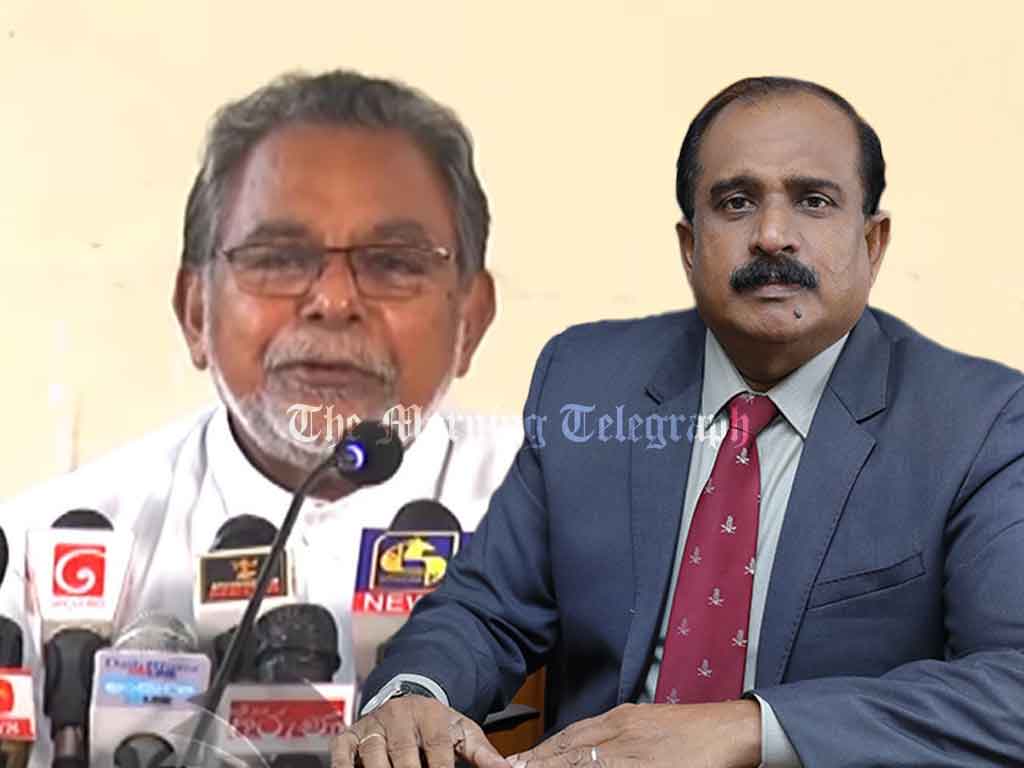
Retired Major General and current Deputy Minister of State Security, Aruna Jayasekara, is facing renewed public pressure to resign following fresh revelations about his role during the 2019 Easter Sunday attacks. The media spokesperson for the Archbishop of Colombo, Reverend Father Cyril Gamini Fernando, has publicly called on Jayasekara to step down from his post and prove his innocence if he has nothing to hide.
In a strongly worded statement during an interview with an online media outlet, Reverend Father Cyril Gamini, speaking on behalf of Archbishop Cardinal Malcolm Ranjith, declared that Jayasekara’s continued presence in government could influence ongoing investigations related to the Easter bombings. He insisted that for the sake of transparency and justice, the former military officer must resign.
The pressure stems from recent disclosures in Parliament, which revealed that Major General Aruna Jayasekara had served as Commander of the Eastern Command during the Easter attacks. His appointment to that post reportedly coincided with an attempt by Mahinda Rajapaksa’s group to seize power. These revelations have prompted alarm, particularly from the opposition.
Samagi Jana Balawegaya MP Nizam Kariyapper added fuel to the fire by accusing senior military officers, including Jayasekara, of failing to prevent the attacks and of allegedly playing a role in destroying crucial evidence. He argued that as the Eastern Commander at the time, Jayasekara must bear responsibility for lapses in security and intelligence coordination.
However, Deputy Minister Jayasekara has rejected the accusations and refused to resign, asserting that he has no intention of bowing to pressure from the Catholic Church. In response to the Archbishop’s call, Jayasekara said the government has no obligation to respond to such demands and that investigations into the Easter bombings are proceeding independently without interference.
“The investigations are being conducted by the proper authorities and are entirely independent,” Jayasekara emphasized. “My position does not and will not influence them. I will not resign simply because a religious institution says so. The government will not act based on such calls.”
Jayasekara’s firm stance has intensified debate about the transparency of the ongoing investigations into one of Sri Lanka’s darkest chapters. The Easter Sunday bombings claimed over 250 lives and wounded hundreds more, leaving deep scars on the nation’s religious and political fabric.
The Catholic Church, which lost many worshippers in the attacks, has been a vocal advocate for justice and accountability, often criticizing what it sees as delays and cover-ups in the investigations. With this latest standoff between a high-ranking government minister and the Church’s leadership, public trust in the investigative process may again come under scrutiny.
While Aruna Jayasekara maintains that he is innocent and uninvolved in any wrongdoing, the call for his resignation marks yet another chapter in the long and troubled path toward justice for Easter Sunday victims. Whether or not he eventually steps down, the controversy surrounding his role ensures the issue remains at the center of national discourse.