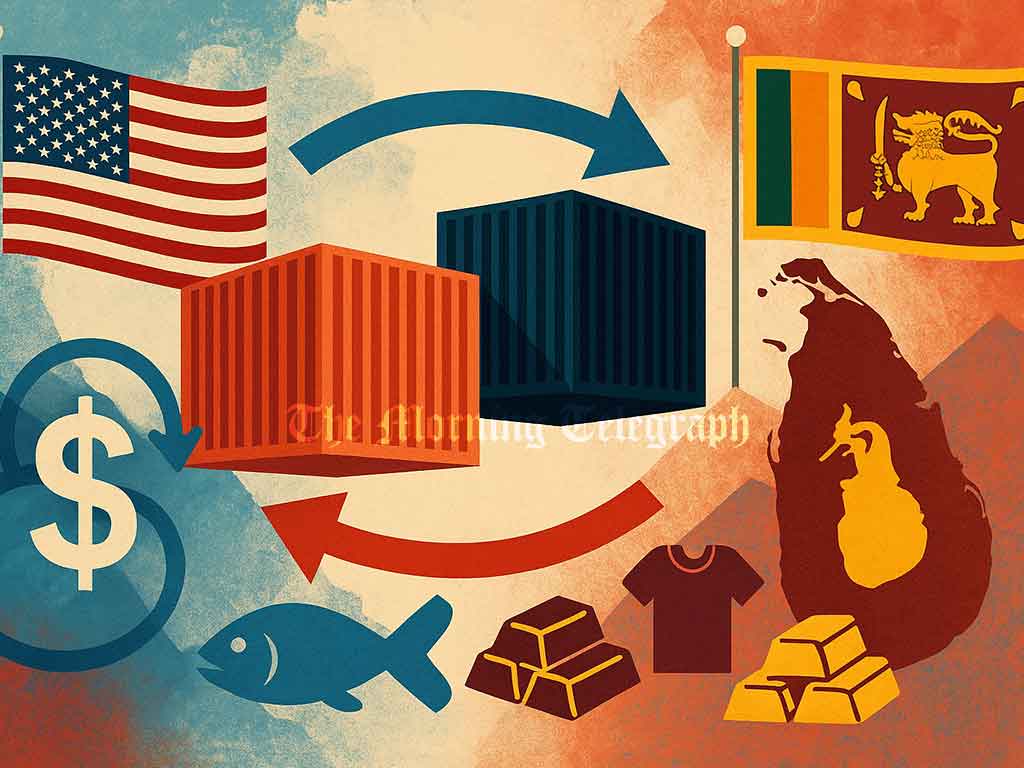
Sri Lanka has granted sweeping trade concessions to the United States, opening its markets to thousands of US products in exchange for modest tariff relief. While the deal reduces reciprocal tariffs on Lankan goods, key MFN charges remain, and experts warn of long-term impacts on local industry, sovereignty, and economic competitiveness.
Sri Lanka has entered into a sweeping tariff agreement with the United States, granting significant concessions on thousands of industrial and agricultural goods in exchange for a reduction in reciprocal tariffs imposed on Sri Lankan exports. While the US has agreed to lower its tariff on Sri Lankan products from 30 percent to 20 percent originally set to come into effect on August 1 critics warn that the price Sri Lanka pays may far outweigh the benefits.
Authoritative sources confirmed that the new agreement covers 1,161 industrial and 42 agricultural products from Sri Lanka, now eligible for a reduced US reciprocal tariff. However, these products will still be subject to Most Favoured Nation (MFN) duties, which vary by item and are codified under US law. Sri Lanka’s MFN status, shared by most global trading partners of the US, allows for baseline preferential treatment but still imposes specific tariffs on each product.
The reciprocal tariff system distinct from MFN was introduced by former President Donald Trump through an Executive Order on April 2 and remains under legal challenge. According to the new deal, many Sri Lankan items will now face zero reciprocal tariff but will still be liable to MFN charges. Some products, however, will be subjected to an added 10 percent reciprocal tariff, while goods not on the list of 1,203 will face MFN plus 20 percent.
Trade officials revealed that the bulk of Sri Lankan items mainly garments, coconut by-products, fisheries, and jewelry—are still negotiating for deeper inclusion in the zero-tariff list. Meanwhile, Sri Lanka has offered broad concessions in return, allowing a “very high percentage” of US goods to enter the country duty-free.
The concessions from Sri Lanka are not limited to tariff reductions. The country has also committed to purchasing $500 million worth of crude oil and $300 million worth of liquefied petroleum gas (LPG) from US suppliers, expanding America’s energy export footprint in South Asia.
The US, for its part, continues to resist exemptions on MFN duties for any country, including Sri Lanka. However, these reciprocal tariff adjustments aim to align Sri Lanka with competitor nations such as Bangladesh, Cambodia, Indonesia, Pakistan and Vietnam, all of which have reached similar trade understandings with Washington.
Garments remain Sri Lanka’s primary export to the US, accounting for nearly 70 percent of all trade. Still, not all of the 1,161 approved industrial items currently figure into Sri Lanka’s active export portfolio. Estimates indicate that the real value of the tariff relief applies to only about 25 percent of Sri Lanka’s total US-bound exports.
Despite the partial relief, critics point out that the trade surplus Sri Lanka holds with the US estimated at 88 percent was a key motivator for President Trump’s aggressive push for “balanced” trade deals. Trump’s administration has consistently sought full liberalisation from trade partners, pressing for open access to foreign markets without offering equivalent benefits in return.
Sri Lankan trade analysts caution that while the agreement may help maintain short-term export competitiveness, the long-term costs of unilateral concessions, especially with strategic assets like oil, gas, and unrestricted market access, could lead to deeper dependency and reduced bargaining power in future negotiations.
With Sri Lanka now aligning its trade terms closely with regional competitors, industry leaders are calling for transparency and parliamentary oversight of future negotiations to ensure the nation’s economic sovereignty is not bartered away in pursuit of export quotas.