
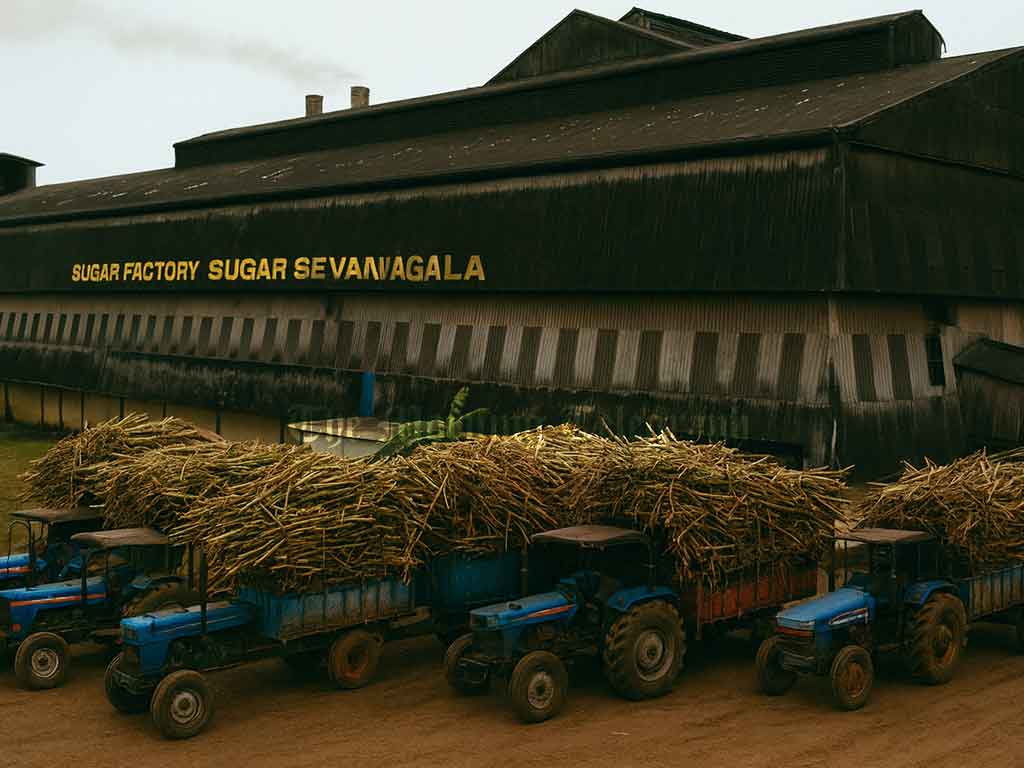
Sri Lanka’s sugarcane heartland is facing economic disaster. With over 250,000 tonnes of sugarcane left unprocessed and 23,000 tonnes of sugar unsold, farmers from Sewanagala to Hingurana are sounding the alarm. Ethanol imports, unpaid dues, and a collapsing market threaten to destroy the future of thousands of cultivator
Sugarcane farmers from Sewanagala, Pelwatte, Hingurana, and Athimale are facing a devastating economic crisis as more than 250,000 tonnes of sugarcane go unprocessed and 23,000 tonnes of refined sugar remain unsold. The national organizer of the Farmers’ Struggle Movement, Wimal Wattuhewa, revealed this growing crisis during a press conference in Nugegoda.
For months, farmers have appealed to the government and authorities for a solution. Despite repeated discussions, the crisis remains unresolved. Sugar stocks are piling up with no buyers in sight. Large quantities of ethanol produced remain unsold, and the farmers are unable to access funds or market their output.
At the same time, critical agricultural timelines are slipping away. The current season demands fertilization, but farmers lack the financial means to purchase fertilizers or maintain nurseries. Without access to essential resources, including seeds and cultivation machinery, next season’s harvest is under severe threat.
According to Wattuhewa, farmers in Hingurana alone have cultivated 65,000 acres this season. But due to systemic delays, Sewanagala farmers are only now harvesting crops that should have been reaped in March. The delay has significantly reduced the sugar content of the cane, depleting both quality and value.
The situation is compounded by unpaid dues. Many farmers have not been compensated for their past harvests, further deepening their financial distress. Wattuhewa accused the government of ignoring the plight of sugarcane farmers even as they struggle for survival.
He highlighted the recent Monaragala District Committee meeting, where Minister Sunil Handunnetti was present. Despite hearing the farmers’ grievances, the minister offered no concrete solution, instead asking farmers to wait another three weeks, an answer Wattuhewa said hinted at stalling until imported ethanol supplies diminish.
However, farmers say this wait-and-see approach is untenable. Ethanol made from imported corn cheaper than sugarcane is flooding the market, undermining local production. The government’s import policies are directly hurting local agriculture. Adding to the crisis, paddy fields are also being cleared, leading to wider implications for food security.
Farmers warn that the sugarcane industry, a vital livelihood for thousands, is collapsing under government inaction, ethanol imports, and lack of structural support. Without urgent intervention, Sri Lanka’s sugar industry could face irreversible damage.


