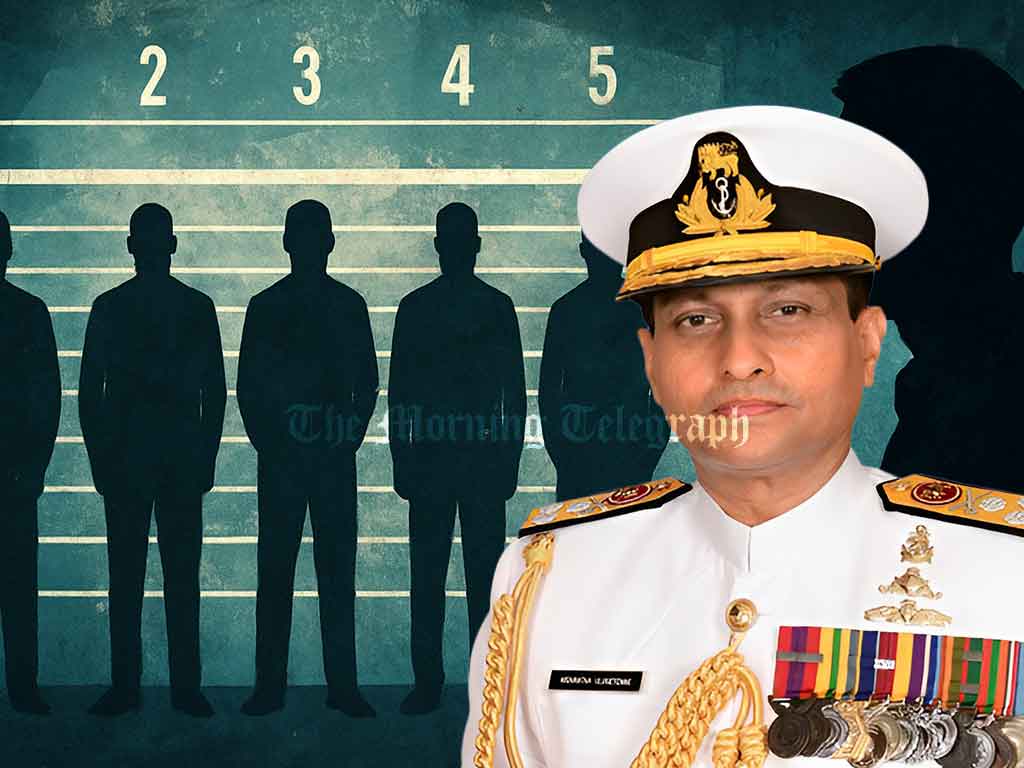
A high-profile identification parade involving former Navy Commander Nishantha Ulugetenne collapses as a senior LTTE operative fails to respond in Sinhala, triggering legal and ethical controversy over CID procedures and past civil war plots.
An identification parade involving former Navy Commander Admiral Nishantha Ulugetenne was unexpectedly cancelled last week after a senior LTTE intelligence operative brought in by investigators failed to understand or respond to questions posed in Sinhala by the Magistrate, according to local media reports.
The witness, identified as “Barathi,” a former deputy intelligence leader of the LTTE in Trincomalee, was brought by the Criminal Investigation Department (CID) to identify Admiral Ulugetenne in connection with an attempted murder investigation. However, during the identification parade held in Polgahawela Magistrate’s Court, Barathi was unable to speak a single word in Sinhala, a critical issue that led to the collapse of the entire procedure.
Ironically, Barathi’s written statement to the CID was recorded in Sinhala, raising serious questions about the integrity and legality of the process. No translator was mentioned in the official documentation, prompting widespread legal and ethical concerns about how the statement was obtained and whether due process was followed.
Despite the collapse of the identification parade, the Magistrate ruled that bail could not be granted due to the seriousness of the charges—attempted murder. Admiral Ulugetenne’s legal team must now appeal to the High Court, extending the legal uncertainty surrounding the former Navy chief.
Military sources have identified Barathi as a central figure in one of the most chilling assassination plots in Sri Lanka’s civil war. He allegedly helped prepare a fish lorry loaded with 1,080 kilograms of C-4 explosives intended to reach Colombo in June 2008. Intelligence reports reveal that the explosives were meant to target the Presidential Secretariat during a scheduled Security Council meeting.
Had the plot succeeded, it could have wiped out the country’s top leadership, including then-President Mahinda Rajapaksa, Defense Secretary Gotabaya Rajapaksa, Army Commander Sarath Fonseka, Navy Commander Wasantha Karannagoda, and other senior defense officials.
On June 29, 2008, Navy intelligence operatives in Trincomalee intercepted the suspicious lorry in Nilaveli. It was later taken to the Trincomalee Naval Base, where the bomb was safely defused at the Coral Cove Firing Range by then-Captain Piyal De Silva, a U.S.-trained explosives expert and Commanding Officer of SLNS Sayura. His swift action likely prevented one of the deadliest terrorist attacks in Sri Lanka’s history.