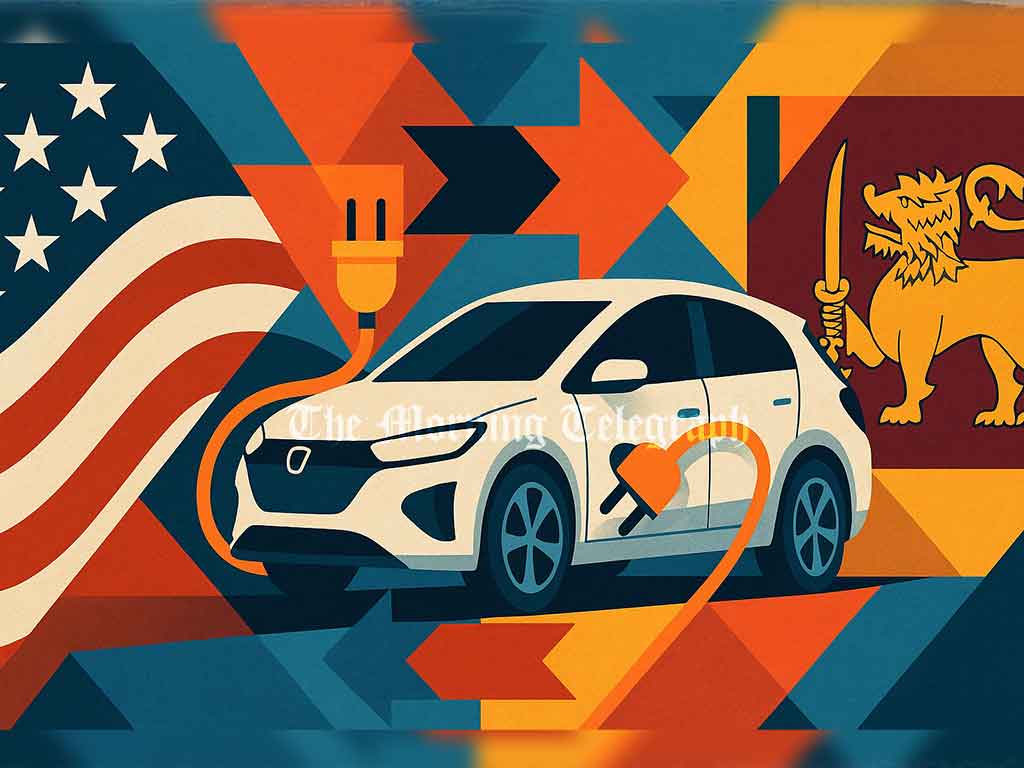
The U.S. has asked Sri Lanka to allow duty-free imports of American vehicles, including electric vehicles (EVs), as part of ongoing trade talks to reduce a growing $2.6 billion trade deficit. While Sri Lanka hasn’t agreed yet, it’s keeping the door open.
The United States has urged Sri Lanka to allow duty-free entry of American-made vehicles, including electric vehicles (EVs), as part of its bid to narrow the significant trade imbalance between the two nations, sources close to the ongoing tariff negotiations revealed.
While the Sri Lankan government has not granted immediate approval to this request, officials have reportedly agreed to consider the proposal gradually over time. Both countries are expected to continue bilateral trade discussions with the objective of achieving further tariff reductions in the future.
In the latest round of talks, Sri Lanka successfully negotiated a reduction in tariffs to 20 percent from the initially proposed 44 percent. This new rate is considered competitive when compared to regional export rivals such as Bangladesh and Vietnam, where similar tariffs are imposed.
In 2024, total goods trade between the U.S. and Sri Lanka amounted to an estimated $3.4 billion. American exports to Sri Lanka reached $368.2 million, an increase of 4.9 percent from 2023 while imports from Sri Lanka totaled $3.0 billion, up 6.1 percent from the previous year. This led to a U.S. trade deficit of $2.6 billion with Sri Lanka, a 6.3 percent increase from 2023.
To help address this imbalance, Sri Lanka has proposed purchasing fuel from American companies, provided the pricing is competitive. The Ceylon Petroleum Corporation (CPC) has already requested samples of WTC crude oil from the U.S. for specification testing.
Currently, apparel remains Sri Lanka’s largest export to the U.S. market. However, Sri Lanka pushed back against U.S. demands to restrict imports of Chinese raw materials for its garment industry, a move that could have disrupted production.
Looking ahead, Sri Lanka is likely to face increasing complexities in balancing trade relationships with global powers like the U.S. and China, both of which dominate the global electric vehicle market. At present, Sri Lanka imports several EV brands from China, including BYD, further intensifying trade tensions in this space.