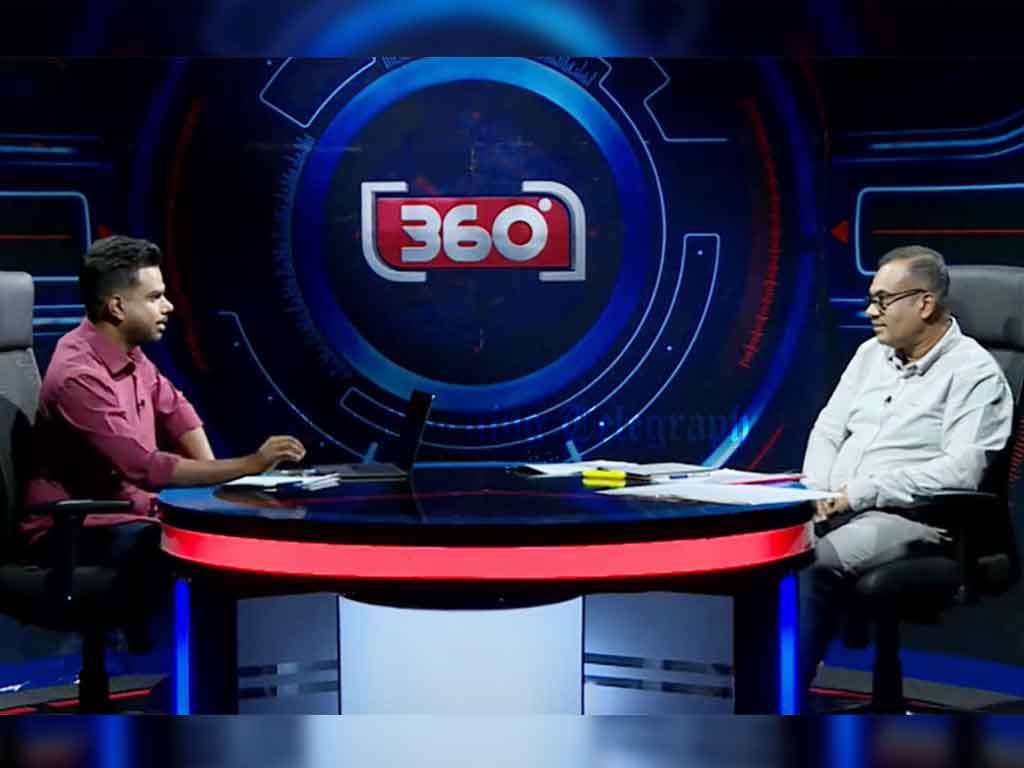
A fiery exchange erupted on Derana TV’s 360 discussion as journalist Kalindu Karunaratne publicly confronted Deputy Minister T.B. Sarath over exaggerated claims on Sri Lanka’s economic growth and forex reserves. With the Finance Deputy Minister left scrambling for answers, the broadcast exposed alarming gaps in government accountability and data accuracy.
Deputy Minister T.B. Sarath came under intense scrutiny during the 360 talk show aired on Derana TV after making bold claims about Sri Lanka’s economic growth rate and foreign exchange reserves. The minister stated that the country had reached an economic growth rate of 8.3% and that foreign reserves had risen from under 3 billion US dollars to over 6.5 billion within less than a year.
Journalist Kalindu Karunaratne, who was part of the panel, directly questioned the accuracy of these statements. “How can you lie like this? How can a responsible Deputy Minister believe the people know nothing and spread blatant misinformation on national television?” he asked pointedly. Karunaratne emphasized that while it is understandable for ordinary citizens not to know specific economic data, a member of Parliament should absolutely be informed about key indicators such as GDP growth and foreign reserves.
Finance Deputy Minister Anil Jayantha, also on the panel, was visibly uncomfortable and attempted to mitigate the damage. He clarified that the minister may not have intended to lie and cited that even intelligent individuals can make mistakes. He noted that when the current government took office, foreign reserves were actually 5.9 billion dollars—not the 3.1 billion claimed by Sarath. Current foreign reserves now stand near 6.5 billion dollars.
The Deputy Finance Minister further stated that not all MPs need to be aware of every economic detail, as long as they carry out their duties. However, Kalindu Karunaratne challenged this notion, arguing that misinformation has consequences and that elected representatives owe the truth to the public.
The confrontation underscored growing public concern about transparency, credibility, and competence within the ranks of Sri Lanka’s political leadership, especially at a time when the country’s economy is under close scrutiny by both citizens and international observers.