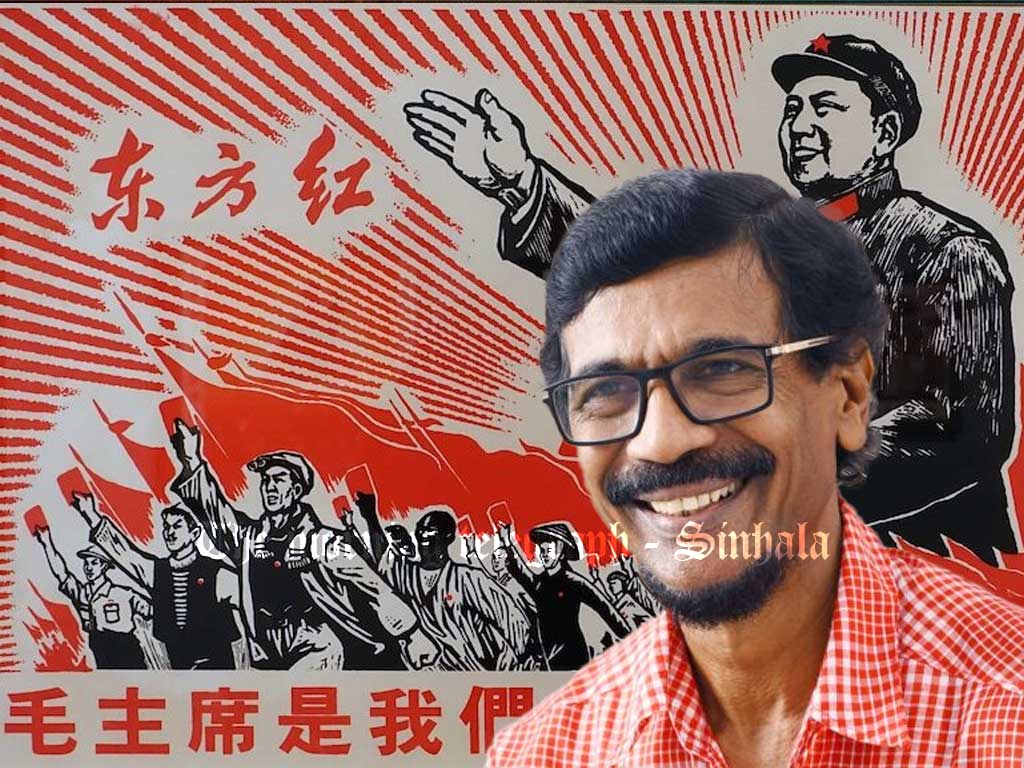
JVP General Secretary Tilvin Silva discloses that the Chinese Communist Party advised them to stay in power for 15 to 20 years to truly transform Sri Lanka. He says the CCP believes short-term governance isn’t enough and that long-term political dominance is essential for lasting reform.
Janatha Vimukthi Peramuna (JVP) General Secretary Tilvin Silva claims that the Chinese Communist Party (CCP) has advised the JVP-led National People’s Power (NPP) to remain in power for 15 to 20 years if they hope to bring about meaningful change in Sri Lanka.
Silva shared this revelation during a recent discussion on an online media channel, reflecting on insights gained from his official visit to China. According to him, CCP leaders clearly communicated that systemic change cannot be achieved within a single five-year term.
“They told us change cannot happen in five years. It will take four or five election victories to bring about real reform. So, you need 15 to 20 years in power,” Silva stated.
He emphasized that this advice came during in-depth political discussions with senior members of the Chinese Communist Party, who shared their own long-term governance strategies and how they sustained political continuity to drive national transformation.
Silva’s remarks add fuel to ongoing debates about the long-term ambitions of the JVP-NPP coalition, as well as its perceived alignment with or admiration for Chinese governance models.
The timing of this statement is also politically significant, as the NPP continues to build momentum ahead of future elections, positioning itself as the only viable alternative to Sri Lanka’s traditional parties. Yet, Silva’s comments raise questions about how the NPP envisions its governance timeline and whether it intends to centralize power over multiple terms.
Political analysts note that the CCP’s model of extended single-party control contrasts sharply with Sri Lanka’s democratic structure, where voter sentiment can rapidly shift. Critics may interpret Silva’s endorsement of long-term rule as a potential drift toward authoritarianism, while supporters could argue that lasting change requires stability and continuity.
The JVP, once known for its insurrectionist past, is now presenting itself as a reformist political force. Aligning ideologically or strategically with the CCP adds a new dimension to its evolving identity, especially among voters wary of foreign influence in domestic politics.
Tilvin Silva’s statement will likely resonate across both the political spectrum and social media, triggering debates about democracy, governance models, and Sri Lanka’s future direction. It also places China back into the conversation about Sri Lanka’s internal political planning.
As the country faces critical economic and political crossroads, the idea of 20 years of uninterrupted power, no matter the party may prompt voters to reflect deeply on what kind of future they want and who they trust to build it.