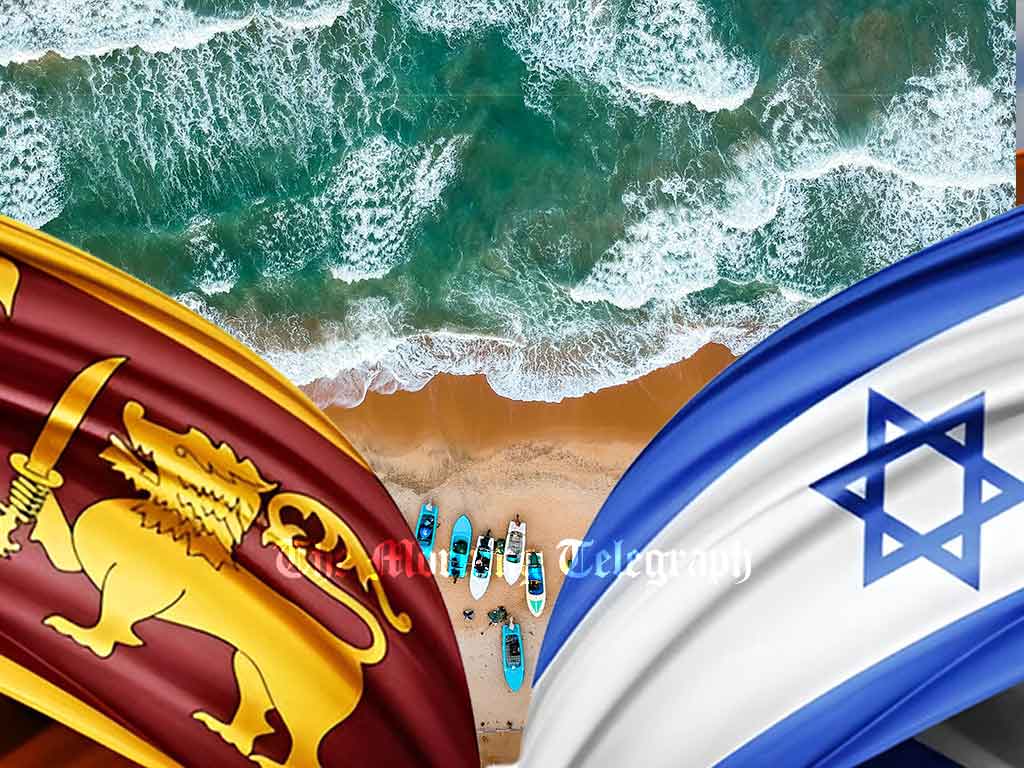
The targeting of Israeli tourists and rising hostility in Sri Lanka hint at a disturbing shift, with silence from authorities potentially paving the way for radicalism and foreign interference.
In the picturesque beach town of Arugam Bay, a destination once known for its pristine surf and global appeal, a troubling undercurrent is taking shape. Once welcoming to visitors of all nationalities, the town has now found itself at the epicenter of a growing Palestinian solidarity movement in Sri Lanka. A campaign of vocal condemnation has emerged, particularly against Jewish visitors and Hebrew welcome signs. The root of this vehement opposition appears to be based on an accusation that Israelis are attempting to monopolize Arugam Bay and transform it into a “Zionist colony.”
This sentiment, however, is not new. It stems from tensions ignited after the events of October 7, 2023. At the time, Jewish tourists were welcomed by the local Muslim community, some of whom leased property for a Chabad House—a Jewish religious center run by the Orthodox Chabad-Lubavitch movement. What once seemed a harmonious co-existence has turned into a flashpoint, with activists targeting Israeli visitors and fueling a national campaign to boycott anything associated with Israel. The Arugam Bay incident is only the tip of a much larger iceberg.
Historically, the Jewish presence in Sri Lanka has been negligible. Any marginal Jewish community that existed was largely a byproduct of Portuguese, Dutch, and British colonialism. Despite this, anti-Semitism never gained significant traction in Sri Lanka, mainly because local society remained uninformed about the kind of racial prejudices that took root in Europe against Jews. Today, however, the rise in anti-Israel sentiment is unmistakably crossing the line into overt anti-Semitism.
What is unfolding is not just criticism of Israel’s policies but a call for collective punishment of all Israelis, including tourists. These boycotts and demonstrations do not acknowledge the October 7 attacks that reignited the latest Gaza conflict, nor do they reflect on Hamas’s refusal to release hostages or engage in ceasefire talks. Instead, Sri Lanka’s solidarity movement has become a megaphone for a one-sided narrative that spreads hatred without understanding the geopolitical complexity of the Middle East.
Recent protests, including one in front of Sri Lanka’s Ministry of Foreign Affairs, reveal how far this movement has escalated. Protesters demanded the cancellation of visa-free entry for Israeli nationals, accusing Israel of genocide and war crimes. Yet, they have failed to voice any criticism against Russia’s actions in Ukraine or the presence of Russian visitors in Sri Lanka, raising questions about selective outrage.
The Sri Lankan government remains notably silent. It has consistently refrained from taking a firm stand on the Israeli-Palestinian conflict, maintaining a strategic ambiguity that previous administrations also embraced. Even former President Mahinda Rajapaksa, while advocating for Palestinian statehood, sought military assistance from Israel to combat LTTE terrorism. The current administration continues this ambiguous posture, seemingly motivated by economic interests, such as sending Sri Lankans abroad to replace Palestinian laborers.
The root of this hostility towards Israeli tourists seems to lie in religious and emotional solidarity with Palestinians. Many in the Sri Lankan Muslim community feel a deep connection to the concept of the global Islamic “Umma,” viewing Israeli visitors as colonial aggressors. These views often translate into narratives steeped in bigotry, which portray Jewish presence in Sri Lanka as a threat. Such portrayals escalate tensions and make every Israeli a target of suspicion and animosity, a hallmark of anti-Semitic behavior.
Critics within the Muslim community who oppose Israeli tourism rarely acknowledge that their rhetoric and actions are rooted in anti-Semitic ideology. Instead, they dismiss accusations of anti-Semitism as a Western construct, projecting the blame onto broader global politics. But this denial does little to mask the reality that anti-Semitism, regardless of its geographic origin, is flourishing in Sri Lanka under the guise of activism.
The most dangerous aspect of this trend is the silence, both from the government and Sri Lankan civil society. This vacuum of accountability enables unchecked anti-Semitic rhetoric to thrive, ultimately creating fertile ground for Islamic radicalization. Left unaddressed, such radicalization may eventually breed terrorism or open the door for foreign actors to exploit the social divide.
What is happening in Arugam Bay is no longer just a local issue. It is a warning. Sri Lanka’s path forward must involve confronting extremism in all forms, before it mutates into a larger threat, both to its own society and its standing on the global stage.