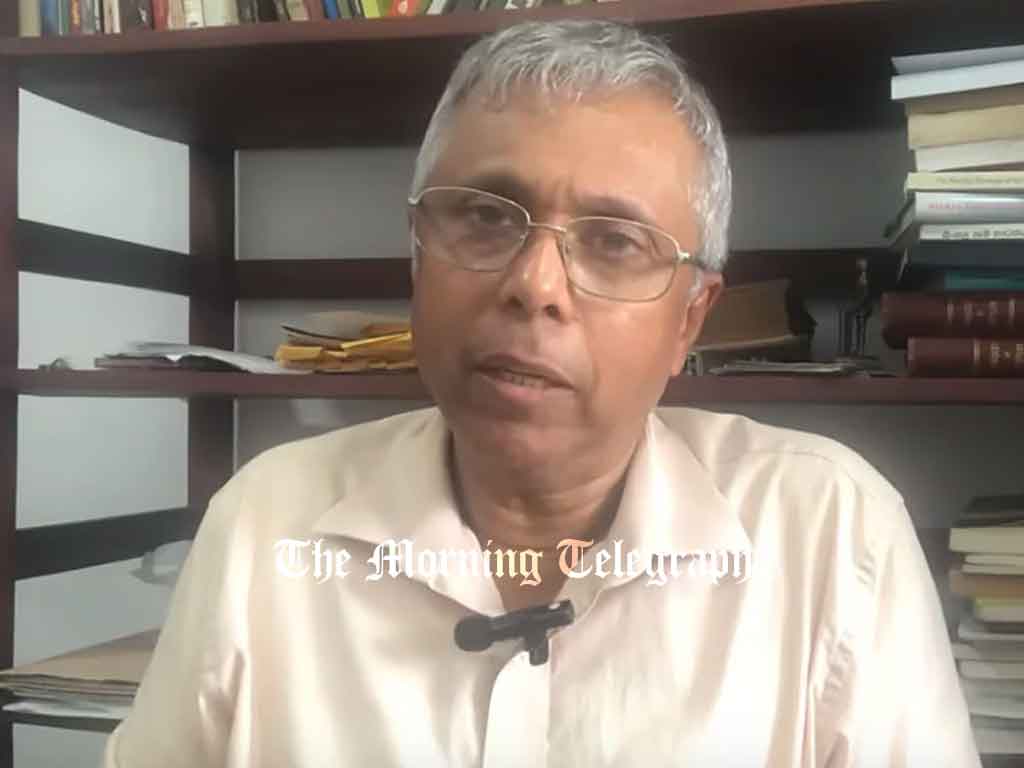
Professor Nirmal Ranjith Dewasiri delivers a scathing analysis of the Supreme Sat saga, exposing how the Rajapaksa regime was misled into endorsing a Chinese satellite project as a national triumph, all while projecting passive silence in the face of mounting accusations.
Professor Nirmal Ranjith Dewasiri has sharply criticized the Rajapaksa family over the Supreme Sat satellite project, claiming it was nothing more than a foreign illusion inflated to deceive the public. He stated that Prime Minister Harini Amarasooriya’s recent remarks have burst the myth surrounding Supreme Sat, revealing that it was not a Sri Lankan space initiative but a Chinese commercial venture unrelated to the island nation.
According to Professor Dewasiri, the project was falsely celebrated as Sri Lanka’s entry into the space age during the Rajapaksa era. The truth, now public, indicates that the satellite was not developed by or for Sri Lanka but by a Chinese company for its own operations. This revelation has turned the once-glorified project into a political embarrassment for the Rajapaksas, who heavily promoted it as a symbol of national pride and technological progress.
Speaking in a video on his official online channel, Professor Dewasiri also commented on the Rajapaksa family’s characteristic silence in the face of criticism. Drawing a controversial comparison, he remarked that their silence, even under the pressure of accusations that led to the downfall of two of their governments, resembled the stoic calm of the Buddha during the infamous Chinchimanavika episode.
He emphasized that the public’s long-standing belief in the Supreme Sat project was rooted in political propaganda rather than fact. The professor pointed out that successive governments did little to clarify the matter until Prime Minister Harini Amarasooriya decisively addressed the issue.
This latest disclosure has reignited criticism of the Rajapaksas’ governance style, especially their penchant for showmanship and grand narratives. Analysts now question how many other projects launched during their tenure may have been more illusion than reality.
The Supreme Sat case is now being seen as symbolic of a broader political culture in Sri Lanka where optics often take precedence over substance. Many believe that the disillusionment sparked by such revelations could significantly reshape public trust in future political leadership.