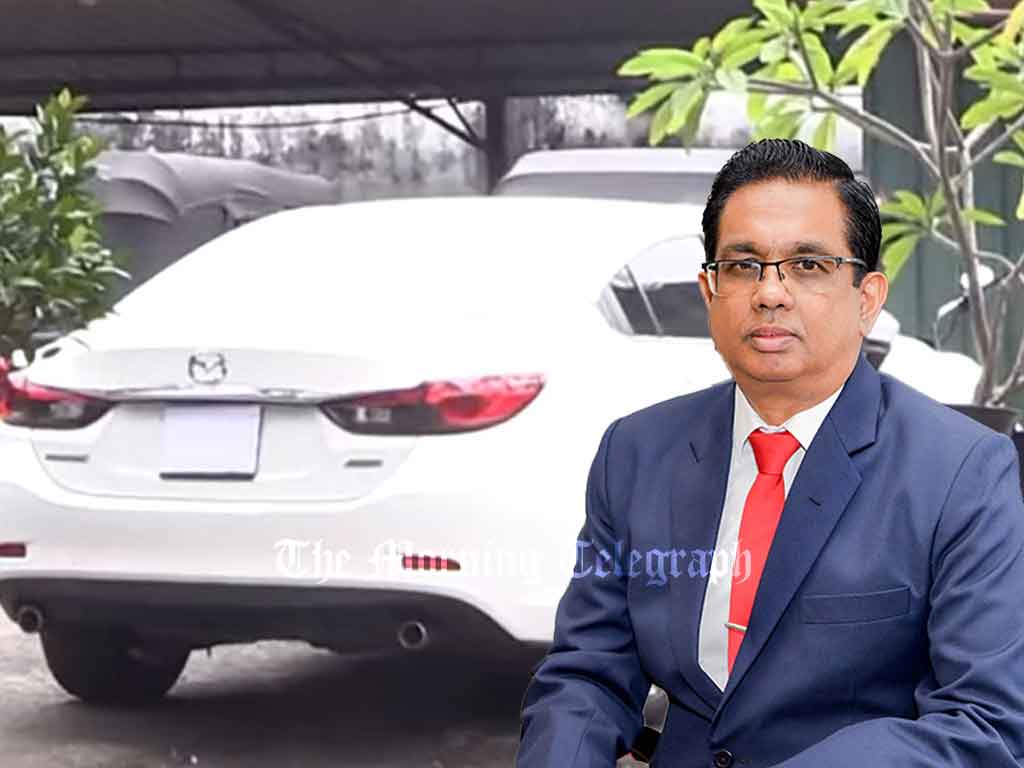
A fiery exposé by journalist Uvindu Kurukulasuriya has reignited debate over public accountability, after he accused the President’s Secretary of misusing an official vehicle for personal use without even paying the outdated Rs. 300 fee. The scandal, involving an accident and alleged cover-up, has sparked calls for immediate resignation and deeper investigation.
The President’s Secretary is now facing public backlash after revelations surfaced that he failed to pay even Rs. 300 when using his official government vehicle for personal use. The controversy exploded after journalist Uvindu Kurukulasuriya posted a lengthy and pointed explanation on his social media platform, demanding the Secretary’s resignation.
The trigger was a traffic accident that occurred while the Secretary’s wife was using the official vehicle, reportedly for non-official purposes. Uvindu’s accusation isn’t just about the accident, but about a broader pattern of neglect, irresponsibility, and disregard for governance protocols.
He alleges that not even the minimal Rs. 300 set by a circular from 1983 was paid for using the state-owned car for personal errands. He directly counters Cabinet Spokesman Minister Nalinda Jayatissa’s statement defending the Secretary, labeling it as misleading and factually incorrect.
“I still believe that the President’s Secretary must resign,” Uvindu wrote. “Before I publish all the details of this case everything will eventually come out in court.”
He supported his argument by referencing a private letter from a retired senior civil servant who defended the act based on long-standing bureaucratic practice. Uvindu disagreed with the logic, countering that such outdated norms and circulars are irrelevant in a modern system where fuel, insurance, and public expectations have evolved dramatically.
“Even if it was allowed, Rs. 300 in 1983 cannot be considered acceptable today,” he insisted. “And in this case, not even that was paid.”
He urged authorities to check the logbook of the vehicle involved in the accident, stating that the truth will be evident from those records.
Uvindu’s comments took a wider turn toward public accountability, referencing the United Kingdom parliamentary expenses scandal, in which MPs stepped down over relatively minor misuses of public funds. “Those who misused public funds, even to pay for their wife’s lunch resigned and apologized. That’s the kind of accountability we expect,” he stated.
He then shared the retired civil servant’s letter:
“Uvindu, could you verify whether this is even acceptable? This is probably outdated thinking from an old bureaucrat’s perspective, but I’ll still share it. Back in 1983, government officials were allowed to use official vehicles for personal purposes only with Cabinet approval, especially in the absence of a driver. Officers had to pay Rs. 300 per month. This was before the fuel prices and insurance costs of today.”
According to the civil servant, exceptions were made in emergencies, or for helping family members. Such leniencies became commonplace over time, with military officers during the war era receiving these privileges routinely. He argued that if brigadiers and commodores were allowed this benefit, denying it to a secretary would be a contradiction of both morality and precedent.
However, Uvindu dismissed this reasoning, arguing that present-day legal norms, court rulings, and expectations of transparency far outweigh legacy practices. “You told me about these emergencies after I raised the issue. But official vehicles are strictly for business use, except in rare justified emergencies like hospital visits log entries are still required.”
He further questioned whether current circulars explicitly allow an official driver to transport family members in the absence of the officer. He emphasized that such permissions must be stated clearly to avoid abuse and confusion.
Uvindu posed three possible interpretations of the situation:
- If the official driver caused the accident, a court ruling must decide accountability and compensation.
- If morality and practice permit such use, clear guidelines should govern it moving forward.
- If future use of official vehicles for personal purposes is to be allowed, existing circulars must be reviewed and updated.
He concluded by calling for judicial scrutiny, saying that how the courts rule on this case will set a crucial precedent for good governance and responsible use of state resources in Sri Lanka.