Former JVP heavyweights Nandana Gunathilaka and Chandrasena Wijesinghe have launched a fierce attack on the proposed Former Presidents’ Rights Bill, accusing the Malima government of playing into Tamil diaspora demands. They argue the move to curtail Mahinda Rajapaksa’s privileges is a betrayal of the leader who helped crush Tamil separatism and a dangerous precedent that could weaken future Sri Lankan presidents.
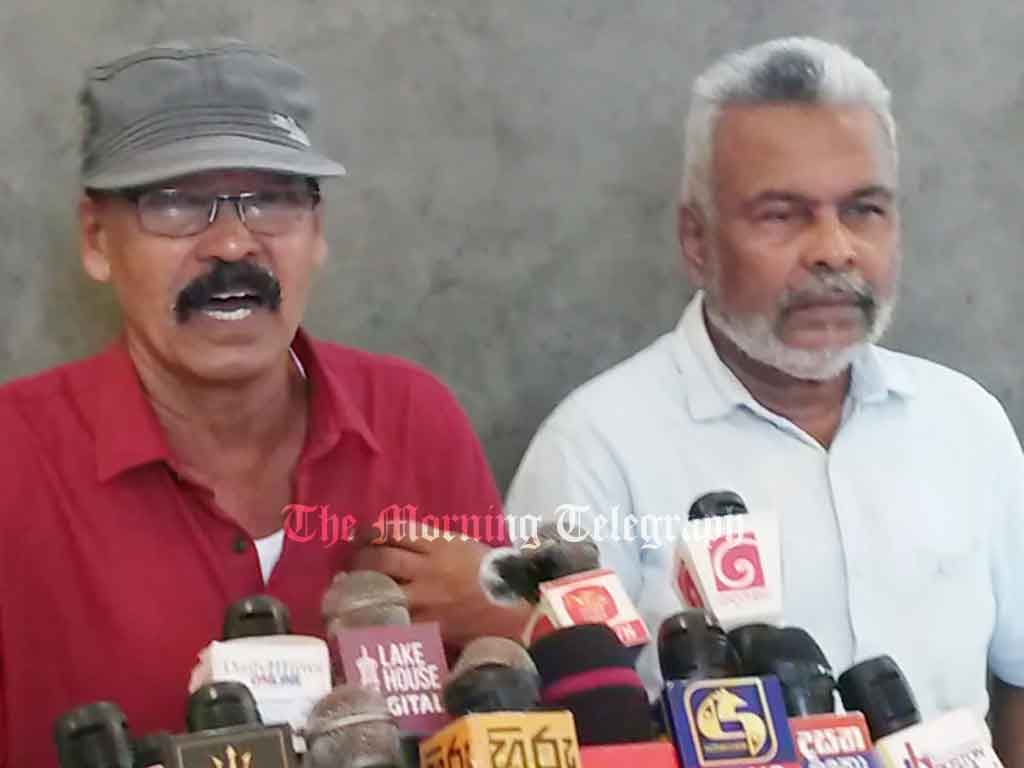
Former JVP Politburo member and ex-Minister Nandana Gunathilaka has strongly criticized the Malima government’s push for the Former Presidents’ Rights Bill, warning that it strips security and privileges from past leaders at the behest of the Tamil diaspora. Speaking at a media conference, Gunathilaka accused the JVP of having abandoned Mahinda Rajapaksa despite being instrumental in his decision to take military action that ultimately defeated Tamil separatism.
Gunathilaka argued it was a serious political mistake to let a few Politburo members dictate the party’s course, especially after the JVP played a decisive role in forming the United People’s Freedom Alliance in 2004 and securing four ministries in the coalition. He recalled how the JVP pushed Rajapaksa toward military engagement against the LTTE, with figures like Champika Ranawaka sharing the same stance. This, he said, is why Tamil separatists hold deep hostility toward Rajapaksa.

Highlighting a pattern of political missteps, Gunathilaka referenced the JVP’s support for Sarath Fonseka in 2010—which could have led to Ranil Wickremesinghe becoming Prime Minister—and their contribution of 500,000 votes to Maithripala Sirisena in 2015, which again positioned Wickremesinghe in power. He accused the Tamil diaspora of aiding the Malima government’s rise, claiming its influence is now undermining war heroes and national sovereignty.
Former Fisheries and Aquatic Resources Minister Chandrasena Wijesinghe, another long-time JVP figure, echoed Gunathilaka’s concerns. Having joined the 2004 coalition government at the JVP’s request, he emphasized his decades of service, including rebuilding the party after the 1988–89 insurgency. Wijesinghe condemned the Bill as unprecedented, noting that no sociologist or intellectual has publicly supported it, and insisted that protecting former leaders is standard practice in any country.
Wijesinghe recounted past frictions with Rajapaksa, from disputes over street protests to incidents like Mahinda breaking the JVP’s only digital camera during a demonstration. Yet, despite these clashes, he said the JVP still elevated him to the presidency, believing his leadership was essential in confronting separatism. He also revealed that at the outbreak of war, Rajapaksa asked Somawansa Amarasinghe whether to proceed despite the presence of spies, receiving the firm answer to fight with the spies already there.
Both former ministers acknowledged that there are unresolved questions about Rajapaksa’s conduct, including allegations of murder, misuse of power, and financial impropriety, but insisted these should be addressed through proper investigations—not by stripping away protections. They warned that weakening former presidents will result in “puppet leaders” unable to act independently for the nation’s benefit.
Appealing to the Mahanayakes, leaders of other faiths, and civil society, they framed the issue as one of national will: protecting the leader who defeated Tamil separatism is protecting Sri Lanka’s sovereignty. Gunathilaka concluded with a symbolic warning—if the Bill passes, the lion on the national flag might as well be replaced with “a dog licking a mascot.”