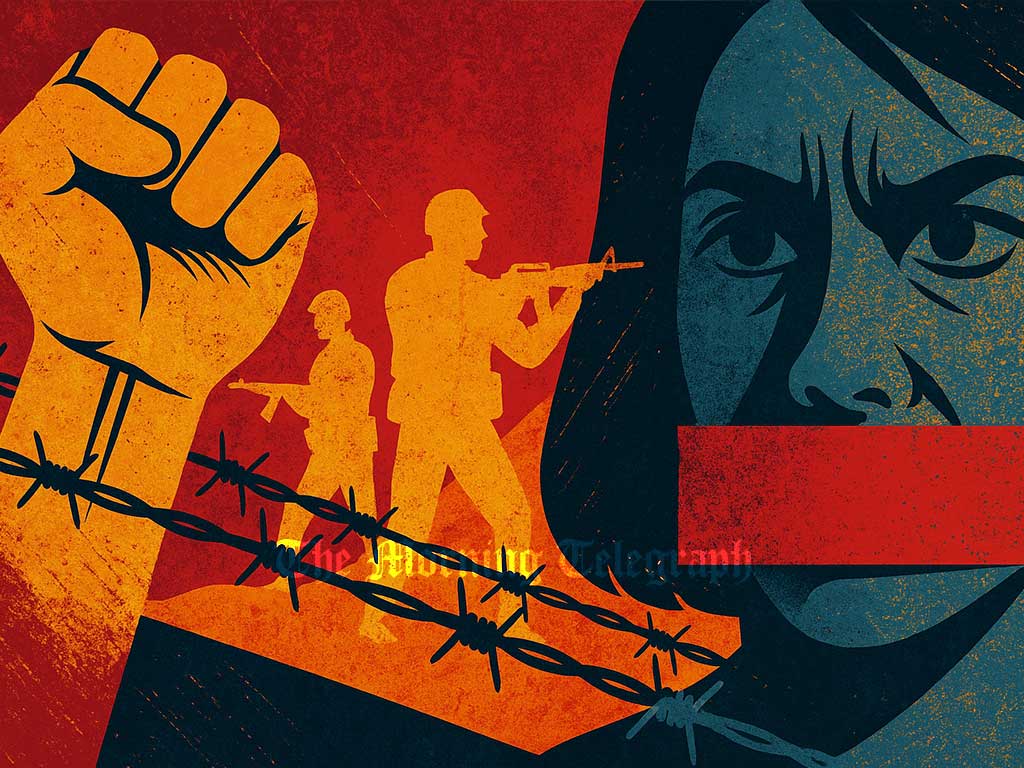
A damning US State Department report accuses Sri Lanka of widespread human rights abuses, from unlawful killings and torture to silencing journalists and crushing dissent, warning that systemic impunity is eroding public trust.
Sri Lanka is facing an alarming rise in human rights violations, according to the United States Department of State’s 2024 Country Report on Human Rights Practices. The detailed review paints a bleak picture of governance, civil liberties, and accountability in the country, warning that constitutional guarantees are failing to protect citizens.
The report, submitted to Congress under the Foreign Assistance Act and Trade Act mandates, lists “credible reports” of arbitrary and unlawful killings, torture, degrading treatment, arbitrary detention, and transnational repression. Freedom of expression and press rights remain severely restricted, with journalists—particularly those covering enforced disappearances, land disputes, and post-war issues in the north and east—subjected to harassment, surveillance, and physical attacks. The misuse of the International Covenant on Civil and Political Rights Act to suppress dissent was flagged as a recurring abuse.

The Human Rights Commission of Sri Lanka recorded seven custodial deaths between January and August 2024, while civil society warned of continued police “encounter” killings despite official guidelines. Disturbingly, the report highlights involuntary sterilisation in marginalised Tamil plantation communities, raising serious consent and ethical concerns.
Public dissent has also been met with intimidation. Tamil journalists reported threats, damage to equipment, and restrictions on movement. The controversial Online Safety Act, passed under the guise of tackling disinformation, was criticised by the Supreme Court for containing unconstitutional provisions, with fears it could be weaponised to silence critics and access encrypted user data from social media companies.
Labour rights are inconsistently upheld. Although freedom of association is recognised, gaps in enforcement and employer resistance limit union activity, particularly in the private services sector. July saw a massive public-sector strike involving one million state employees and 250,000 teachers over spending cuts. Informal workers, making up 58% of the workforce, often lack wage and safety protections, and the tea estate sector continues to face criticism for underpayment and hazardous conditions.
The longstanding issue of enforced disappearances remains unresolved. The Office on Missing Persons was accused of prioritising administrative closures over thorough investigations into wartime abuses. As of July, 203 families had received limited compensation, but numerous mass grave cases remain incomplete. Pretrial detention is rampant, with two-thirds of detainees held without conviction, and Prevention of Terrorism Act cases continuing despite an official moratorium.
Torture is described as “endemic,” with the HRCSL logging 2,845 complaints of torture and 675 of degrading treatment in just over a year. Since anti-torture laws were enacted in 1994, convictions remain in single digits. The report also notes the absence of a legal ban on female genital mutilation, which persists in some Muslim communities.
On refugee rights, Sri Lanka has no asylum framework and depends on the UNHCR for registration and support though the agency plans to close its operations this year. As of December, 163 refugees and 251 asylum seekers face an uncertain future without permanent residence or ongoing aid.
The report also documents transnational repression, with the government renewing bans on Tamil and Muslim diaspora groups accused of terrorism links. While some Muslim groups were removed from the list in 2024, many remain banned, stifling political participation and community engagement.
Concluding its findings, the State Department warns that Sri Lanka has taken “minimal steps” to hold perpetrators accountable. The persistence of systemic impunity, it says, poses a severe threat to the nation’s post-crisis human rights trajectory.