By Roshan Jayasinghe
This piece continues my reflective series for Morning Telegraph. Rather than offering final answers, it opens a space for observation, the practice of seeing without judgment, comparison, or closure. In a culture hungry for conclusions, I invite the reader to pause, witness, and discover the dignity of simply being aware.
What are we seeking?
What are we here for?
Where are we going?
We return to these questions the way the tide returns to shore, again and again, hoping the water will leave a perfect answer in the sand. Most often it doesn’t. It erases our cleverness and carries the shells away.
Perhaps that is the lesson.
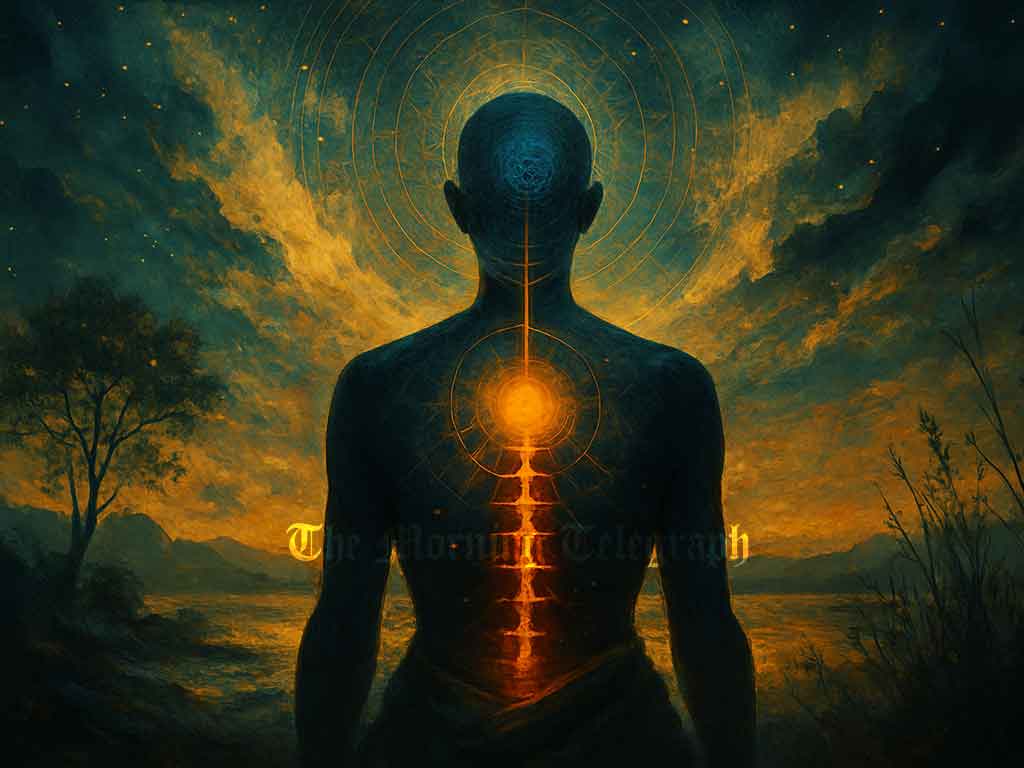
We are born into a mind that explains and compares. It is a brilliant tool, and also a restless one; it wants meaning the way lungs want air. But there is another movement in us, older than thought, quieter than certainty. Call it observation. Call it consciousness. Call it soul if the word helps. It is the part of us that can simply witness the vastness of nature without judging it, the part that recognizes we are not separate from the universe that formed us. We are not merely obedient to it; we participate in it.
To witness is not to retreat from life. It is to meet life without the costume of conclusions.

THE PERFORMANCE OF ANSWERS
Answers carry a subtle vanity. They can become a stage where we display intelligence, allegiance, or superiority: “See? I know. I understand more than you. I am closer to the truth.” Yet each perfected reply breeds another question, another defense, another debate. We win the argument and lose the horizon.
Observation asks for none of this. It is not passive; it is unarmed. It stands in the same room as joy and grief and does not insist that either justify itself. It lets the river flow and the star burn without demanding a purpose statement. It looks at the human heart, its hunger, its tenderness, and does not rush to cure it with a theory.
The river does not explain why it flows.
The stars do not explain why they burn.
Why must we explain why we are?
FIELD NOTES FOR SEEING
-Notice before you name.
-Listen before you label.
-Breathe before you conclude.
A PRACTICE OF SEEING
To live by witnessing is to make three quiet vows:
1. See without measuring.
Give the first moment to reality, not to your story about it.
2. See without comparing.
Comparison drags the present into court; witnessing lets it live.
3. See without concluding.
Conclusions are sometimes useful, but they are not sacred. Leave a door open.
These vows do not shrink the world; they make it honest. Honesty loosens our grip on artificial contentment, the kind we manufacture from status and distraction, and returns us to the simple, difficult practice of being here.
THE SOUL AS MOTION, NOT POSSESSION
We are taught to treat “soul” like a possession, a fragile lamp we must carry unbroken from one room of life to the next. Look closer. What if soul is not a thing we own but a movement, the current of observation itself? Not an object, but the way the universe looks at itself through a human window.
If so, the task is not to defend the lamp.
The task is to keep the window clear.
A clear window does not promise a quiet life. It promises a true one. We will still love and lose, build and break, work and rest. We will still ask the old questions. But questions soften when carried by seeing. They stop shouting for a finish line. They become companions for the road.
THREE QUESTIONS
-What are we seeking?
Perhaps nothing that can be kept.
-What are we here for?
Perhaps to witness what cannot be improved by our opinion of it.
-Where are we going?
Perhaps deeper into the same mystery that brought us here.
INTELLIGENCE WITHOUT CONTEST
To witness does not make us less intelligent. It frees intelligence from contest. We no longer think to prove we are wiser than another or closer to a Creator than our neighbor. We think to serve what is real. Thought becomes a good tool again, sharp when needed, set down when done.
This is how observation influences reality without dominating it: by removing the friction of pretense. When we meet a person, a problem, or a day without the armor of a ready-made conclusion, something alive can happen between us. The moment speaks. We hear.
THE OPEN-ENDED HORIZON
“Happiness” often fails as a project because it demands an ending, a final arrangement of events that secures a permanent feeling. Witnessing has no such demand. It allows joy and sorrow to pass like weather across a mountain that does not move. The mountain is not indifferent. It is steadfast.
Not knowing becomes freedom, not failure. In that spaciousness, life shows itself as it is. We observe with care, act with clarity, and love without the anesthesia of certainty.
A LITANY FOR EVERYDAY SEEING
-Before speaking, look once more.
-Before naming, listen once more.
-Before deciding, breathe once more.
Let a moment be whole before you divide it into meaning.
A CLOSING THAT DOESN’T CLOSE
If nobody can give the
final answer, let us stop waiting for one. Let us become the place where the universe is seen clearly for a moment, through a human being who chose observation over performance and presence over applause.
And then, with the next breath, begin again.
EDITOR’S NOTE
“This essay invites readers into an open-ended practice of witnessing: seeing without judgment, comparison, or the need to conclude. It is part of our ongoing series exploring questions that shape the human spirit.”
ABOUT THE AUTHOR
Roshan Jayasinghe writes a continuing series for Morning Telegraph on awareness, meaning, and the practice of observation in everyday life. His work explores how dignity emerges not from conclusions but from presence, the willingness to witness without rushing to explain.

Roshan Jayasinghe
Rooted in the belief that humanity can realign with the natural order where balance, regeneration, and interdependence are inherent. Roshan’s reflections invite readers to pause, question, and reimagine the systems we live within. His writing seeks not to impose answers, but to spark thought and awaken a deeper awareness of our shared human journey. Roshan will be sharing weekly articles that gently challenge, inspire, and reconnect us to what matters most.