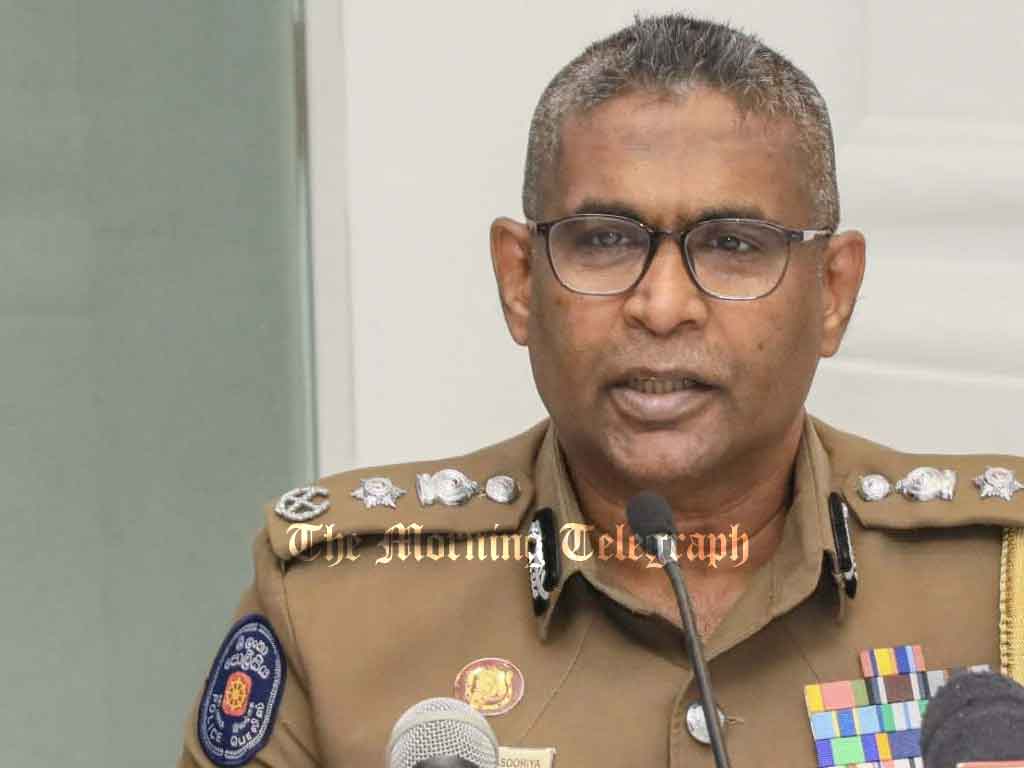
Newly appointed Sri Lanka Police Chief Priyantha Weerassuriya is facing fierce backlash after publicly glorifying child beatings during a university speech, raising alarming questions about child rights, law enforcement credibility, and the future of justice in the country.
Newly appointed Inspector General of Police (IGP) Priyantha Weerassuriya has come under intense criticism after remarks made during a speech at the Faculty of Law, University of Colombo, on Friday (16) sparked a nationwide uproar. The country’s top cop openly praised corporal punishment, recalling how beatings from his mother shaped his childhood, a statement now seen as a disturbing endorsement of violence.
Recounting his childhood experiences, IGP Weerassuriya said his mother’s strict discipline, often involving beatings with a stick, was the reason for his success. He described her as “the most intelligent woman” despite lacking formal education and credited her harsh methods for helping him rise to the highest post in the police service. His exact words were, “When I was a child, I was often involved in fights. One day I came home injured, and my mother found out. Instead of siding with me, she beat me with the best stick. That was her intelligence. Although uneducated, she was the wisest person I’ve ever known.”

The comments, delivered with a sense of amusement, were made while discussing a recent complaint from a mother against a school principal who allegedly assaulted a student. Instead of addressing the seriousness of the complaint, Weerassuriya brushed it aside, suggesting his own childhood beatings had been beneficial.
The remarks have sparked outrage among child rights activists, legal experts, and the wider public. Sri Lankan law clearly prohibits corporal punishment of children, both at home and in schools. For the head of the police force, who is also a lawyer, to glorify beatings is being seen as a blatant contradiction to the very laws he is meant to uphold.
Critics argue that the IGP’s statements risk normalizing violence against children and eroding hard-fought progress on child protection. “By ridiculing a mother’s complaint and glorifying beatings, the IGP has essentially declared that child abuse will not be taken seriously under his watch,” one human rights activist warned.
Concerns are heightened given past allegations of police brutality under Weerassuriya’s tenure as Acting IGP. Rights groups now fear his public stance on corporal punishment could extend beyond homes and classrooms, encouraging abusive behavior within law enforcement itself.
Legal experts have also expressed alarm. “In any civilized country, such a statement alone would be grounds for removal,” a senior lawyer commented. “But this is Sri Lanka. Unless the government intervenes, there is little to stop him from shielding abusers and weakening the rule of law.”
Deputy Minister of Public Security Sunil Watagala and Cabinet Minister of Public Security Ananda Wijepala, both former law enforcement officials, have so far remained silent on the controversy. Their lack of response has intensified pressure on the government to clarify whether it supports or condemns Weerassuriya’s remarks.
Child rights organizations are warning of grave consequences. “If the highest-ranking police officer in the country publicly glorifies beating children at a law faculty, what hope do we have for protecting the next generation?” one activist asked.
As the debate intensifies, the scandal has raised troubling questions about Sri Lanka’s justice system, child protection policies, and whether outdated practices of corporal punishment still hold sway in the country’s institutions. For many, the IGP’s remarks have become a defining test of whether Sri Lanka will stand for children’s rights or slip further into a culture of normalized violence.