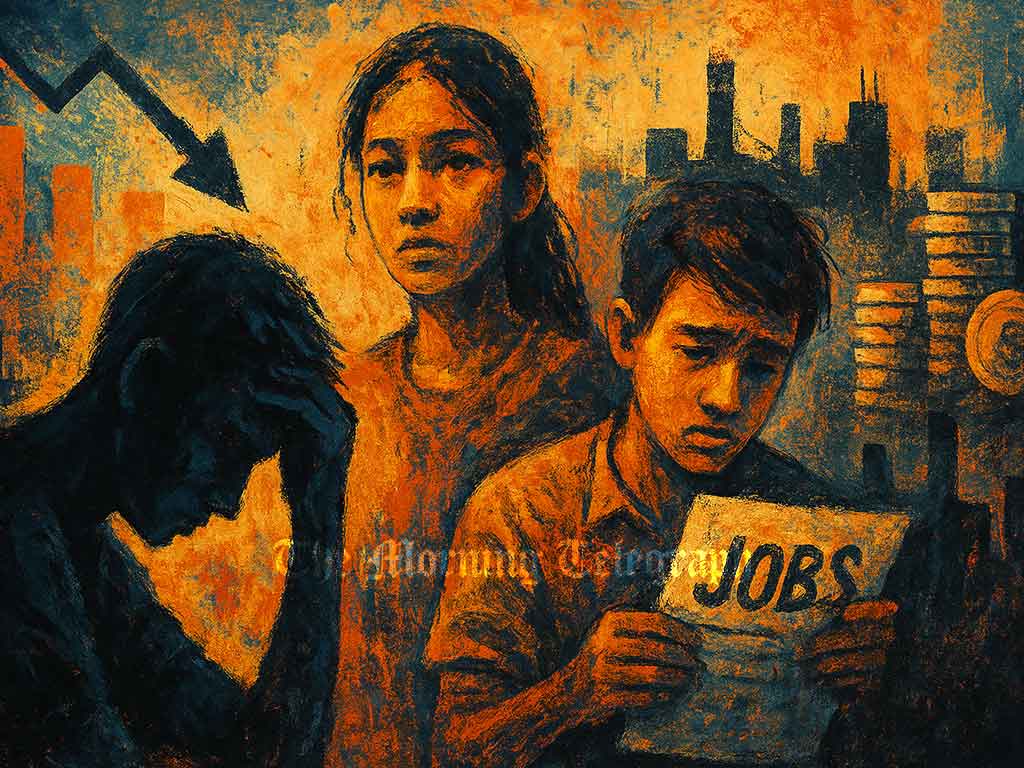
The World Bank has issued a stark warning that Sri Lanka and other developing nations risk a massive jobs crisis within the next decade, as millions of young people enter the workforce without enough employment opportunities to sustain them.
According to the World Bank Group, the strongest path to overcome poverty and achieve prosperity is through employment. Yet a new forecast signals a looming challenge that threatens this foundation. The Bank predicts that 1.2 billion young people in developing nations will enter the job market in the next ten years, but current trends suggest that only 420 million new jobs will be generated.
This mismatch could leave millions without opportunities, eroding hopes and threatening wider social stability and economic growth. The World Bank stresses that urgent action is needed to generate economic growth that creates sustainable jobs, enhances resilience against poverty, and is primarily driven by the private sector.

Why is job creation important?
The World Bank highlights that job creation remains one of the most effective tools to combat poverty and foster prosperity. Employment strengthens national economies, reduces dependence, and empowers communities. At the global level, it addresses the root causes of unrest and migration. Jobs not only provide income but also dignity and purpose, with added value when economic opportunities for women are expanded. The Bank notes that women reinvest as much as 90 percent of their earnings back into families and communities, multiplying the benefits.
What steps should be taken?
The World Bank outlines several urgent measures to meet the challenge. Business-friendly policies and simple legal frameworks can enable private sector growth. Public investment in infrastructure, electricity, and digital access is critical to open pathways to jobs. Aligning education and skill development with labor market needs is equally vital. Small businesses must also be supported with better access to finance to scale operations and improve productivity.
What is the World Bank’s strategy?
The Bank proposes a three-pillar approach. The first focuses on building basic infrastructure for jobs through public sector investment in healthcare, education, skills, clean water, energy, and transport. Such foundations drive long-term growth. The International Bank for Reconstruction and Development and the IDA help nations finance these initiatives effectively. In Bangladesh, for instance, World Bank funds have supported economic zones and software parks, creating nearly 45,000 jobs, including for women.
The second pillar emphasizes governance and policy reforms. Strong governance and predictable regulatory environments are essential to attract investment. Governments must streamline laws, eliminate bureaucratic obstacles, and reduce corruption to encourage job creation. Effective governance fosters trust and stability, providing the private sector with the confidence to invest.
The third pillar is leveraging private capital. The Bank points out that public finance alone cannot create the scale of jobs required. A vibrant private sector is crucial for entrepreneurship, innovation, and labor demand. However, private capital will only flow if conditions are favorable and risks are managed. High-potential job-creating sectors include infrastructure, energy, agribusiness, tourism, healthcare, and value-added manufacturing—areas aligned with domestic strengths and resilient to global economic shifts.
Why is employment critical for women and youth?
The World Bank emphasizes that women face unique barriers to employment. Challenges such as early marriage, teenage pregnancy, lack of childcare, inadequate transport, unequal asset access, and restrictive social norms limit opportunities. Consequently, women often find themselves in vulnerable jobs with little security.
For young people, the gap lies between rising education levels and limited job opportunities. In low-income nations, graduates often face underemployment, working in positions that do not match their skills. This mismatch threatens productivity and morale, reinforcing cycles of poverty.
What is the situation in Sri Lanka?
According to the Department of Census and Statistics, Sri Lanka’s labor force participation rate for the first quarter of 2025 was 49.7 percent. Of this, 70.1 percent were men and 32 percent women. The economically active population stood at 8.46 million, with 5.54 million males and 2.92 million females.
Meanwhile, 8.57 million people were economically inactive, with women representing a higher share at 72.4 percent. Employed persons numbered about 8.14 million, with 50.3 percent in services, 26.2 percent in industry, and 23.4 percent in agriculture.
Unemployment was recorded at 322,331, reflecting a national rate of 3.8 percent, with 2.5 percent for men and 6.3 percent for women. Youth unemployment remained disproportionately high, at 19.7 percent for ages 15–24 and 10.1 percent for ages 25–29. Among those aged 30 and above, the rate dropped sharply to 1.3 percent.
Survey data show that unemployment among women is consistently higher than men across all age and education levels. Youth and female unemployment continue to make the largest contributions to the national unemployment rate. The highest joblessness was reported among those with G.C.E. Advanced Level or higher education at 6.1 percent, again with women facing greater challenges than men at every educational tier.
The findings underscore the urgent need for Sri Lanka and other developing nations to act swiftly. Without decisive policies to create jobs, the next decade could see not just lost opportunities, but also lost generations.