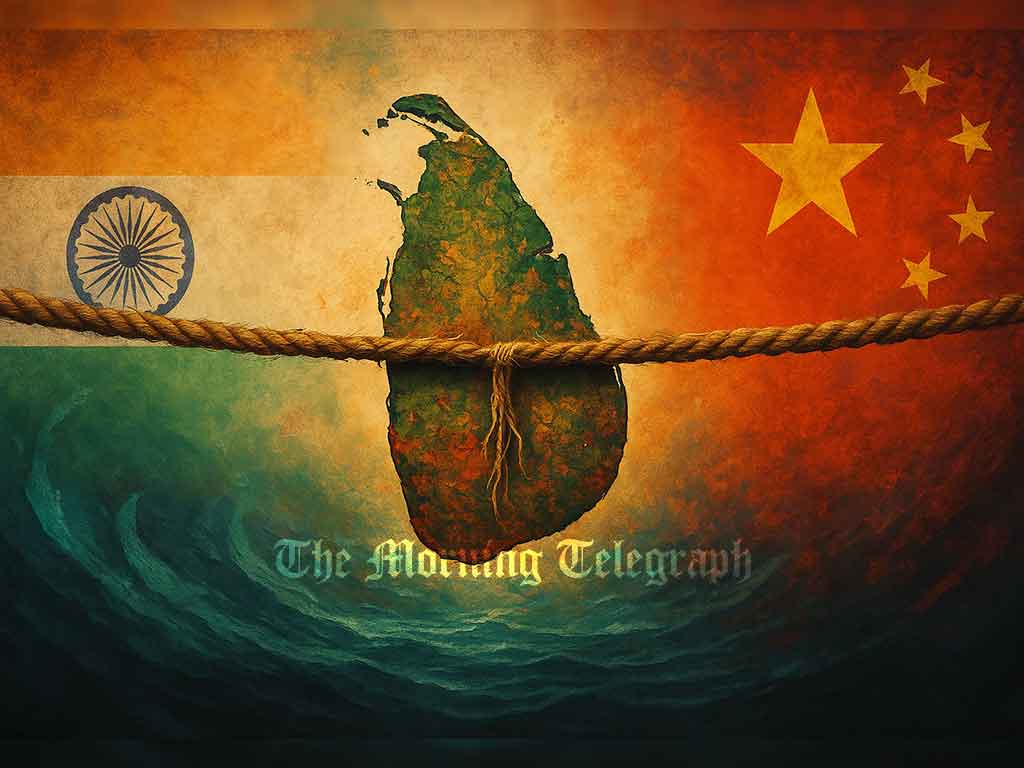
Sri Lanka’s long history of playing global powers against each other faces a dangerous new test as India and China edge closer together, threatening to strip Colombo of its bargaining power and derail Chinese-backed projects on the island.
During the Cold War, Sri Lanka sought to exploit the rivalry between the United States and the Soviet Union. President J.R. Jayewardene aligned with Washington, while India sided with Moscow, a division that fueled tensions between Colombo and New Delhi. The conflict in the North was a direct result of this alignment, and eventually J.R. yielded to Indian influence by signing the Indo-Sri Lanka Agreement.
Before agreeing to the deal, J.R. had appealed to the United States for support against a possible Indian invasion, but Washington refused to intervene. Later, when his government sought to purchase helicopter spare parts from the United States, American officials said approval from India was required under the terms of the Indo-Sri Lanka Agreement. This left J.R., who had tried to use Cold War rivalry to Sri Lanka’s advantage, facing bitter disappointment.

Decades later, when Mahinda Rajapaksa came to power in 2005, Sri Lanka was once again used as a chessboard for great power politics. Mahinda welcomed large-scale Chinese projects, hoping to exploit friction between Beijing, Washington, and New Delhi. His successors, Maithripala Sirisena, Gotabaya Rajapaksa, Ranil Wickremesinghe, and current President Anura Kumara Dissanayake, continued to leverage the India-China-U.S. triangle to boost Sri Lanka’s bargaining position.
Of these leaders, Ranil managed the balancing act with the most skill, extracting benefits without provoking direct confrontation. But the global order is shifting. After the Trump administration’s tariffs against India, New Delhi and Beijing have begun moving past their disputes, engaging in diplomatic talks and planning leadership visits. The Chinese Foreign Minister is currently in India, and the Indian Prime Minister is preparing for an official trip to Beijing.
Supporters of Anura’s government argue that closer cooperation between India and China will keep Chinese-backed projects in Sri Lanka safe from Indian interference. Yet, this new alignment could also leave Colombo dangerously exposed. If China avoids challenging Indian dominance in South Asia, Sri Lanka’s geopolitical leverage may collapse, stripping it of the very bargaining chip it has relied on for decades.