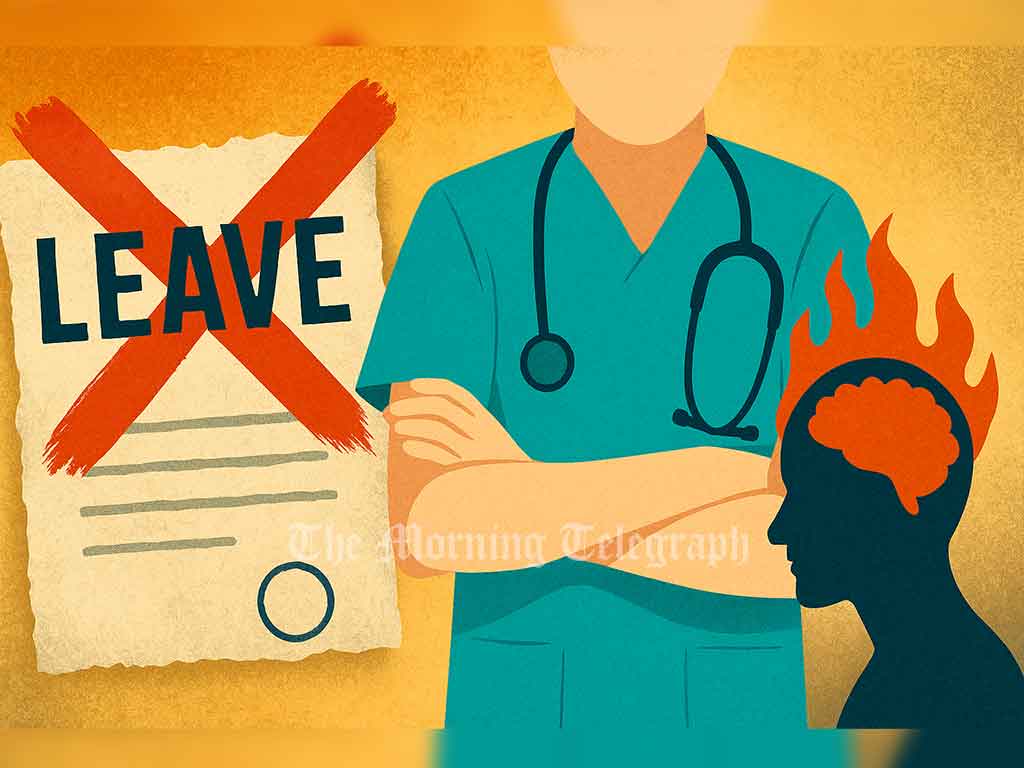
Sri Lanka’s health system is facing renewed pressure as the Ministry of Health and Mass Media suspends local and foreign leave for its employees, sparking outrage among professionals who warn of worsening staff shortages and a looming collapse of medical services.
The Ministry of Health and Mass Media has announced that all local and foreign leave for employees across institutions under its authority will be suspended until further notice. The directive was issued on 18 August 2025 by Ministry Secretary Dr. Anil Jasinghe, who circulated the order to all Additional Secretaries, the Director General of Health Services, Deputy Directors, Provincial Health Directors, hospital heads, regional health service officers, program leaders, and department heads.
The circular cites Public Administration Circular 14/2022 and Public Enterprise Circular No. PED 05/2022, stressing that the nature of essential health services has been severely disrupted due to staff taking leave. The document also emphasized that recruitment of new staff into vacant positions remains restricted, further intensifying the crisis.

A reversal of a previous decision
Dr. Jasinghe explained that the decision effectively reverses a measure introduced during Sri Lanka’s financial and political meltdown. He recalled that during the height of the crisis, the state struggled to pay salaries and offered staff the option of remaining in the country without pay for five years or leaving for overseas opportunities.
“There are still avenues to apply for leave properly, and those procedures will remain in place,” he told BBC Sinhala. “But if so many health workers leave simultaneously, our system will collapse. We cannot afford to lose essential staff while this country continues to face immense challenges.”
He added that a troubling pattern has emerged where employees on five-year leave under the earlier system have not returned, with some leaving without even notifying the ministry.
Supply to demand mismatch
Criticism has mounted from professional bodies, who accuse the government of worsening the crisis rather than resolving it. Ravi Kumudesh, President of the United Federation of Paramedical Professionals, said the move ignores global demand for Sri Lankan health professionals and prevents the country from benefiting from valuable foreign income.
“This is entirely the wrong approach,” Kumudesh said. “Instead of restricting staff from leaving, we should be producing more professionals and meeting international demand. The country needs nurses, doctors, and paramedical experts trained at scale. Right now, only a handful are trained at each university, which is nowhere near enough.”
He labeled the decision “disruptive” and accused the authorities of sabotaging the long-term plan to expand training capacity and generate overseas revenue by allowing medical staff to work abroad.
Old system vs. new rules
Kumudesh also pointed to flaws in the existing system, noting that it mainly allowed senior staff with 20 to 30 years of service to seek employment overseas, while blocking mid-level professionals with 5 to 10 years of training precisely the group most in demand internationally.
“The health service can function when mid-level professionals go abroad,” he explained. “But if senior specialists leave, the impact is much more severe. By preventing the middle group from leaving, the government has effectively created more instability, not less.”
He further stressed that previous reforms were introduced specifically to address the imbalance and to ensure that staff in demand abroad without undermining local services could travel for work.
“The entire point was to allow those in demand to contribute abroad while sustaining our system here. Blocking everyone is both shortsighted and dangerous,” Kumudesh concluded.
As the debate intensifies, experts warn that the government’s attempt to tighten control may only accelerate dissatisfaction within the sector and deepen the workforce shortage it is trying to solve.