Sri Lanka’s export leaders were summoned to the Presidential Secretariat with promises of support, but President Anura Kumara Dissanayake made it clear, government help comes with strings attached. Behind talk of “reviving the economy” and “strengthening dollar reserves,” the message was blunt: exporters must pay up in taxes if they expect state backing. The meeting, dressed up as pre-budget dialogue, revealed the uneasy balance between survival for struggling industries and a government desperate for revenue.
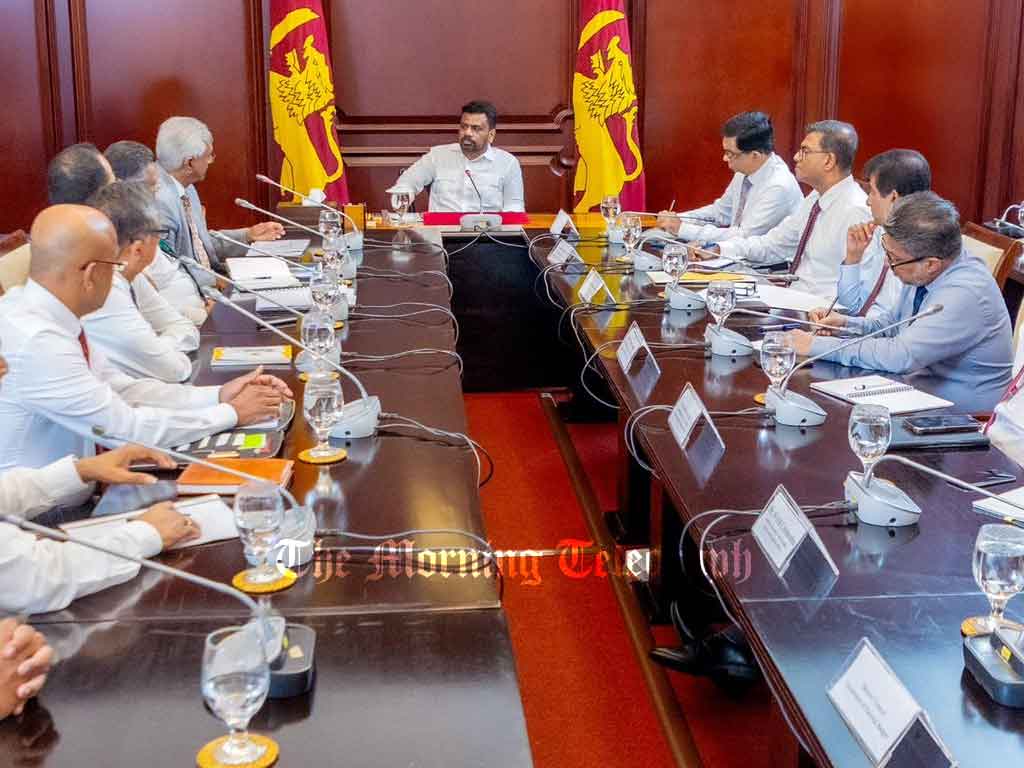
A pre-budget discussion for the year 2026 was held yesterday (26) at the Presidential Secretariat under the patronage of President Anura Kumara Dissanayake, with leading private sector entrepreneurs in the plantation sector present to share their concerns and recommendations on the export industry. The central theme of the meeting was the need to strengthen dollar reserves, a crucial requirement for stabilizing Sri Lanka’s fragile economy.
The government of Sri Lanka has made limited progress in improving state revenue and achieving a degree of economic stability, but the President stressed that sustaining such momentum requires exporters to do more than just lobby for facilities. He bluntly reminded the gathering that while the government stands ready to provide the necessary infrastructure, exporters must also “pay fair taxes” in return for the benefits they receive.

President Dissanayake further emphasized that the economy cannot be restricted by artificial controls. He explained that his administration is implementing measures aimed at reviving the weakened economy and moving it forward through expansion. He added that while import restrictions will be eased cautiously to prevent pressure on dollar reserves, the government is focusing on increasing export earnings as the primary strategy to strengthen reserves. He insisted that a concrete programme has already been implemented to achieve this goal.
Special attention during the discussions was directed toward the issues affecting the tea, coconut, and rubber sectors, which remain vital to the nation’s export base. Representatives highlighted the difficulties they currently face, ranging from outdated systems to inadequate support mechanisms, and laid out their proposals on how such problems could be overcome. They also made direct requests to the President to provide immediate relief and long-term solutions to safeguard the industries’ competitiveness.
The meeting was attended by Secretary to the President Dr. Nandika Sanath Kumanayake, Finance Secretary Dr. Harshana Suriyapperuma, Senior Adviser to the President Duminda Hulangamuwa, Senior Additional Secretary to the President Russell Aponso, and Export Development Board Chairman Mangala Wijesinghe. Alongside them were private sector entrepreneurs and representatives from industries linked to tea, rubber, and coconut cultivation.
President Dissanayake concluded the discussion by reiterating that the government will continue to back exporters through facilities and policy measures. However, he reminded participants that state support is not a free handout but part of a reciprocal arrangement, where entrepreneurs are expected to honor their responsibilities to the nation by contributing taxes fairly.