Nationwide demonstrations have gripped Indonesia as anger over soaring inflation, lavish parliamentarian wages, and police brutality sparks the most serious challenge yet to President Prabowo Subianto’s leadership.
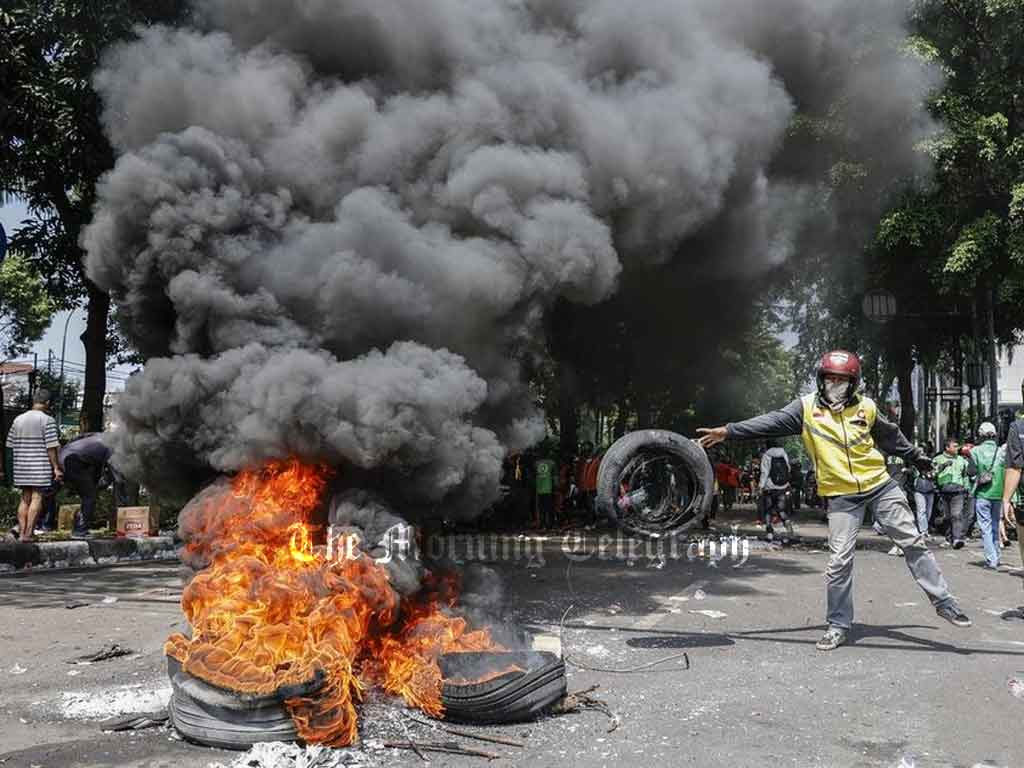
Violent anti-government protests have swept across Indonesia, triggered by frustration over rising living costs, corruption, and police violence. Tensions reached a breaking point after a motorcycle taxi driver was killed when struck by a police vehicle during a demonstration in Jakarta.
In a recorded address on Friday, President Prabowo Subianto appealed for calm, urging the public to trust his leadership. But his call failed to quell unrest as protesters clashed with security forces, pelting the police mobile brigade headquarters and torching a five-storey building in Jakarta’s Kwitang neighbourhood. Despite heavy rain, protests continued late into the night, marking the most significant crisis of Prabowo’s presidency since he assumed office in October.

The grievances behind the unrest are deeply rooted. Protesters accuse the government of ignoring the struggles of ordinary citizens while rewarding parliamentarians with excessive privileges. Reports revealed that 580 parliament members receive a monthly housing allowance of 50 million rupiah ($3,000), nearly 10 times Jakarta’s minimum wage and 20 times higher than wages in poorer provinces. This revelation fueled public fury against what demonstrators call “corrupt elites.”
Gejayan Memanggil, one of the groups leading the protests, demanded parliamentarians’ salaries and allowances be cut. They accuse lawmakers and police of corruption, highlighting a long-standing distrust among Indonesia’s 280 million citizens toward the country’s ruling class.
At the same time, inflation and tax burdens have become unbearable for many households. Protesters insist that minimum wages must be raised in line with inflation rates, as families struggle with daily living costs. The demonstrations reflect months of simmering discontent that has now exploded into nationwide unrest.
President Prabowo, a former military general, entered office with promises to boost economic growth to 8 percent within five years and attract global investment to Southeast Asia’s largest economy. However, the current unrest poses a formidable test to his ability to balance ambitious economic pledges with social stability.