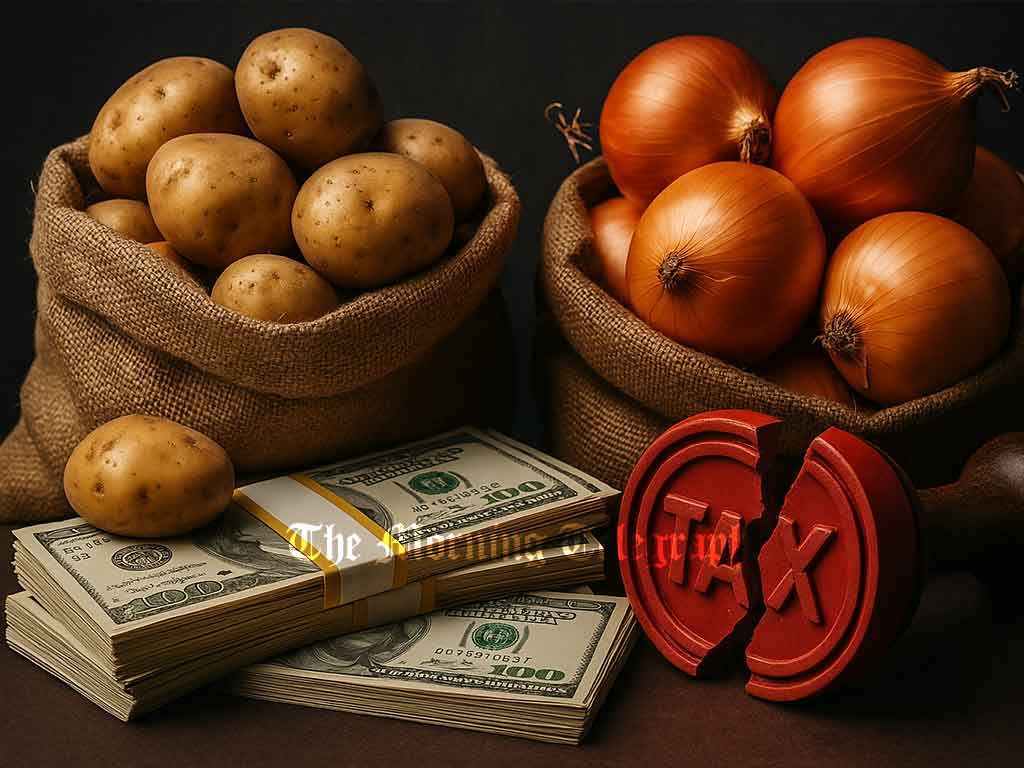
A major controversy has erupted in Sri Lanka’s Finance Ministry after Trade and Investment Policy Director General Pradeep Kumara resigned, refusing to enforce an allegedly illegal tax order on potato and onion imports, while importers rake in billions through loopholes.
Pradeep Kumara, Director General of the Trade and Investment Policy Department of the Ministry of Finance, has resigned from his post after refusing to implement an order from the Ministry Secretary to increase taxes on potatoes and onions without proper cabinet approval. Finance Ministry sources confirmed the sudden resignation.
Traditionally, the Finance Minister imposes higher taxes on imported potatoes and onions during harvest season to protect local farmers. However, under the law, cabinet approval is required to impose such taxes. Reports state that this time, the Secretary of the Ministry of Finance bypassed legal procedure and ordered the Director General to impose the taxes directly.
Pradeep Kumara rejected the directive, informing the Ministry Secretary that the gazette could not be issued since the order violated the law. When pressed to proceed regardless, he stood firm, resigning from his position on the grounds that he could not comply with an unlawful instruction.
Meanwhile, customs sources revealed that importers had already brought in nearly 27,000 metric tons of onions just days before the new tax was announced. Sri Lanka’s average monthly onion demand is only about 20,000 metric tons, meaning the sudden surge in imports was strategically timed.

These onions, brought in without paying the newly proposed tax, are now being sold at higher market prices as though the tax had been applied. Wholesale market sources estimate that importers are making profits exceeding Rs. 100 crore through this loophole, while local farmers face devastating losses.
The scandal has raised serious concerns about transparency and governance in Sri Lanka’s trade policy. Critics argue that the episode reflects a pattern of policy manipulation that benefits politically connected importers at the expense of farmers and consumers.