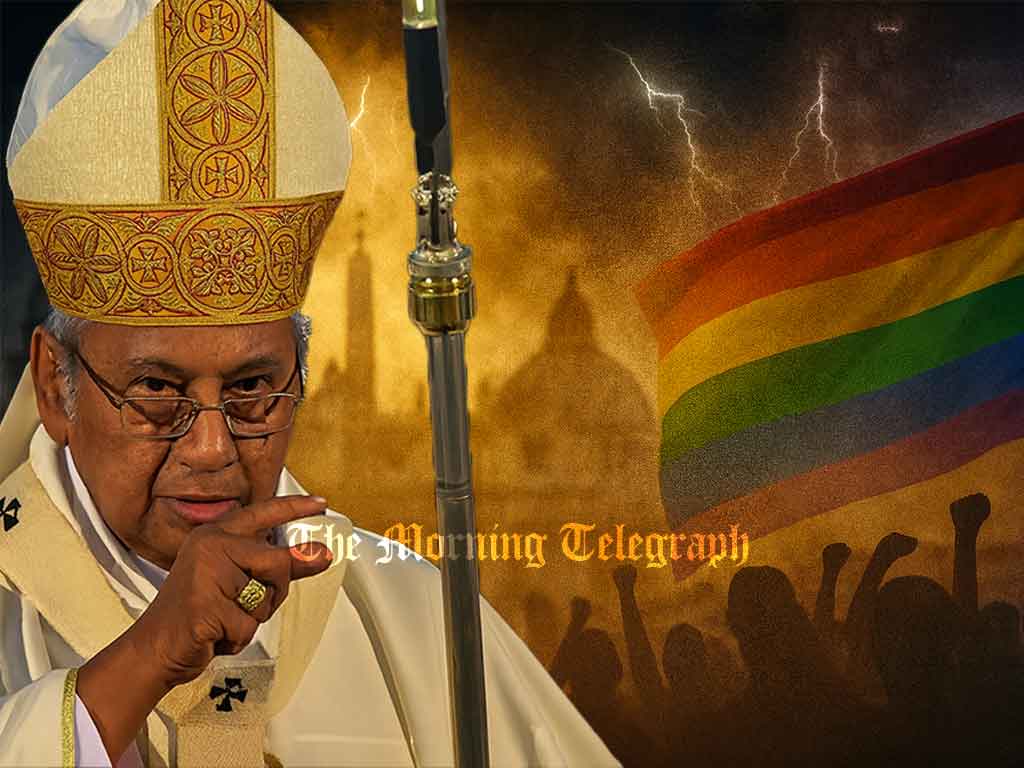
As the Vatican prepares to host an international LGBTQ pilgrimage during the 2025 Catholic Jubilee, Sri Lankan Cardinal Malcolm Ranjith has strongly opposed same-sex marriage, sparking renewed debate over faith, culture, and equality.
The Vatican is preparing to welcome a series of LGBTQ events during the 2025 Roman Catholic Jubilee, even as a Sri Lankan cardinal intensifies criticism of efforts to expand rights for same-sex couples in his country.
Next week, around 1,000 pilgrims from nearly 30 countries are expected to arrive in Rome for a three-day LGBTQ pilgrimage, organized by the Italian group La Tenda di Gionata (“Jonathan’s Tent”). The program will feature a multilingual prayer vigil on September 5, a Mass and procession through the Holy Door at St. Peter’s Basilica, and conclude with the Angelus prayer led by Pope Leo XIV on September 7.

Bishop Francesco Savino, vice president of the Italian Bishops’ Conference, who will preside over the Mass, said the inclusion reflects the Church’s mission to welcome all individuals “regardless of background or life choices.” The Vatican, which placed the pilgrimage on its official Jubilee calendar in December 2024 under the late Pope Francis, emphasized that listing the event does not constitute an official endorsement.
While Pope Francis had previously allowed blessings for same-sex couples, his successor, Pope Leo XIV, has reaffirmed marriage strictly as “between a man and a woman.” However, he has chosen to maintain Francis’ directive permitting blessings, signaling both continuity and caution in Church teaching.
In Sri Lanka, Archbishop of Colombo Cardinal Malcolm Ranjith condemned what he described as a “sinister move” to legalize same-sex marriage. He argued that some international organizations, with political support, are promoting gender transformation for youth, certified by psychiatrists, and warned that such practices could undermine traditional cultural and religious norms rooted in Buddhism.
At the same time, Ranjith emphasized that individuals of different sexual orientations should not face harassment. His remarks have fueled debate across social media, with many drawing comparisons to Supreme Court rulings and noting that while homosexuality is legal in neighboring India, same-sex marriage remains unrecognized.
The contrasting positions between the Vatican’s inclusive approach to LGBTQ pilgrims and Sri Lanka’s strong opposition highlight the global divide over LGBTQ rights, faith, and social values, underscoring tensions between tradition and reform within the Catholic Church and beyond.