A leader’s example carries more weight than their speeches. President Anura’s decision to ride without a life jacket isn’t just a personal oversight, it risks undermining the very laws his government enforces.
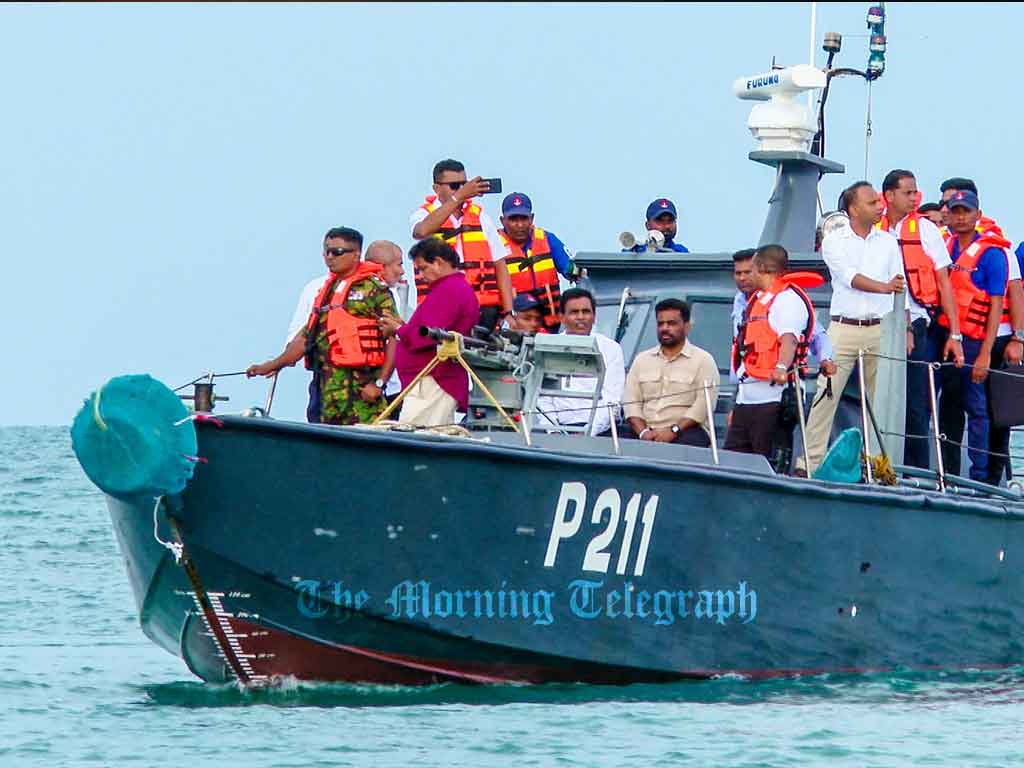
When President Anura Kumara Dissanayake and a group of politicians traveled by boat to Katchatheevu, sharp eyes noticed something missing: life jackets. Except for security personnel, none of the leaders, including the President himself, wore one. It may seem like a small oversight, but in the court of public opinion, small things often speak volumes.
The criticism that followed was immediate and justified. Leaders who govern a country are expected to set an example, not simply enforce rules that ordinary citizens must follow. The sight of a President ignoring a basic safety regulation sends the wrong message: that the law applies to some, but not to all.
History provides a sharp contrast. In 2017, former Australian Prime Minister Malcolm Turnbull was fined $250 for failing to wear a life jacket on his dinghy. He accepted the fine without protest, calling it a “lesson learned” and publicly reinforcing the importance of compliance. That response not only upheld the law but strengthened trust in leadership.

Sri Lanka’s current administration came to power by promising to correct the mistakes and arrogance of previous governments. Citizens, therefore, rightly expect its leaders to avoid repeating them. For a government that stresses accountability, failing to observe basic safety rules is more than symbolic, it risks eroding credibility.
This is about more than boating safety. It’s about trust. If those at the helm of the state flout the rules, how can ordinary people be expected to follow them? Leadership is not simply about crafting policy or delivering speeches; it is about embodying the standards you ask society to uphold.
As Sri Lanka struggles to rebuild faith in institutions, such lapses are dangerous. Wearing a life jacket is not optional, it is a matter of law and public safety. A leader who chooses otherwise signals carelessness not only with their life but with their responsibility to the people.
President Anura should take this criticism seriously. Correcting the mistake publicly, as Turnbull did, could turn an embarrassment into a lesson on accountability. After all, governance is not just about pointing fingers at past failures, it is about proving, every day, that you are willing to lead differently.