President Anura Kumara Dissanayake makes a bold admission about Sri Lanka’s economic challenges while launching a massive development initiative in the Northern Province, emphasizing his government’s commitment to long-term stability and growth.
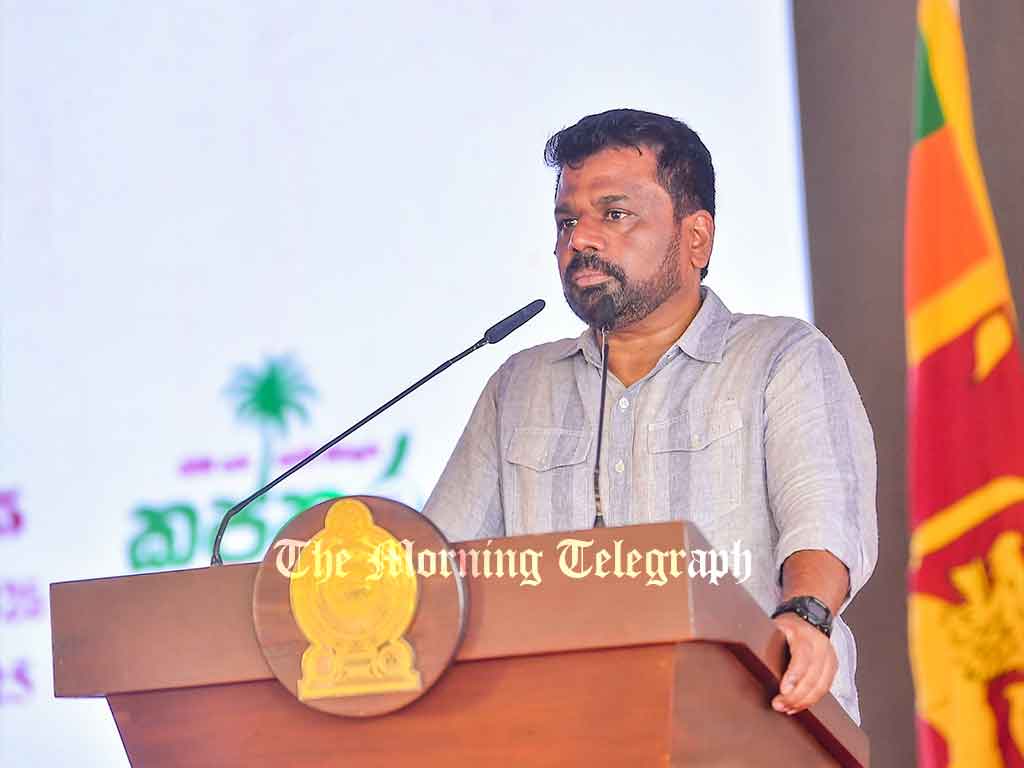
President Anura Kumara Dissanayake has delivered a significant statement regarding Sri Lanka’s economic development, emphasizing that his administration requires a reasonable timeframe to rebuild the nation’s economy. He clearly stated, “We are not magicians. We do not have a magic wand,” while affirming his commitment to revitalizing the Northern Province and establishing a strong economic foundation for all citizens.
The President participated in the inaugural ceremony of the Northern Coconut Triangle in Pudukkuduirippu town, an event marking World Coconut Day 2025 under the theme “The Nation Makes the Nation Rich – Kapthuru Saviya.” This agricultural development project represents a major government initiative for regional development.

He assured that citizens who demonstrated political trust in the current government during the last presidential election would be led to victory. The administration plans several future development programs including establishing special industrial zones specifically designed to create new economic opportunities for the Northern region.
The President strongly reaffirmed his government’s commitment to protecting land rights, language rights, and cultural rights of Northern citizens, alongside ensuring the right to truth regarding missing persons. He stated the government’s primary objective is fostering national unity, promising that necessary decisions toward this goal would be implemented without hesitation.
The Northern Coconut Triangle project, developed following technical recommendations from the Coconut Research Institute, connects three strategic towns: Point Pedro, Silawathura, and Kokilai. This comprehensive development scheme covers five districts: Jaffna, Kilinochchi, Mullaitivu, Mannar, and Vavuniya. The previous government budget allocated Rs. 500 million specifically for providing high-yielding coconut seedlings to local growers. This agricultural development initiative aims to cultivate 16,000 acres of new coconut lands by 2025, with expansion plans targeting 40,000 acres between 2025 and 2027. This economic development project is expected to significantly improve local livelihoods through coconut-based industries while boosting export income from coconut products by approximately 70 million US dollars annually.
During the ceremony, the President personally distributed land title deeds and government subsidies to coconut farmers representing all five Northern districts. The event also featured the presentation of a commemorative magazine for World Coconut Day 2025. Mr. Nuwan Chinthaka, Deputy Director General of the International Coconut Community, presented an official certificate of appreciation to President Dissanayake, recognizing Sri Lanka’s contributions to coconut cultivation.
In his address, the President acknowledged that the Pudukudiyirippu area had endured significant historical conflicts, resulting in substantial losses for local communities. He noted that Northern voters demonstrated remarkable political trust by supporting his government in recent elections, expressing his determination to lead them toward victory through sustainable development.
The President reiterated that his government possesses no miraculous solutions, emphasizing their systematic approach to solving economic difficulties throughout the North and nationwide. He stressed the necessity of a reasonable implementation timeframe for effective economic recovery.
His administration is addressing multiple priorities simultaneously: ensuring fundamental rights including land ownership, linguistic rights, cultural preservation, and truth-seeking regarding the disappeared; advancing economic development through creating strong economic foundations and restoring lost economic opportunities. The launched coconut cultivation project forms a crucial component of this strategy, alongside developing special industrial zones, enhancing tourism infrastructure, and improving agricultural facilities including water management systems.
The President addressed national reconciliation, emphasizing building cultural integration through shared celebrations and sports diplomacy to reunite divided communities. He reflected on the thirty-year conflict that fostered distrust and tragedy, leading to societal division and the emergence of communal politics.
He declared that voters decisively rejected divisive politics in the last presidential election, vowing to prevent the resurgence of communal discourse. The government remains committed to national unity and will not hesitate to make controversial decisions necessary for progress, nor will it allow destructive elements to reverse development initiatives.
The administration recognizes the severe economic challenges facing citizens and is implementing solutions systematically. Over the past year, the government has established essential policy foundations by eliminating corruption, strengthening public administration, enforcing the rule of law, and increasing government revenue. These measures support creating a robust economy capable of debt management while restarting stalled development projects and initiating new programs across all sectors.
The President concluded by outlining his vision for transforming Sri Lanka into a nation that commands international respect and attention, inviting all citizens to join this journey of national transformation without discrimination.
The event was attended by religious leaders, government officials including Minister of Plantations and Community Infrastructure Samantha Vidyaratne, Minister of Fisheries, Aquatic and Marine Resources Ramalingam Chandrasekar, and Minister of Transport, Highways, Ports and Civil Aviation Bimal Ratnayake. Also present were Deputy Ministers, Northern Province Governor Nagalingam Wethanayahan, Ministry Secretary Prabath Chandrakeerthi, district secretaries, international representatives, and delegates from various agricultural institutions including the Coconut Development Authority and Coconut Cultivation Board.