A wave of outrage is building as trade unions, civil society, artists, and political parties condemn the government for openly unleashing thugs in Yakkala, warning that repression will only escalate under IMF-driven policies.
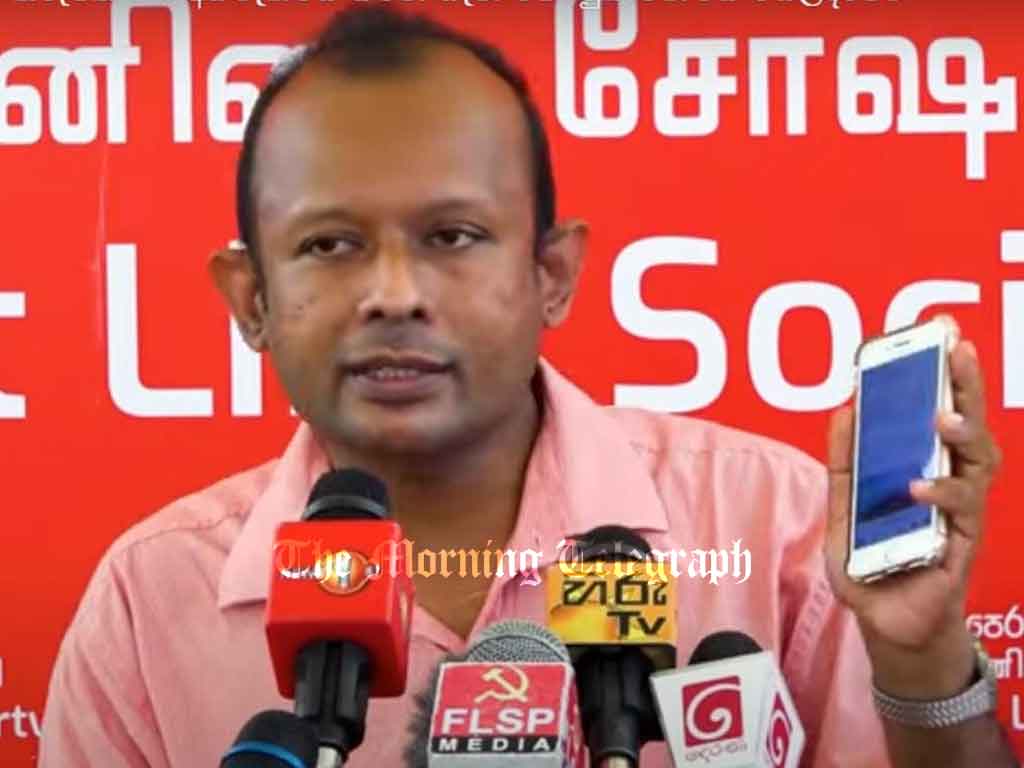
A powerful coalition of trade unions, artists, university professors, civil society activists and members of political movements gathered at the Colombo Public Library to denounce the violent attack on the Gampaha District Headquarters of the Frontline Socialist Party (FSP).
Addressing the joint press conference, FSP Education Secretary Pubudu Jayagoda emphasized that the Yakkala incident should not be dismissed as a mere property dispute but as a political signal of the government’s trajectory. He argued that while the property dispute should be resolved in court, the violent events carried out by government-linked groups reflect a dangerous precedent.

According to Jayagoda, ministers claimed the office had been obtained legally through a court ruling. However, he questioned why no fiscal officer had been sent to enforce such an order. Instead, government-aligned groups, including Mahinda Jayasinghe, accompanied by police, forcibly entered and attacked, while law enforcement silently stood by.
Jayagoda warned that this incident marked a shift in governance where state-backed thuggery was no longer hidden but proudly executed in public. He reminded that past governments also used violence but largely did so in secret. The difference now, he stressed, is that these acts are being carried out openly, with MPs themselves participating in unlawful property seizures and violent attacks, even targeting students preparing for the Advanced Level Examination.
He accused the government of sending a clear message that morality and law no longer matter, and that power will dictate action. Such thuggery, he warned, cannot be stopped in the future if unchecked now, becoming a national disgrace. He linked this behavior to the IMF program the government has vowed to implement, describing it as a path of coercion and repression that has historically led successive governments, from J. R. Jayewardene to the Rajapaksas, to rely on abuse of power.
Jayagoda declared that a broad movement is now uniting against these actions. Trade unions, civil citizens, artists, and political groups are collectively rejecting what he described as the government’s shameless repression. He vowed that they are prepared to mobilize all forces to resist and confront the government’s growing abuse of power.