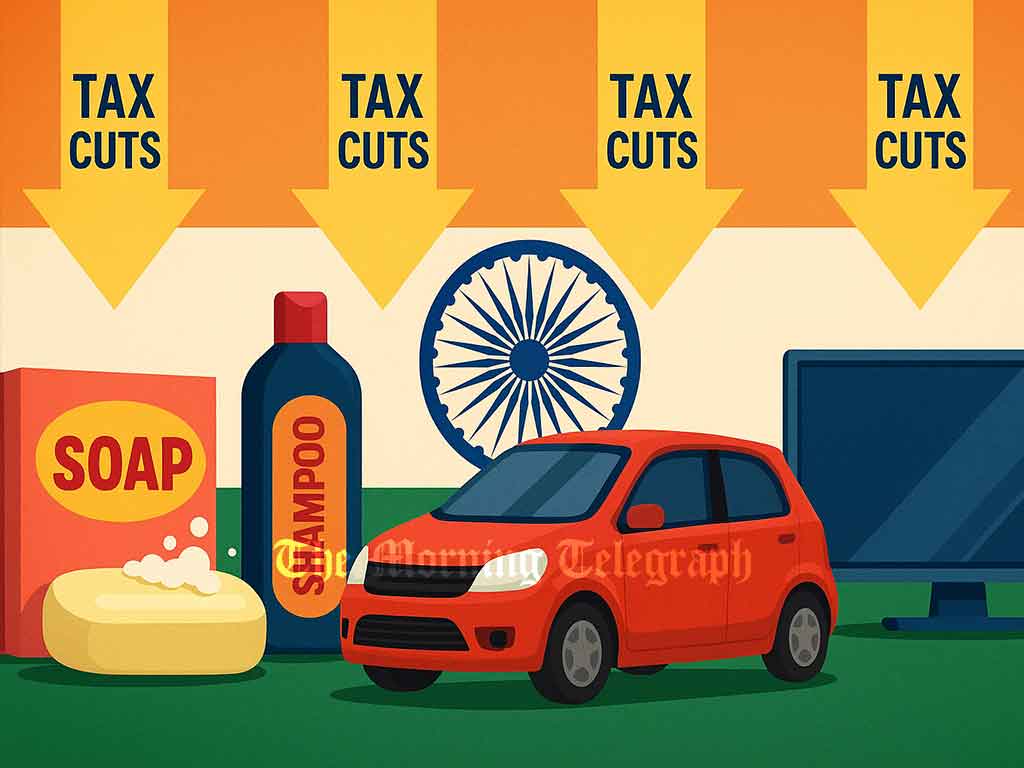
India’s sweeping GST reform cuts taxes on essentials and small cars, aiming to boost spending and shield its economy from global tariff shocks.
India has announced a landmark decision to cut taxes on hundreds of consumer goods, from soap and toothpaste to small cars and televisions, in an effort to stimulate domestic demand as the country grapples with global trade disruptions triggered by US tariffs.
Finance Minister Nirmala Sitharaman confirmed that India’s Goods and Services Tax (GST) system has been restructured, streamlining the previous four-tier system into a simplified two-tier regime. The new rates, set at 5 percent and 18 percent, will see steep reductions on popular items. Toothpaste and shampoo taxes will fall from 18 percent to 5 percent, while small cars, air conditioners and televisions will see tax cuts from 28 percent to 18 percent. Insurance premiums, including health and life cover, will now be tax-free.

The tax cuts will take effect from September 22, the start of the Hindu festival Navratri, and are expected to cost the central and state governments 480 billion rupees ($5.49 billion). Sitharaman emphasized that the GST changes are part of long-term reforms rather than a direct response to the US tariff hike of 50 percent imposed last month.
Alongside the reductions, the cabinet also approved a 40 percent tax on ultra-luxury goods such as cigarettes, high-capacity cars, and carbonated beverages. This balance, officials say, ensures the reforms remain consumer-friendly while protecting government revenue.
The move is expected to deliver a strong boost to consumer spending, benefiting fast-moving consumer goods (FMCG) giants like Hindustan Unilever and Godrej Industries, as well as electronics firms including Samsung, LG, and Sony. Carmakers such as Maruti Suzuki, Toyota, and Suzuki Motor are set to gain significantly from reduced taxes on small vehicles.
The decision aligns with Prime Minister Narendra Modi’s call for greater self-reliance, under his “Atmanirbhar Bharat” vision. Modi praised the reforms, stating they would “improve the lives of citizens and ensure ease of doing business, especially for small traders and enterprises.”
India’s economy already grew at a robust 7.8 percent in the quarter to June. Analysts believe the combination of GST cuts and earlier personal tax reductions will create a consumption-driven surge, further strengthening India’s economic outlook amid global uncertainty.